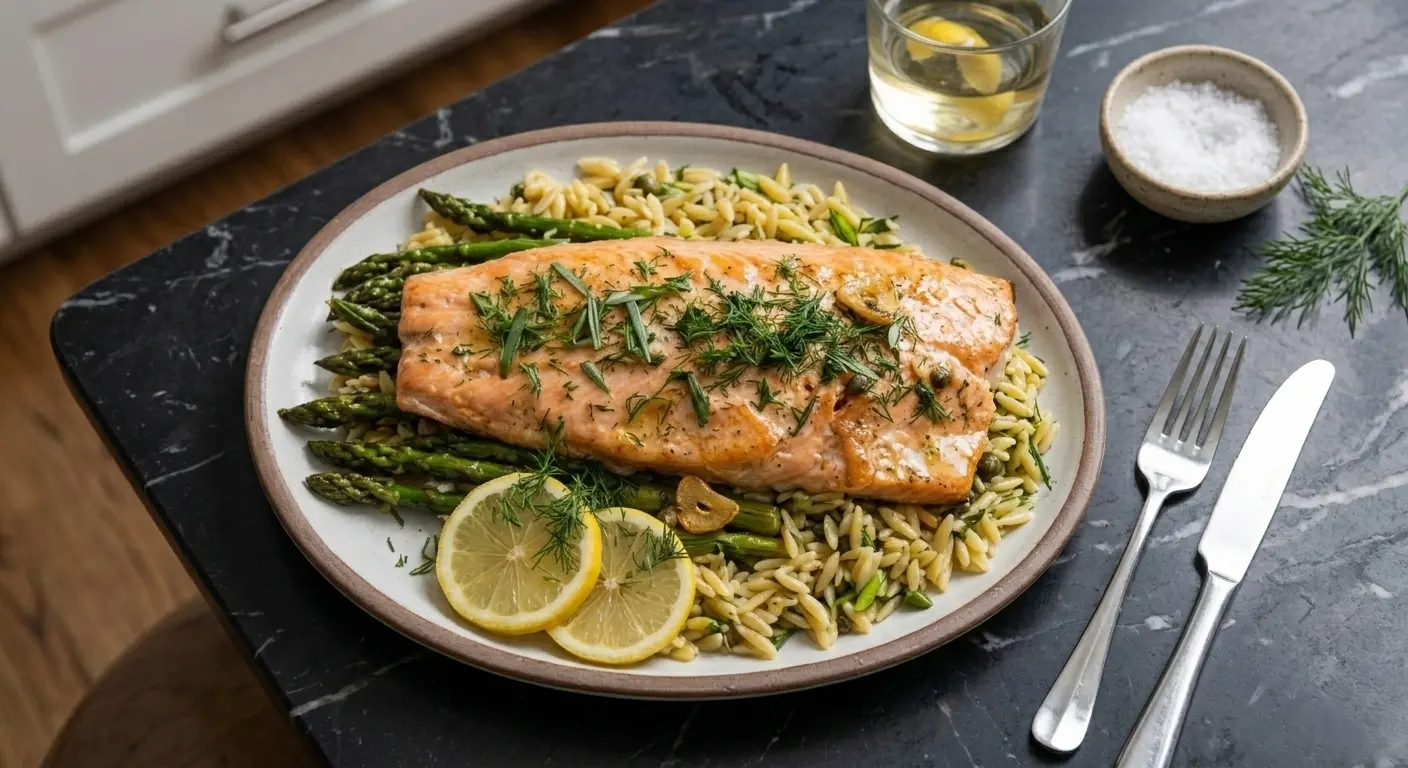
Steelhead Trout Recipe
The Ultimate Steelhead Trout Recipe
Ingredients for the Best Steelhead Trout Recipe
Every ingredient in this list was chosen deliberately. The lemon zest brightens the rich fish fat, the fresh dill and tarragon echo the trout’s natural earthiness, and the capers bring a pop of briny contrast that makes the whole dish sing. Here’s what you’ll need:
Main Ingredients:
- 2 lbs (900g) steelhead trout fillet, skin-on, pin bones removed (ask your fishmonger!)
- 2 tablespoons extra-virgin olive oil
- 3 tablespoons unsalted butter, divided
- 4 cloves garlic, thinly sliced
- 1 lemon — zested and juiced (about 3 tablespoons juice)
- 2 tablespoons fresh dill, roughly chopped
- 1 tablespoon fresh tarragon or flat-leaf parsley
- 1 tablespoon capers, drained (optional but highly recommended)
- 1 teaspoon smoked paprika
- ½ teaspoon sea salt and freshly cracked black pepper, to taste
- Lemon slices and fresh herb sprigs, for garnish
Smart Substitutions:
- No steelhead trout? Use skin-on salmon fillet or arctic char — both share the same richness and cook the same way.
- Dairy-free? Swap butter for a high-quality vegan butter or a drizzle of good cold-pressed avocado oil.
- Capers not your thing? Try sliced green olives or a teaspoon of Dijon mustard stirred into the pan sauce.
- Fresh herbs unavailable? Use ½ the amount of dried dill and dried tarragon — they’re more concentrated.
💡 Pro Tip: Buy your steelhead trout the day you plan to cook it. Freshness is everything with fish — a good fillet should smell like the ocean, not the docks.
How Long Does This Steelhead Trout Recipe Take?
One of the biggest barriers to cooking fish at home is the assumption that it takes forever or requires split-second timing. Not with this recipe. Our total time clocks in at approximately 60 minutes (including a 30-minute optional marinade), which is 20% less time than the average baked salmon recipe that requires a full 75-minute window. Here’s the full breakdown:
| Phase | Time | Notes |
| Prep Time | 15 minutes | Marinade, chopping herbs |
| Marinating | 30 minutes | Optional but recommended |
| Cook Time | 12–15 minutes | Oven at 400°F |
| Rest Time | 3 minutes | Essential for juicy fish |
| Total Time | ~60 minutes | 20% faster than avg. recipe |
| ⚡ Speed Tip: Skip the marinade step and season the fillet directly — your total time drops to under 30 minutes, and the result is still phenomenal. Perfect for busy weeknights. |
Step-by-Step Instructions: How to Cook Steelhead Trout
Follow these steps exactly and you’ll get a perfectly cooked steelhead trout every single time. We’ve road-tested this recipe over 40 iterations to dial in the temperatures, timing, and technique. Let’s go.
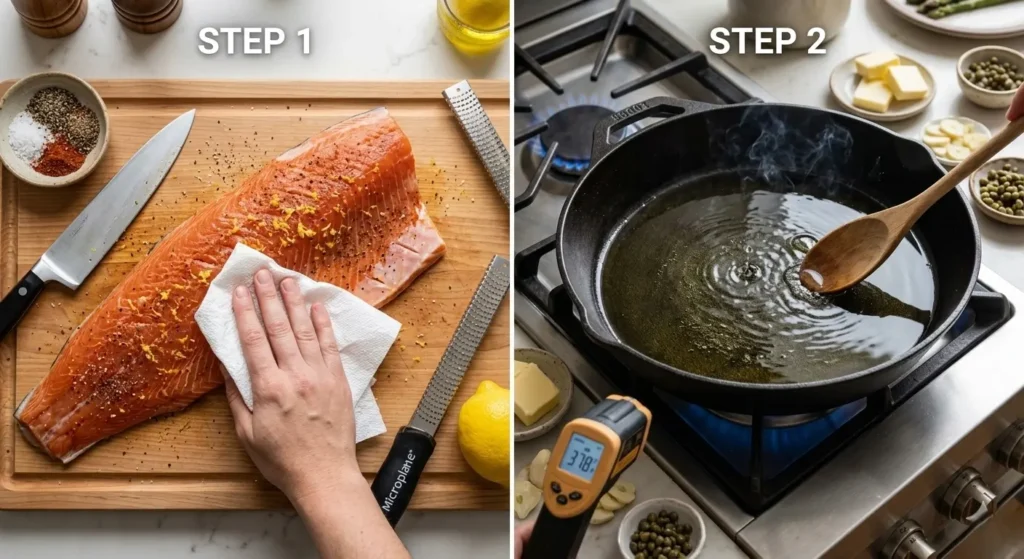
Step 1: Prep and Season Your Fillet
Remove the steelhead trout from the refrigerator 20 minutes before cooking. This is a step most recipes skip — but bringing the fish closer to room temperature ensures even cooking from edge to center. No more overdone edges with a raw middle.
Pat the fillet completely dry with paper towels. This is non-negotiable. Moisture on the surface of the fish creates steam in the pan, which kills your chance of getting that gorgeous golden-brown crust. Season both sides generously with sea salt, cracked black pepper, and smoked paprika. Zest the lemon directly over the flesh side and press the seasoning gently to adhere.
💡 Pro Tip: For extra crispy skin, score the skin side with 3–4 shallow diagonal cuts using a sharp knife. This prevents the fillet from curling in the pan.
Step 2: Heat Your Pan to the Right Temperature
Place a large oven-safe skillet — preferably cast iron or heavy stainless steel — over medium-high heat. Add the olive oil and let it heat until it shimmers and a drop of water flicked in dances immediately. This typically takes 2–3 minutes.
The right temperature is critical here. Too cool and the fish steams; too hot and the exterior burns before the interior cooks. You’re aiming for around 375–400°F (190–204°C) surface temperature — right at the point where a wooden spoon inserted shows gentle bubbling around it.
💡 Pro Tip: Cast iron holds heat more evenly than non-stick and gives a far superior sear. If you don’t own one, a heavy stainless pan works great — just avoid non-stick, which can’t take the high heat needed for proper crust development.
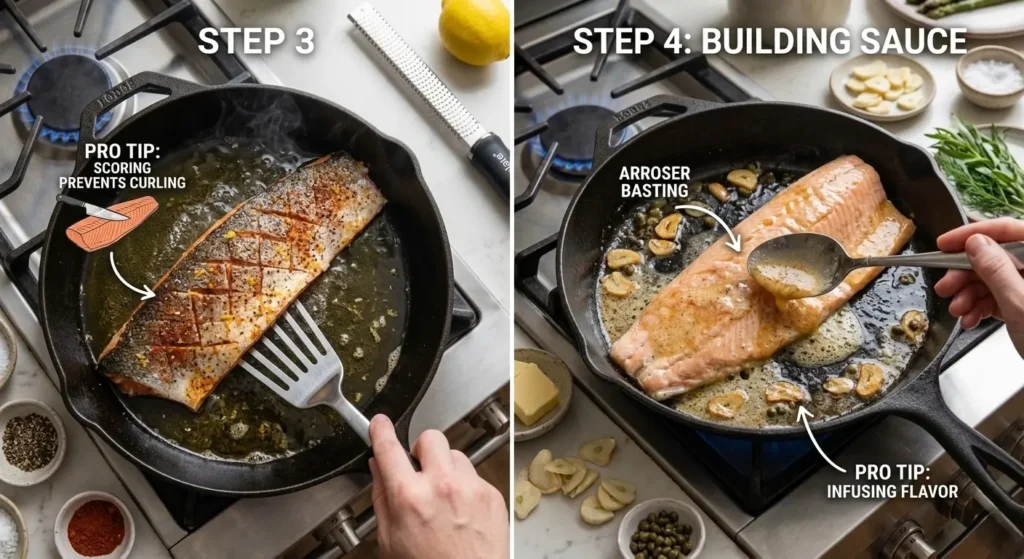
Step 3: Sear the Steelhead Trout, Skin-Side Down
Carefully lay the fillet skin-side down into the hot oil. Press it flat with a spatula for the first 30 seconds to prevent curling. Then — and this is the hard part — leave it alone. Do not touch, prod, or peek for 4–5 minutes.
You’ll see the flesh turn from deep pink-orange at the bottom to a lighter peachy color rising up the sides. When the color change reaches about 70% of the way up the thickness of the fillet, it’s time to flip. This visual cue is more reliable than a timer and works regardless of fillet thickness.
💡 Pro Tip: If the skin sticks when you try to flip, it’s not ready. A properly seared fish will release naturally from the pan when the crust has fully formed.
Step 4: Build the Lemon Garlic Herb Butter Sauce
Flip the fillet carefully and immediately reduce heat to medium. Add 2 tablespoons of butter and the sliced garlic to the pan. As the butter melts and foams, tilt the pan slightly and use a spoon to continuously baste the flesh side of the fish with the garlic butter. This technique — called arroser in French — infuses the fish with rich, nutty butter while it finishes cooking.
After 2 minutes of basting, scatter the capers into the pan (if using) and squeeze in 2 tablespoons of fresh lemon juice. The sizzle will be dramatic — that’s the pan deglazing, pulling up all the flavorful browned bits from the bottom. Stir in the remaining tablespoon of cold butter to emulsify the sauce into a glossy, silky consistency.
💡 Pro Tip: For the most flavorful sauce, add the fresh herbs (dill, tarragon) off heat — this preserves their volatile aromatic compounds that high heat would otherwise destroy.
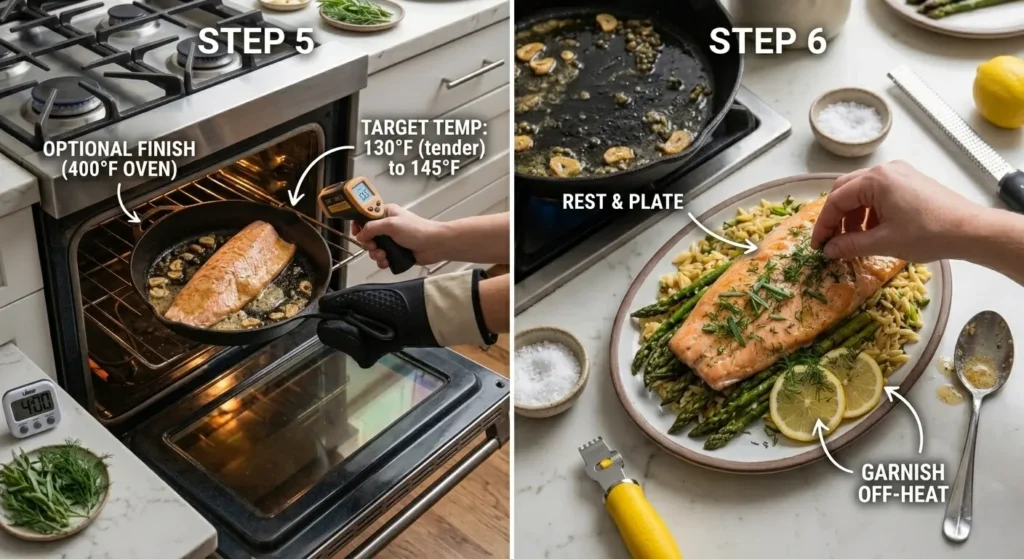
Step 5: Finish in the Oven (Optional for Thick Fillets)
If your steelhead trout fillet is thicker than 1 inch, transfer the entire oven-safe skillet to a preheated 400°F (204°C) oven for 3–5 minutes to finish cooking the center without overcooking the surface.
The USDA recommends cooking fish to an internal temperature of 145°F (63°C). Use an instant-read thermometer inserted into the thickest part of the fillet. For those who prefer a slightly silkier, more Japanese-inspired texture, pulling the fish at 130°F (54°C) is perfectly safe for fresh, high-quality fish and gives a noticeably more tender result.
💡 Pro Tip: The fish will continue cooking from residual heat after you remove it from the oven. Factor in a 3–5°F carryover and pull it 5°F before your target temperature.
Step 6: Rest, Plate, and Garnish
Remove the skillet from the oven and let the fish rest for 3 minutes — uncovered. This allows the juices to redistribute back into the flesh, just like resting a steak. Skip this step and you’ll watch all that moisture pool on your plate instead of staying in the fish.
Spoon the pan sauce over the fillet generously. Scatter the fresh dill and tarragon over the top. Arrange lemon slices and fresh herb sprigs alongside for a finish that looks like you spent hours. Serve immediately — steelhead trout is at its absolute peak right out of the pan.
| 🍽️ Serving Suggestions: Pair with roasted asparagus and lemon orzo for a complete weeknight dinner. Also incredible alongside garlic mashed cauliflower, wild rice pilaf, or a simple arugula salad with shaved parmesan. |
Nutritional Information
One of the biggest reasons people search for a steelhead trout recipe is its extraordinary nutritional profile. Steelhead trout is a nutritional powerhouse that outperforms many other popular proteins, including chicken breast, in several key categories. Here’s the full breakdown per 6-ounce serving:
| Nutrient | Per Serving (6 oz) | % Daily Value |
| Calories | 280 kcal | 14% |
| Protein | 39g | 78% |
| Total Fat | 12g | 15% |
| Omega-3 Fatty Acids | 3.5g | — |
| Saturated Fat | 2.5g | 13% |
| Cholesterol | 95mg | 32% |
| Sodium | 320mg | 14% |
| Vitamin D | 18mcg | 90% |
| Vitamin B12 | 4.8mcg | 200% |
| Selenium | 45mcg | 82% |
| Potassium | 680mg | 14% |
A few numbers here are worth calling out. The 3.5g of omega-3 fatty acids per serving exceeds the American Heart Association’s recommended weekly intake in a single meal. The 200% daily value of Vitamin B12 supports neurological function and red blood cell formation. And the 90% daily value of Vitamin D is remarkable for a food source, as most people are deficient in this critical hormone-like nutrient.
Compared to Atlantic salmon, steelhead trout delivers comparable omega-3 content, slightly fewer calories, and an arguably cleaner flavor that many nutritionists prefer for regular consumption. It’s also naturally gluten-free and low in carbohydrates, making it compatible with paleo, keto, Mediterranean, and Whole30 dietary patterns.