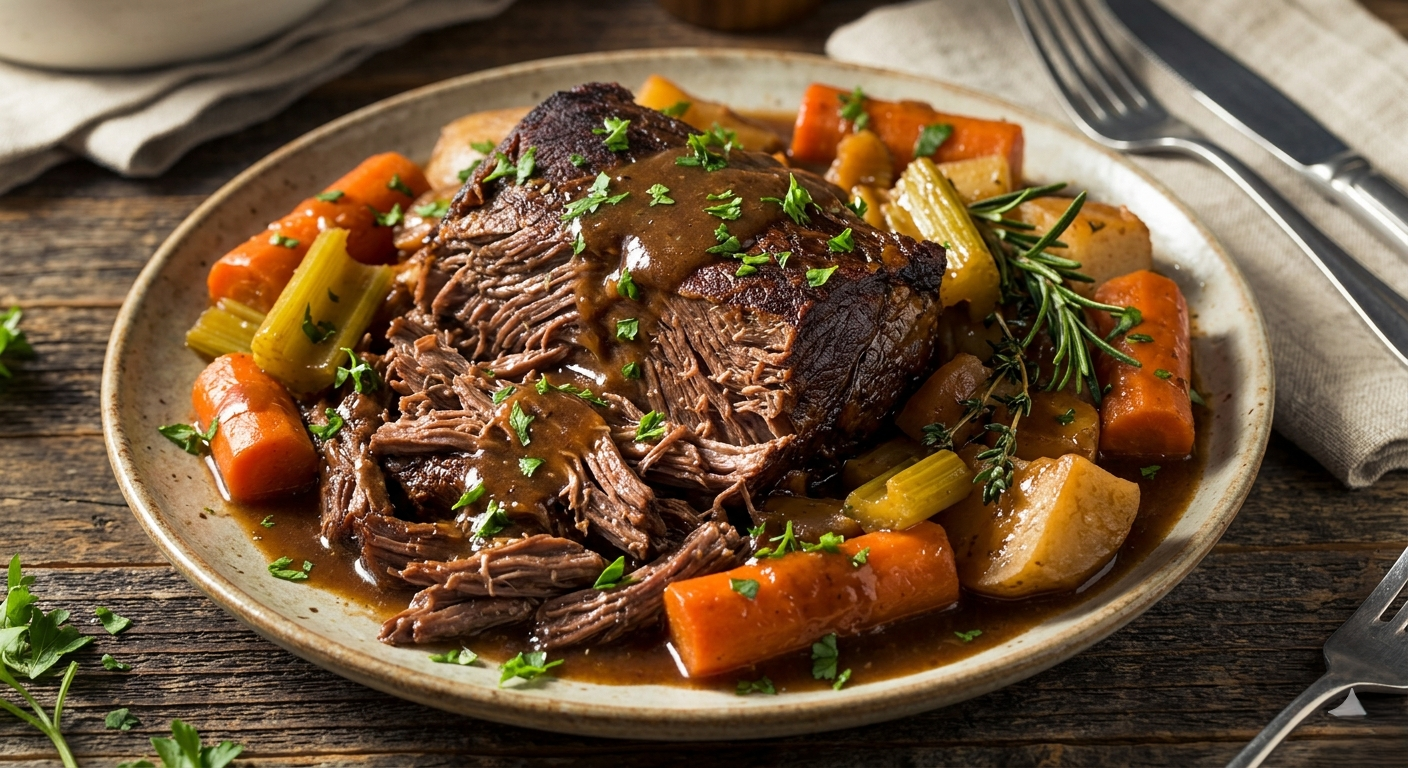
Rump Roast Recipe
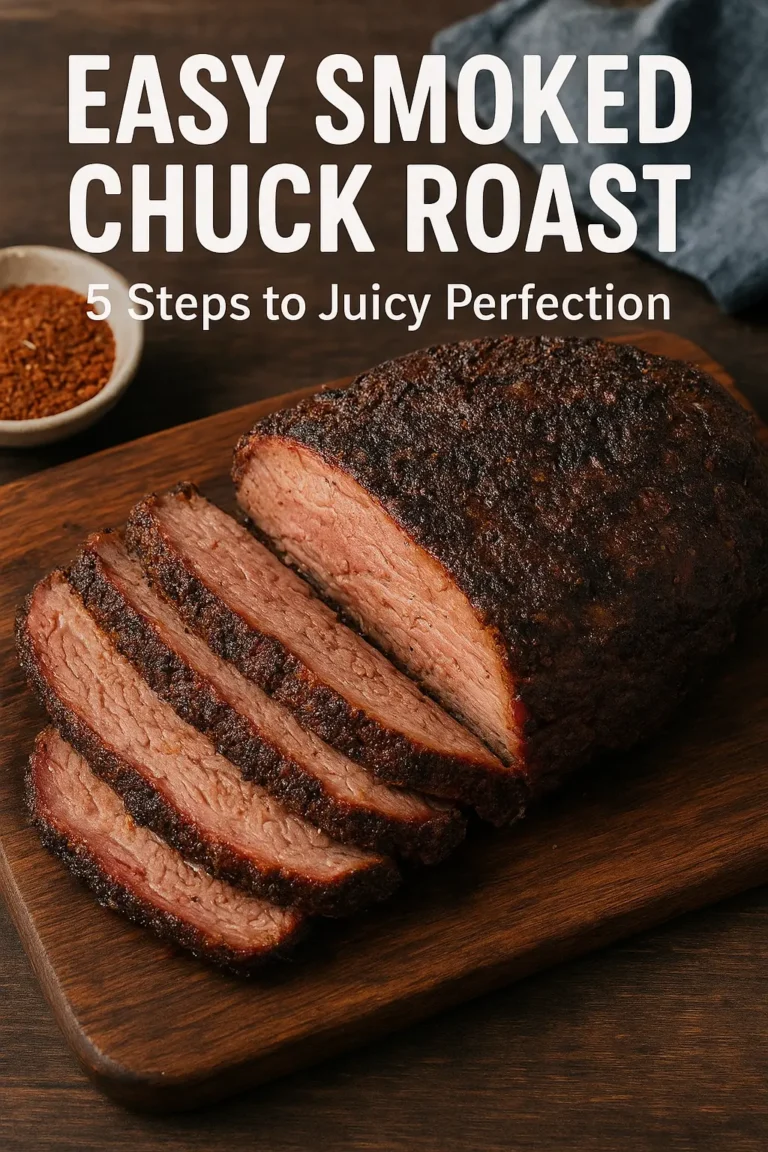
The Ultimate Rump Roast Recipe: Tender, Juicy & Packed with Flavor
Ingredients for This Rump Roast Recipe
Everything you need is pantry-friendly and affordable. Below, the list is split between the roast itself and the braising aromatics that build the sauce.
For the Roast
- 3–4 lb rump roast (bone-in or boneless)Sub: bottom round or chuck roast
- 2 tsp kosher salt + 1 tsp black pepper
- 1 tsp garlic powder + 1 tsp onion powder
- 1 tsp smoked paprika
- 2 tbsp olive oil (for searing)
For the Braise
- 2 cups beef broth (low-sodium)Sub: chicken or vegetable stock
- 1 cup dry red wineSub: extra broth + 1 tbsp Worcestershire
- 4 garlic cloves, smashed
- 2 large onions, quartered
- 4 medium carrots + 3 celery stalks
- 2 sprigs fresh rosemary + 3 sprigs thyme
- 2 tbsp tomato paste
- 1 lb baby potatoes (optional, add last hour)
Step-by-Step Instructions
1 Season & dry brine (the night before, ideally)
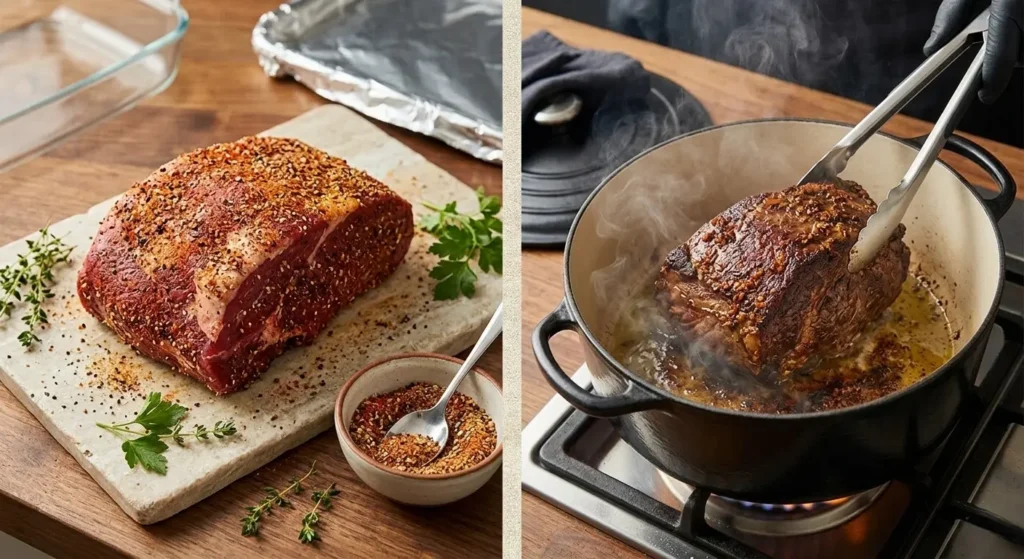
Pat the rump roast completely dry with paper towels — moisture is the enemy of a good sear. Mix the kosher salt, black pepper, garlic powder, onion powder, and smoked paprika in a small bowl. Rub this seasoning blend all over every surface of the roast. For best results, place the seasoned roast uncovered in the fridge overnight. This dry brine draws out surface moisture, then reabsorbs it to deeply season the meat.
Pro tip: Even 1 hour of dry brining at room temperature makes a measurable flavor difference. Don’t skip it.
2 Preheat & sear for the Maillard reaction
Preheat your oven to 325°F (163°C). Heat a Dutch oven or heavy oven-safe pot over medium-high heat and add the olive oil. Once the oil shimmers and just begins to smoke, add the roast and sear undisturbed for 3–4 minutes per side until a deep mahogany crust forms. This Maillard reaction creates hundreds of new flavor compounds that no amount of seasoning can replace.
Don’t crowd the pan: If the roast releases steam instead of sizzling, your pan isn’t hot enough. A proper sear is the single biggest flavor upgrade you can make
3 Build the braising base
Remove the seared roast and set aside. In the same pot, add onions, carrots, and celery. Sauté for 3 minutes until slightly softened. Add garlic and tomato paste, stirring for 1 minute until the paste darkens. Pour in the red wine, scraping up all those caramelized browned bits from the bottom — that’s pure flavor. Add the beef broth, then nestle the roast back in. Tuck rosemary and thyme sprigs around it. The liquid should come halfway up the roast, not submerge it.
Deglazing tip: Those brown bits stuck to the bottom — called fond — are concentrated beefy goodness. Scrape every last bit into the braising liquid.
4 Slow braise in the oven
Cover the Dutch oven with a tight-fitting lid and transfer to the preheated oven. Braise at 325°F for 2.5 to 3 hours, or until the internal temperature reads 190–200°F (88–93°C) on a meat thermometer. If using potatoes, add them during the final 45–60 minutes. The roast is done when it yields easily to a fork — when you press it, the fibers should begin to separate. Resist the urge to rush this step; collagen converts to gelatin slowly, and that’s what gives the braising liquid its luxurious body.
Temperature matters: Target 195°F for pull-apart texture. At 165°F the meat is safe but still tough. At 200°F+ you risk drying it out. 190–200°F is the sweet spot.
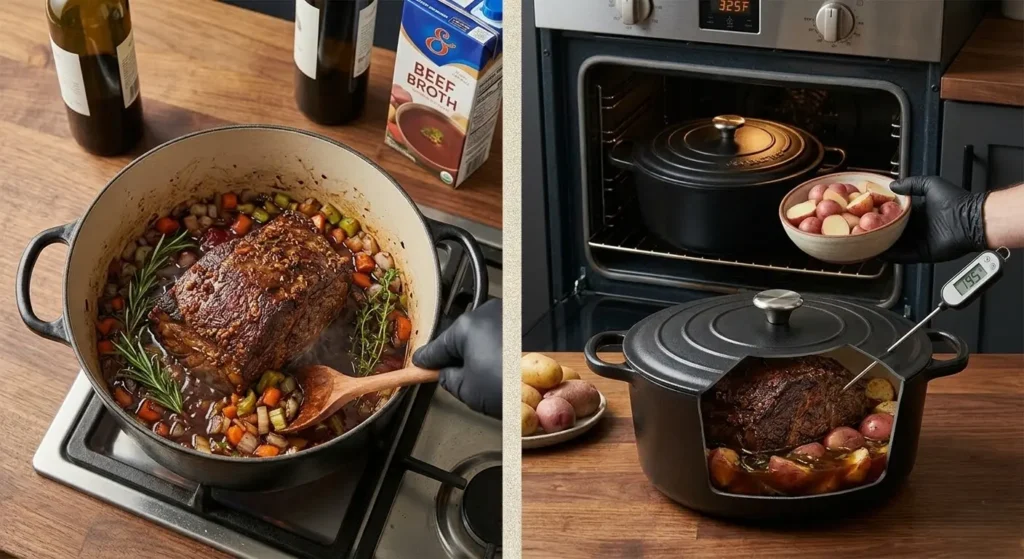
5 Rest, then make the pan gravy
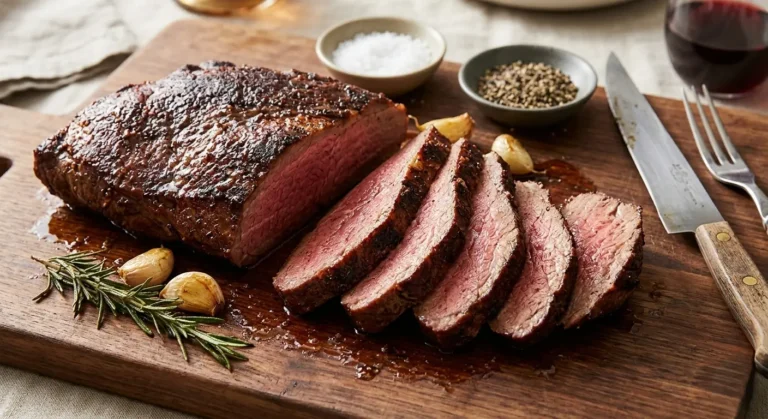
Transfer the roast to a cutting board, tent loosely with foil, and rest for 15 minutes — this allows juices to redistribute so they stay in the meat, not on the cutting board. While it rests, strain the braising liquid into a saucepan. Bring to a boil and simmer for 8–10 minutes to reduce by a third, concentrating the flavor. For a thicker gravy, whisk together 2 tbsp cornstarch with 3 tbsp cold water and stir into the simmering liquid. Adjust salt and pepper to taste.
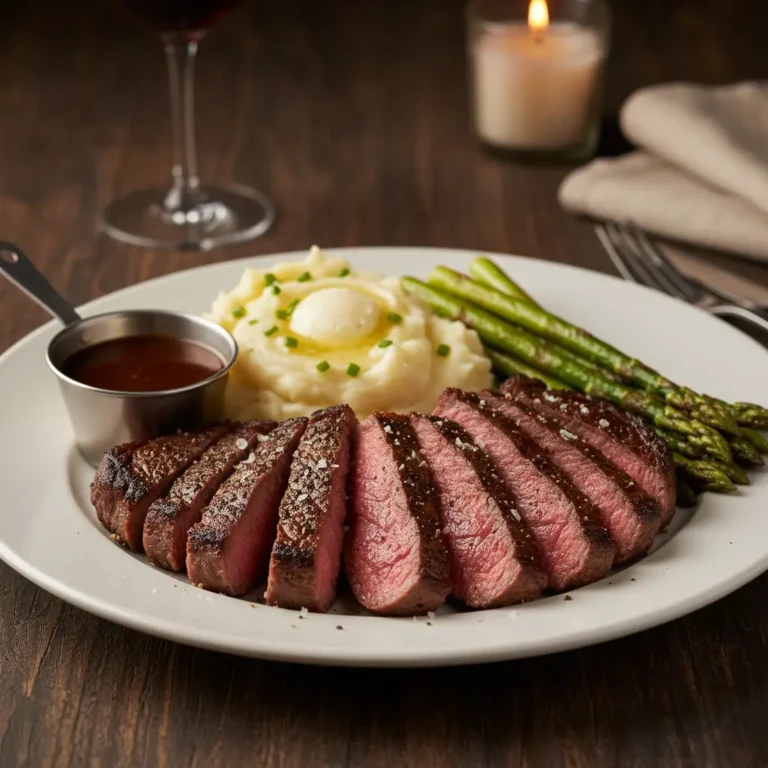
Slicing insight: Always slice against the grain for maximum tenderness. The grain runs lengthwise — you’ll see parallel muscle fibers. Cut perpendicular to them in slices or simply shred with two forks for a pulled-beef style.
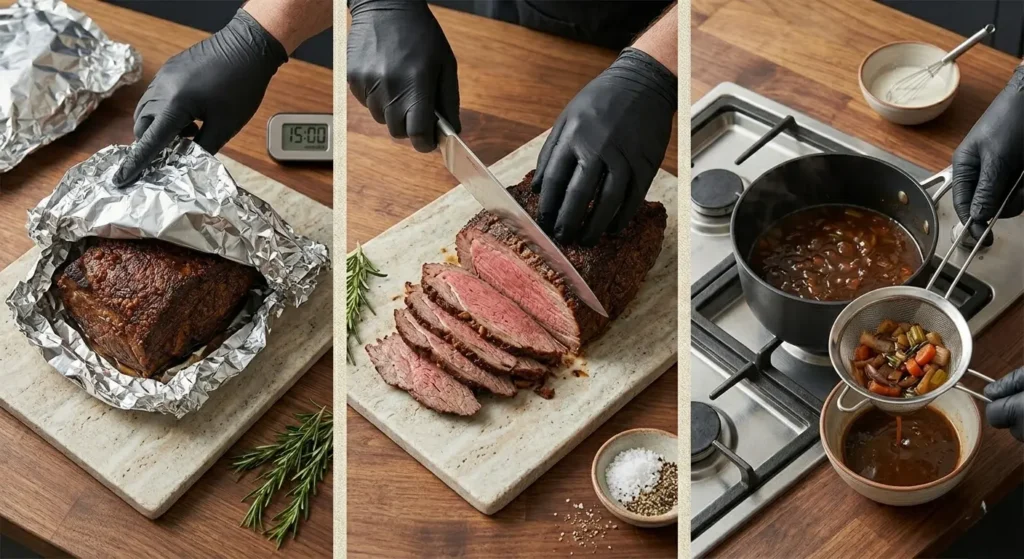
Nutritional Information
Per serving (approx. 5 oz cooked beef + vegetables, without potatoes). Values are estimates and vary based on exact ingredients and serving size.
| Nutrient | Per serving | % Daily value |
|---|---|---|
| Calories | 310 kcal | — |
| Protein | 38 g | 76% |
| Total fat | 12 g | 15% |
| Saturated fat | 4 g | 20% |
| Carbohydrates | 9 g | 3% |
| Sodium | 480 mg | 21% |
| Iron | 3.8 mg | 21% |
| Zinc | 7.4 mg | 67% |
* Percent daily values based on a 2,000-calorie diet. Rump roast is an excellent source of complete protein, zinc, B12, and iron — making it one of the most nutrient-dense cuts of beef for the price.