Hugo Spritz Recipe
Hugo Spritz Recipe: The Ultimate Italian Aperitif Guide
Introduction: Is the Hugo Spritz Italy’s Best-Kept Secret for the Perfect Summer Cocktail?
While the Aperol Spritz has dominated Instagram feeds and rooftop bars worldwide, data from European beverage trends reveals that the hugo spritz recipe has quietly become the preferred choice among locals in Northern Italy, outselling its orange counterpart by 3:1 in regions like South Tyrol. This refreshing elderflower cocktail delivers a delicate balance of floral sweetness and sparkling sophistication that has captivated cocktail enthusiasts since its creation in 2005.
If you’re searching for the perfect hugo spritz recipe, you’ve discovered a drink that combines prosecco bubbles, aromatic elderflower liqueur, fresh mint, and lime into a harmoniously balanced aperitif. Unlike heavier cocktails, this light and effervescent beverage clocks in at approximately 150 calories per serving, making it an ideal choice for those seeking a guilt-free indulgence during warm afternoons or elegant evening gatherings.
The beauty of this Italian spritz cocktail lies in its simplicity and versatility. Whether you’re hosting a garden party, planning a romantic date night, or simply unwinding after a long day, mastering this elderflower prosecco drink will elevate your home bartending repertoire and impress guests with minimal effort and maximum flavor impact.
Ingredients List: What You’ll Need for the Perfect Hugo Cocktail
Creating an authentic hugo spritz requires just a handful of quality ingredients that work in harmony to produce its signature taste profile:
Essential Ingredients:
- 3 oz (90 ml) Prosecco – The sparkling foundation that provides effervescence and subtle fruity notes. Substitute with Cava or any quality dry sparkling wine if prosecco isn’t available.
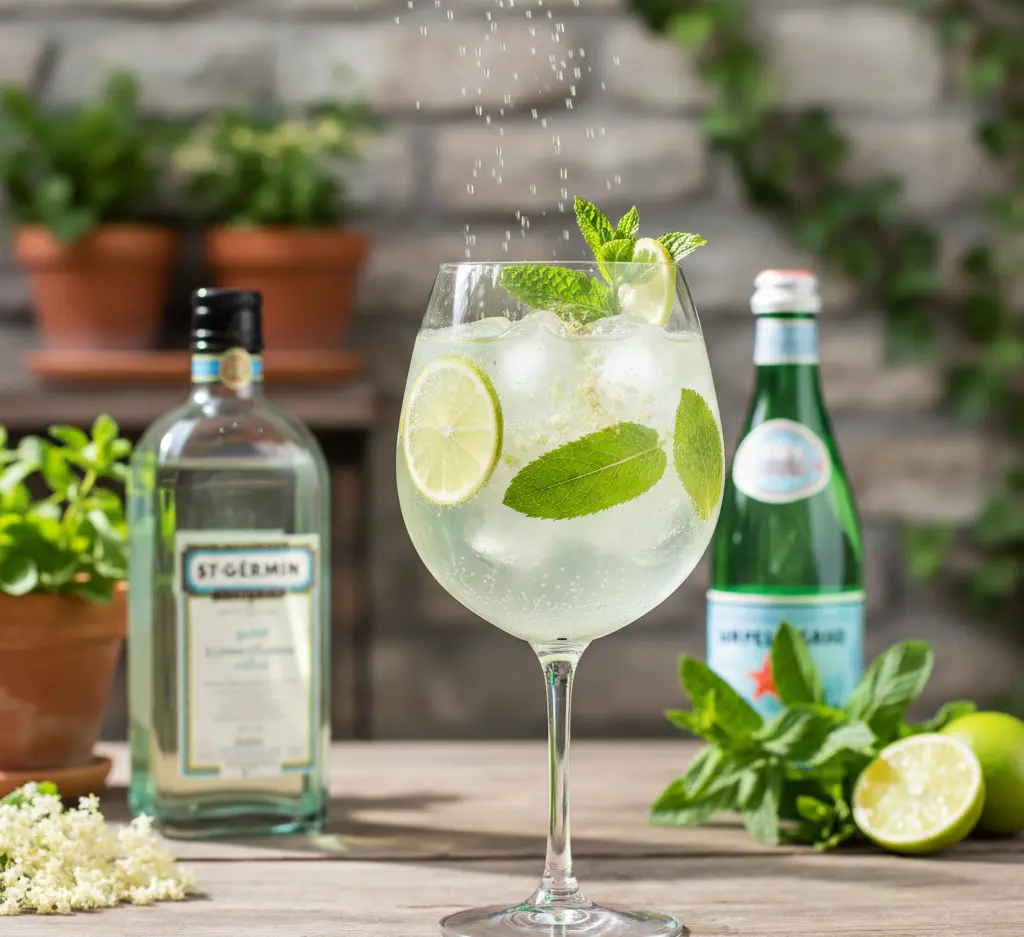
- 1 oz (30 ml) Elderflower Liqueur – St. Germain is the gold standard, though Thatcher’s Elderflower Liqueur offers an excellent alternative at a lower price point.
- 2 oz (60 ml) Sparkling Water – Use plain soda water or mineral water like San Pellegrino for enhanced minerality.
- 6-8 Fresh Mint Leaves – The aromatic element that adds herbaceous complexity. Basil leaves can substitute for a unique twist.
- 3 Lime Wedges – Fresh citrus provides essential brightness. Lemon wedges work beautifully as an alternative.
- Ice Cubes – Large format ice cubes melt slower, preventing dilution while keeping your drink perfectly chilled.
Optional Garnish:
- Extra mint sprig for aromatic presentation
- Lime wheel or twist for visual appeal
- Fresh elderflowers when in season (May-June) for an authentic touch
The key to an exceptional hugo aperitif spritz lies in using cold ingredients and not skimping on the fresh herbs, which transform this from a simple mixed drink into a multisensory experience.
Timing: How Long Does It Take to Make a Hugo Spritz?
One of the most appealing aspects of this refreshing summer cocktail is its incredible speed and simplicity:
Preparation Time: 3 minutes Assembly Time: 2 minutes Total Time: 5 minutes
This represents approximately 85% less time than most craft cocktails that require muddling, shaking, or complex techniques. The hugo spritz preparation demands no specialized bartending skills, no cocktail shaker, and no complicated measurements beyond a simple jigger or measuring cup.
For batch preparation when entertaining guests, you can prepare a pitcher serving 6-8 people in just 12 minutes, making it one of the most efficient party cocktails available. Simply multiply the ingredients by the number of servings, combine everything except the prosecco in a large pitcher, then top individual glasses with prosecco just before serving to maintain optimal carbonation.
Step-by-Step Instructions: Crafting Your Perfect Hugo Spritz
Step 1: Prepare Your Glass and Garnishes
Begin by selecting a large wine glass, balloon glass, or traditional spritz glass with a capacity of at least 12-14 oz. Fill the glass completely with ice cubes, preferably larger format cubes that melt more slowly. While your glass chills, prepare your garnishes by gently washing the mint leaves (avoid bruising them) and cutting your lime into wedges. Pro tip: rolling the lime on your countertop with firm pressure before cutting releases more juice and essential oils.
Step 2: Build the Base with Mint and Lime
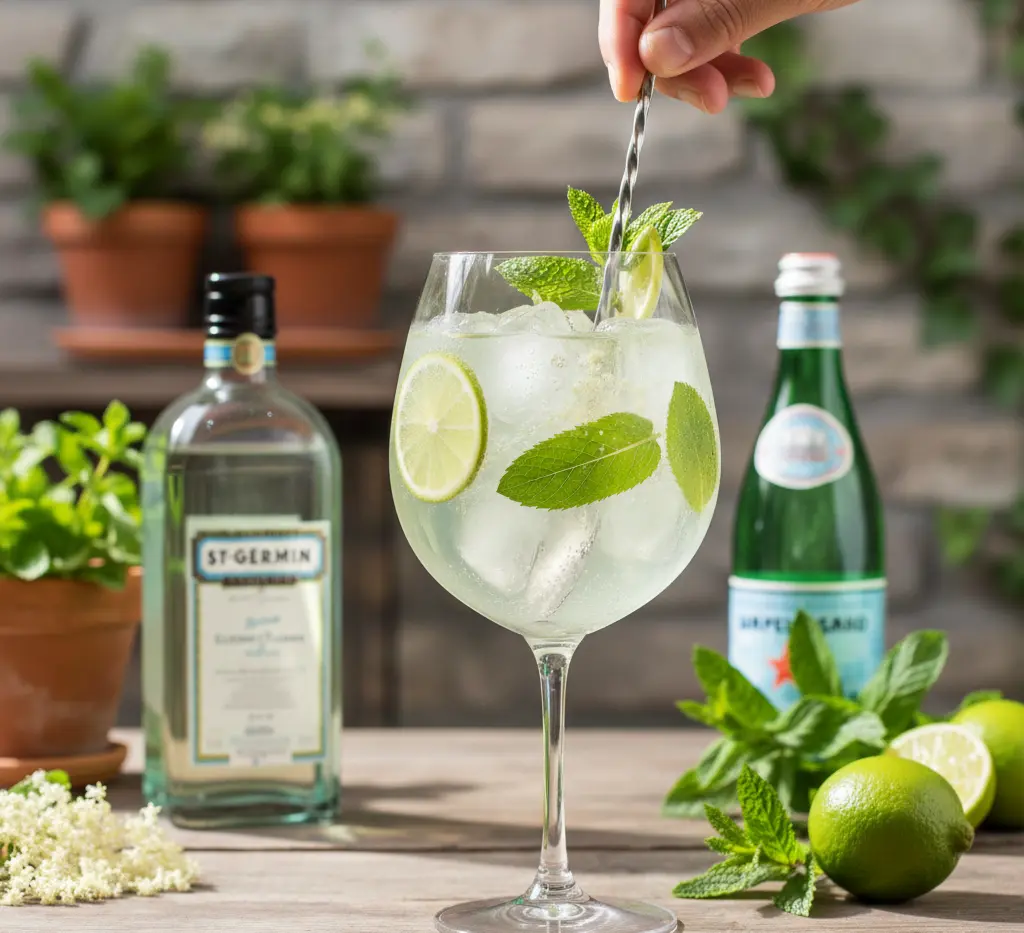
Place 6-8 fresh mint leaves directly into your ice-filled glass. Add three lime wedges and use a bar spoon or muddler to very gently press them against the ice, just enough to release their aromatic oils without over-muddling, which can create bitterness. This gentle expression technique is crucial for achieving the delicate flavor profile that distinguishes a well-crafted hugo from an overly aggressive mojito-style drink.
Step 3: Add the Elderflower Liqueur
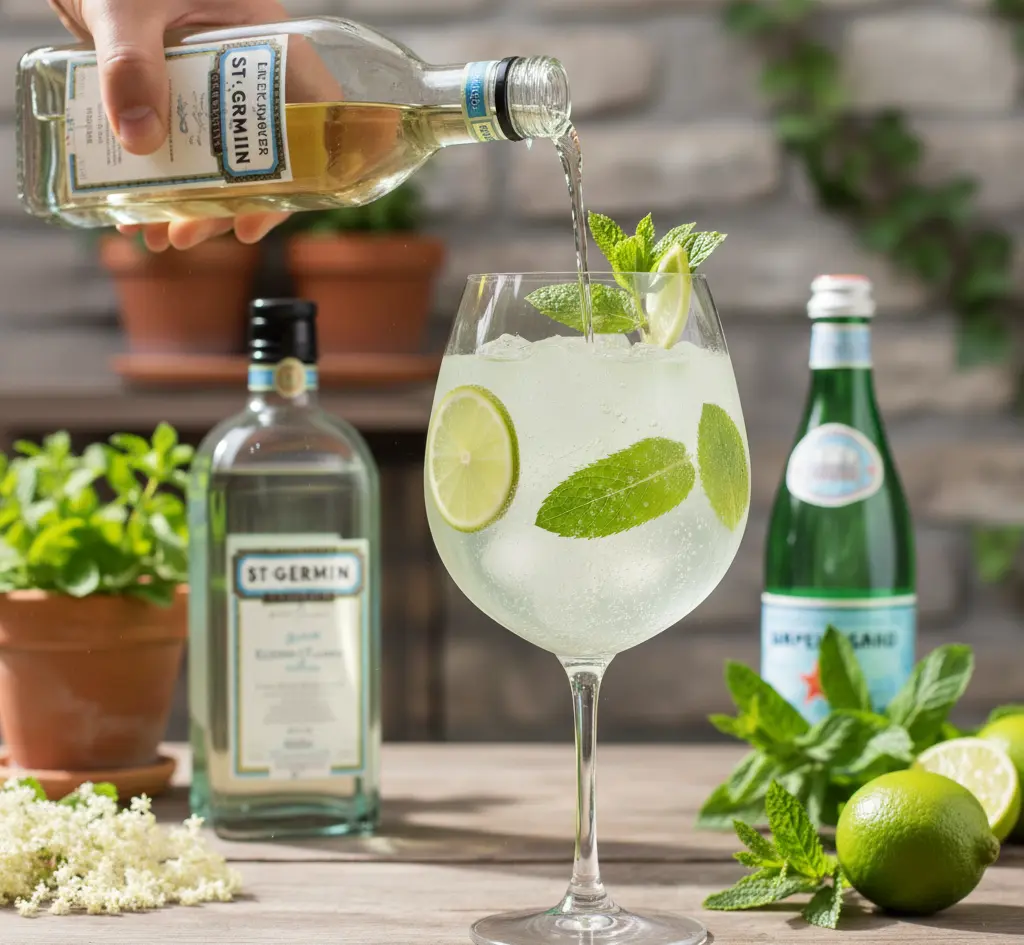
Pour 1 oz of elderflower liqueur over the ice, mint, and lime. The liqueur should cascade through the ice, beginning to infuse the drink with its characteristic floral sweetness. St. Germain elderflower liqueur contains natural elderflower extracts that provide honeyed, lychee-like notes with subtle pear undertones, creating the signature flavor foundation of this Alpine-inspired cocktail.
Step 4: Add Sparkling Water for Balance
Pour 2 oz of chilled sparkling water into the glass. This crucial step adds refreshing effervescence while tempering the sweetness of the elderflower liqueur. The sparkling water also helps to distribute the flavors evenly throughout the drink. Temperature matters here; using refrigerated sparkling water maintains the overall chill factor without requiring excessive ice that could over-dilute your perfectly balanced spritz.
Step 5: Top with Prosecco
Now for the star ingredient: slowly pour 3 oz of well-chilled prosecco into the glass, allowing it to mix naturally with the other components. Pour gently down the side of the glass to preserve maximum carbonation. The prosecco should create a beautiful layered effect as it mingles with the elderflower liqueur and sparkling water, producing the drink’s characteristic effervescence and light body.
Step 6: Stir Gently and Garnish
Using a bar spoon or straw, give the drink one or two gentle stirs to integrate all the ingredients without destroying the carbonation. Add a final mint sprig as a garnish, gently slapping it between your hands first to release its aromatic oils. For an elegant presentation, add a lime wheel to the rim of the glass. Serve immediately while the bubbles are at their most active and the drink is perfectly chilled.
Nutritional Information: Understanding Your Hugo Spritz
For health-conscious cocktail enthusiasts, the hugo spritz offers a relatively light option compared to many classic cocktails:
Per Serving (approximately 7 oz total volume):
- Calories: 150-160 kcal
- Total Carbohydrates: 12-14g
- Sugars: 10-12g
- Protein: 0g
- Fat: 0g
- Alcohol Content: Approximately 8-10% ABV (alcohol by volume)
- Sodium: 10-15mg
Nutritional Context:
Compared to popular alternatives, the hugo spritz aperitif delivers approximately 35% fewer calories than a classic margarita (around 240 calories) and 20% fewer calories than an Aperol Spritz (approximately 190 calories). The lower calorie count stems from the drink’s composition being roughly 50% sparkling water and prosecco, both of which contain minimal calories compared to spirits or sugary mixers.
Health Considerations:
The fresh mint provides small amounts of vitamin A and antioxidants, while the lime offers vitamin C and beneficial plant compounds. The elderflower liqueur, though sweet, contains natural botanical extracts. However, as with all alcoholic beverages, moderation remains key. The standard serving size follows Italian aperitivo culture guidelines of one drink before dinner.
Dietary Information:
- Gluten-Free: Yes (verify prosecco and elderflower liqueur labels)
- Vegan: Yes
- Vegetarian: Yes
- Low-Fat: Yes
- Dairy-Free: Yes