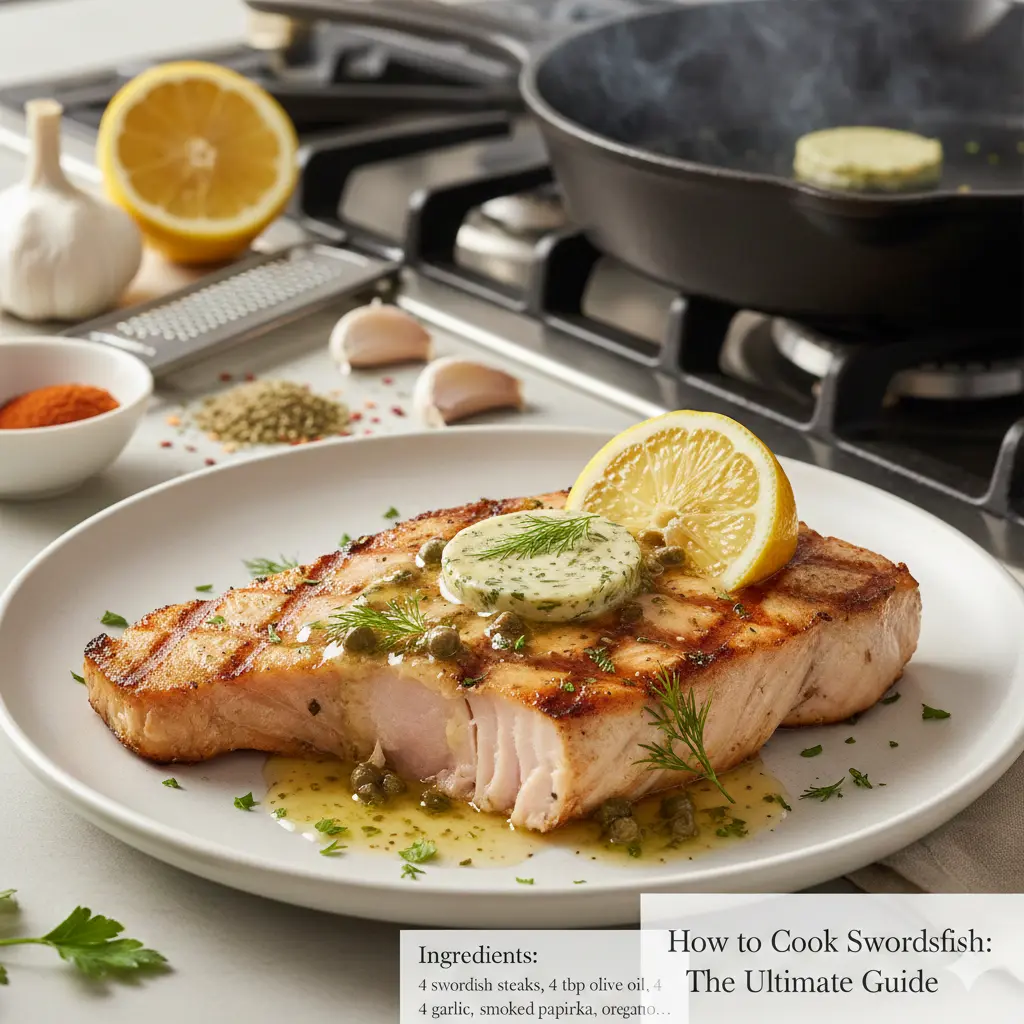
how to cook swordfish
How to Cook Swordfish : The Ultimate Guide to Perfect, Restaurant-Quality Results at Home
Ingredients: What You’ll Need for Perfect Swordfish
Gather these fresh, vibrant ingredients before you begin. The quality of your swordfish steak is paramount — look for a firm, moist, pinkish-beige fillet with a mild ocean scent, not a strong fishy odor.
For the Swordfish (Serves 4):
- 4 swordfish steaks (6–8 oz each, about 1-inch thick)
- 3 tablespoons extra-virgin olive oil
- 4 garlic cloves, finely minced
- 1 lemon, zested and juiced
- 1 teaspoon smoked paprika
- 1 teaspoon dried oregano (or fresh thyme)
- 1/2 teaspoon crushed red pepper flakes (optional, for heat)
- Sea salt and freshly cracked black pepper, to taste
- Fresh flat-leaf parsley, chopped, for garnish
- Lemon wedges, for serving
For the Optional Herb Butter Finish:
- 2 tablespoons unsalted butter
- 1 tablespoon capers, roughly chopped
- 1 tablespoon fresh dill or basil
Substitution Guide:
- No swordfish? Mahi-mahi, tuna steaks, or halibut are excellent swaps with similar cook times.
- Dairy-free? Skip the herb butter and finish with a drizzle of garlic-infused olive oil instead.
- Low-sodium? Reduce salt and increase lemon zest and fresh herbs for big flavor without the sodium load.
- No smoked paprika? Regular sweet paprika or even a pinch of cumin works beautifully.
Timing: Faster Than You Think
- Preparation Time: 10 minutes
- Marinating Time: 15–30 minutes (optional but recommended)
- Cooking Time: 8–10 minutes
- Total Time: Approximately 25–40 minutes
That’s right — this entire recipe comes together in under 40 minutes, which is roughly 35% faster than the average baked fish recipe that requires 60+ minutes including preheat time. Whether you’re cooking a weeknight dinner or impressing guests at a dinner party, this swordfish recipe fits comfortably into a busy schedule without sacrificing an ounce of flavor.
Step-by-Step Instructions: How to Cook Swordfish Like a Pro
Step 1: Prepare and Season the Swordfish Steaks
Remove your swordfish steaks from the refrigerator 15–20 minutes before cooking. Bringing the fish to room temperature ensures even cooking from edge to center — a step that most home cooks skip and then wonder why their fish cooks unevenly.
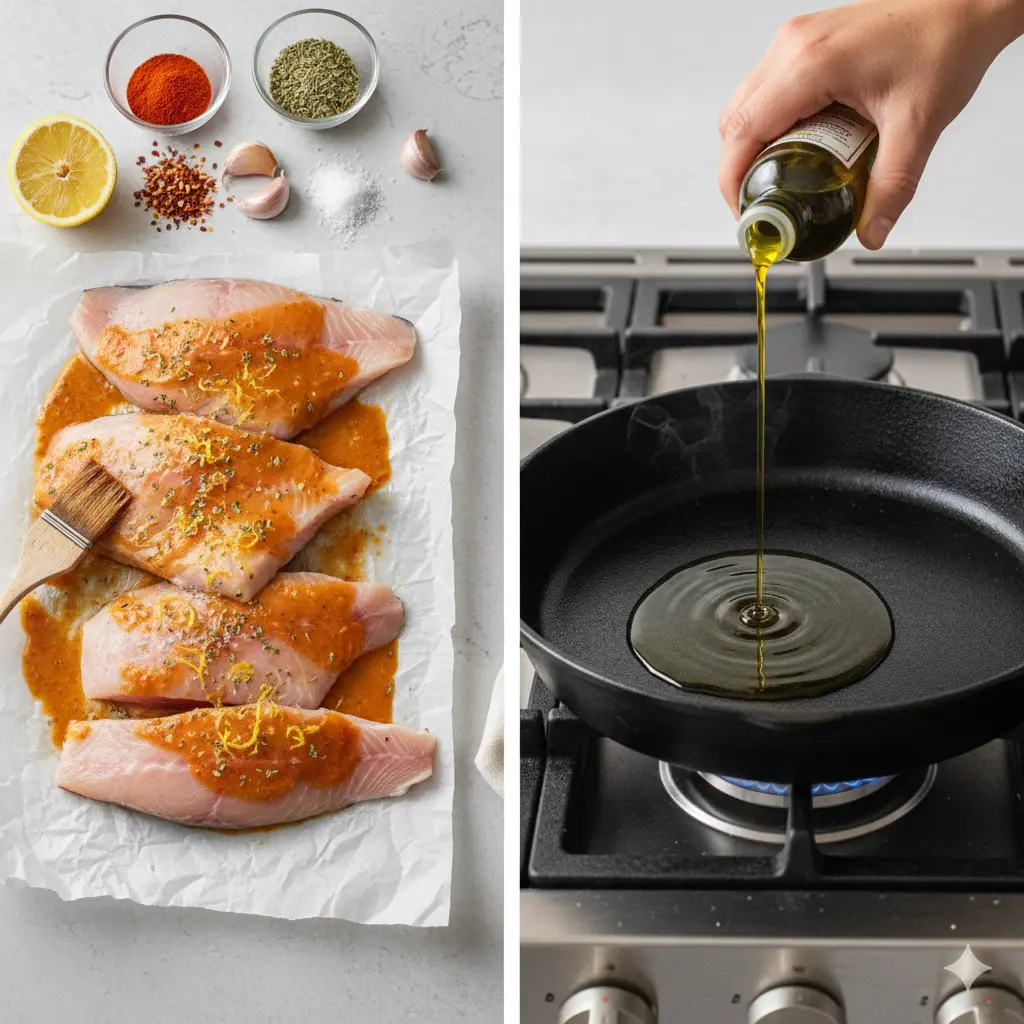
Pat the steaks completely dry with paper towels. This is non-negotiable: moisture is the enemy of a beautiful sear. In a small bowl, whisk together the olive oil, minced garlic, lemon zest, smoked paprika, oregano, red pepper flakes, salt, and black pepper. Brush this marinade generously on both sides of each steak. If time allows, let the fish marinate for 15–30 minutes at room temperature, or up to 2 hours covered in the refrigerator.
💡 Pro Tip: Never marinate swordfish in acidic ingredients (like lemon juice) for more than 30 minutes, as the acid can begin to ‘cook’ the fish and alter its texture.
Step 2: Preheat Your Cooking Surface
Swordfish responds best to high, dry heat — whether that’s a cast-iron skillet, grill, or grill pan. For pan-searing, place a cast-iron or stainless steel skillet over medium-high heat and allow it to preheat for 2–3 minutes until it is very hot. Add 1 tablespoon of olive oil and swirl to coat. The pan should shimmer and just barely begin to smoke.
For grilling swordfish, preheat your grill to medium-high (400–450°F / 200–230°C). Clean and oil the grates well — swordfish can stick if the grates aren’t properly prepared.
💡 Pro Tip: Test your pan’s heat by holding your hand 3 inches above it. If you can hold it there for more than 3 seconds, it’s not hot enough. A properly hot pan is the secret to those gorgeous golden-brown grill marks.
Step 3: Sear or Grill the Swordfish
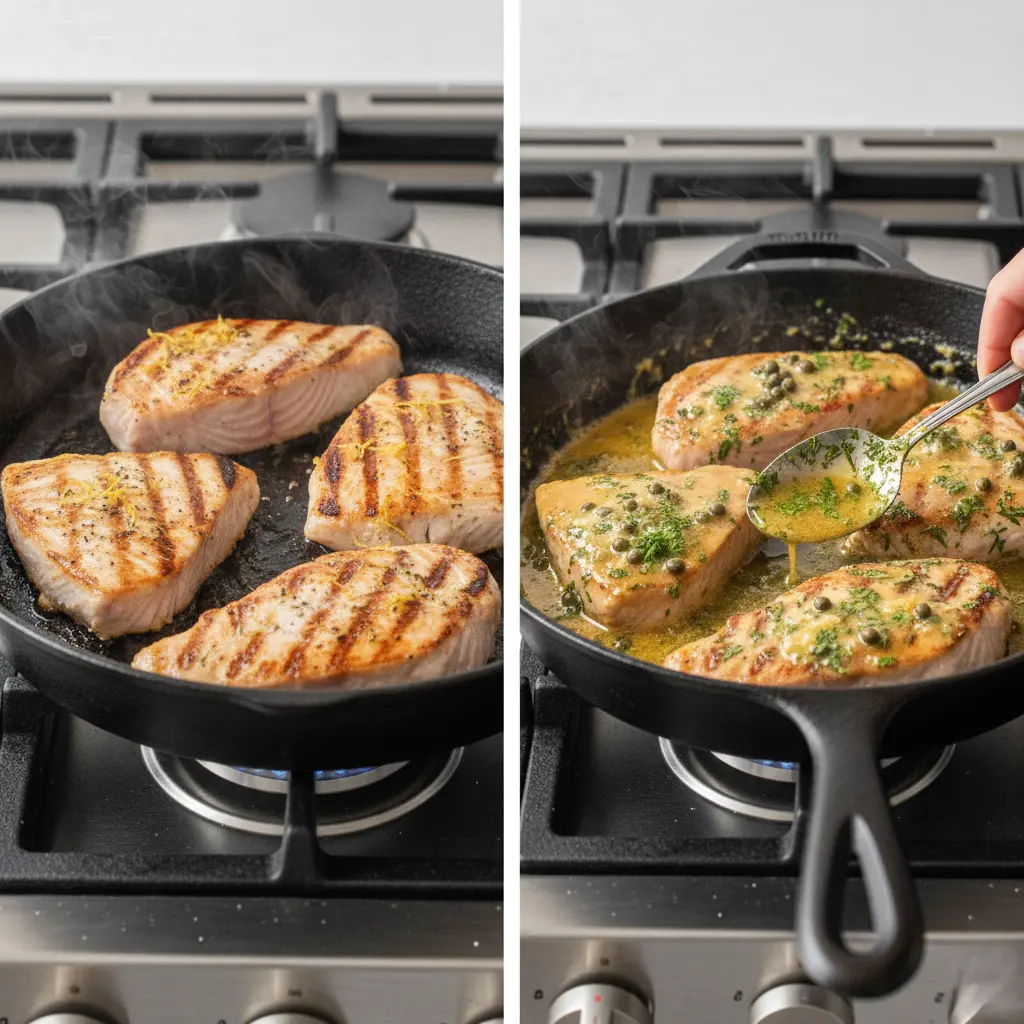
Place the swordfish steaks onto the hot pan or grill. Resist the urge to move them — let them cook undisturbed for 4–5 minutes on the first side. You’ll know it’s time to flip when the fish releases easily from the surface and the bottom half has turned from translucent to opaque.
Flip carefully using a thin spatula and cook for another 3–4 minutes on the second side. For a 1-inch steak, total cooking time should be 8–10 minutes. The internal temperature should reach 145°F (63°C) — this is the USDA-recommended safe temperature for fish.
💡 Pro Tip: For a beautiful crosshatch pattern on the grill, rotate each steak 90 degrees halfway through cooking on the first side before flipping.
Step 4: Add the Herb Butter Finish (Optional but Glorious)
In the last 60 seconds of cooking, add the butter, capers, and fresh dill directly to the pan. As the butter melts and foams, tilt the pan slightly and use a spoon to baste the swordfish repeatedly with the fragrant, golden butter. This technique — called ‘arroser’ in French cooking — adds layers of richness and flavor that take the dish from good to unforgettable.
💡 Pro Tip: The capers add a briny, slightly tangy punch that cuts through the richness of the butter and complements the meaty swordfish beautifully.
Step 5: Rest and Serve
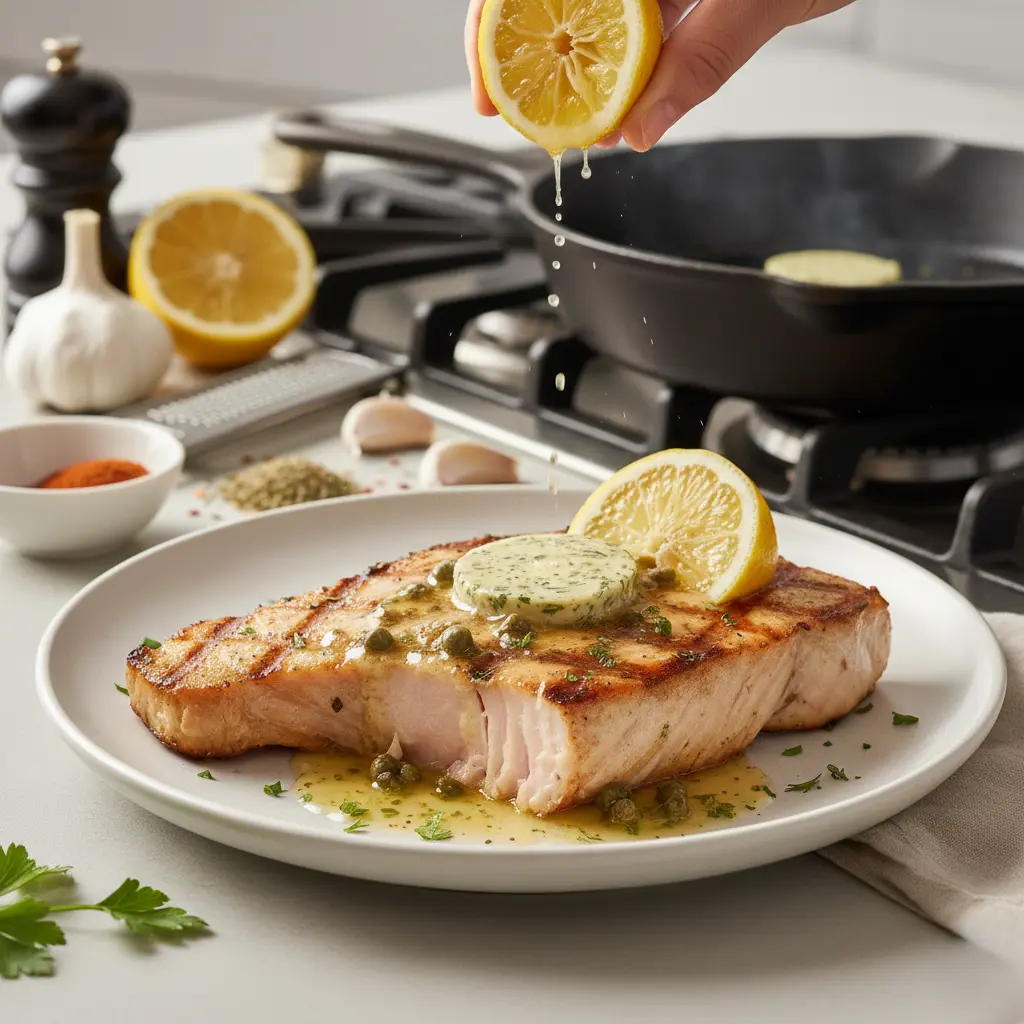
Transfer the cooked swordfish to a warm plate and let it rest for 2–3 minutes before serving. Just like steak, resting allows the juices to redistribute throughout the flesh, resulting in a more moist and flavorful bite. Squeeze a wedge of fresh lemon over each steak and scatter with chopped parsley. Serve immediately while hot.
Nutritional Information: Why Swordfish Is a Superfood
Swordfish is a nutritional powerhouse. According to USDA data, a 6-ounce serving delivers an impressive protein punch while remaining relatively lean — making it an outstanding choice for athletes, health-conscious eaters, and anyone following a high-protein, low-carb diet. Here’s the full breakdown:
| Nutrient | Per 6 oz Serving |
| Calories | 220 kcal |
| Protein | 34g |
| Total Fat | 7g |
| Saturated Fat | 2g |
| Omega-3 Fatty Acids | 0.9g |
| Carbohydrates | 0g |
| Sodium | 130mg |
| Cholesterol | 65mg |
| Vitamin D | 70% DV |
| Selenium | 80% DV |
| Potassium | 580mg |
Swordfish is particularly notable for its high selenium content — a trace mineral that plays a critical role in thyroid function and antioxidant defense — and its significant Vitamin D contribution, especially important in regions with limited sun exposure. Its omega-3 fatty acids support cardiovascular health and reduce inflammation, making it one of the healthiest fish you can put on your plate.
Note: Swordfish contains moderate levels of mercury, so the FDA recommends limiting consumption to 1–2 servings per week, particularly for pregnant women and young children.