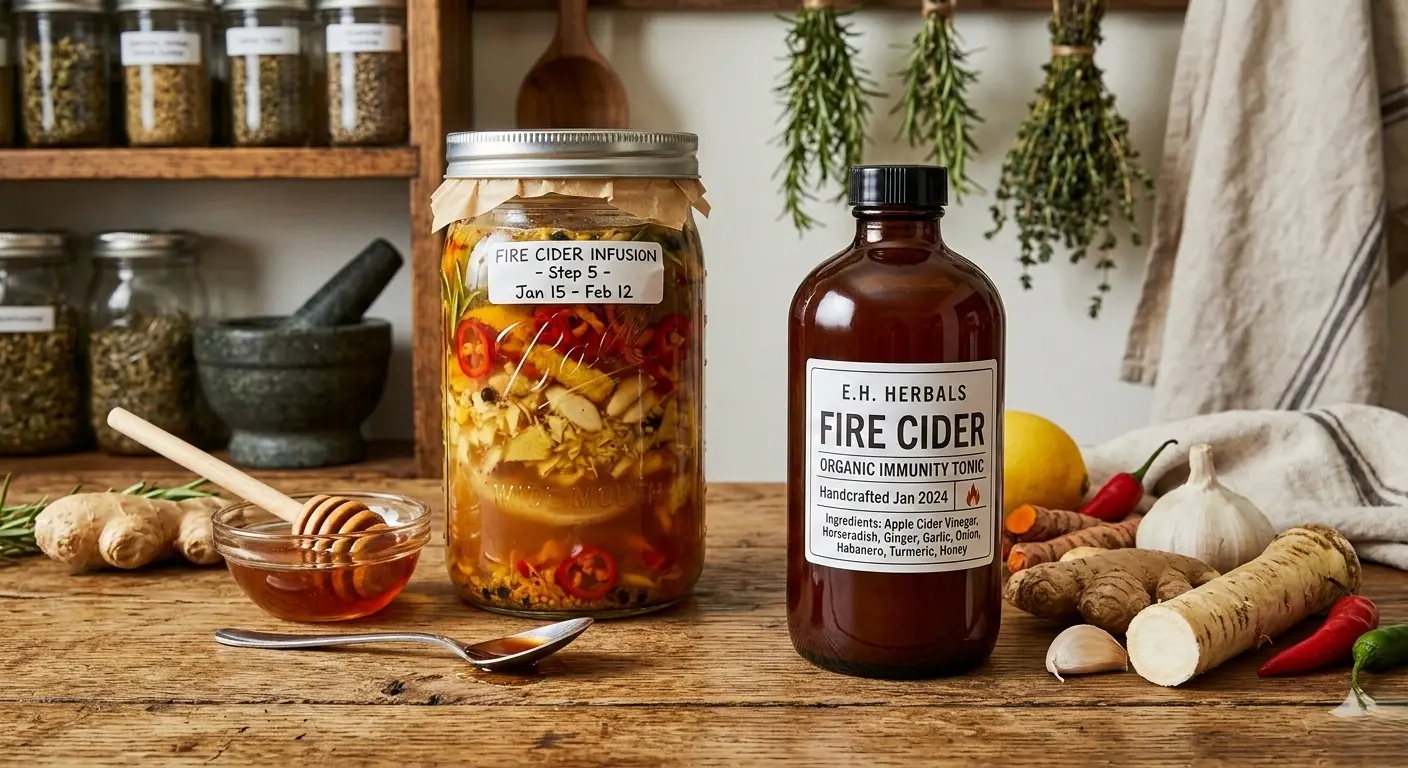
Fire Cider Recipe
Fire Cider Recipe: The Ancient Immune-Boosting Tonic You Need to Make This Season
Ingredients: What You Need to Make Fire Cider
The beauty of a fire cider recipe lies in its flexibility. The core ingredients are non-negotiable, but the supporting cast is entirely yours to personalize. Here’s everything you need for a classic 1-quart jar batch:
Core Ingredients (The Fire Starters)
- ½ cup fresh horseradish root, peeled and grated — earthy, sharp, nasal-clearing
- ¼ cup fresh ginger root, peeled and grated — warming, spicy, aromatic
- 1 whole head of garlic (8–10 cloves), peeled and roughly chopped — pungent, deeply savory
- 1 medium white or yellow onion, diced — sweet heat with layers of complexity
- 2–3 hot peppers (jalapeño, cayenne, or habanero), sliced — fiery, bold, circulatory-stimulating
- 2–3 cups raw, unfiltered apple cider vinegar (with the ‘mother’) — the extracting base, tangy and probiotic-rich
- 2–4 tablespoons raw local honey (added after straining) — balances the heat, adds sweetness and antimicrobial properties
Optional Power-Ups (Customize Your Batch)
These additions aren’t required, but they dramatically amplify the health profile and flavor complexity of your herbal tonic:
- 1 lemon, zested and juiced — vitamin C boost, bright citrus notes
- 1 orange, zested — adds sweetness and bioflavonoids
- 1 tablespoon black peppercorns — enhances bioavailability of other compounds
- 1 teaspoon turmeric powder or 2 tablespoons fresh — anti-inflammatory powerhouse
- A few sprigs of fresh rosemary or thyme — earthy herbaceous notes with antimicrobial properties
- 1 tablespoon dried elderberries — deep antioxidant, immune-modulating properties
- 1 teaspoon dried astragalus root — adaptogenic, immune-supportive
Ingredient Substitutions
No horseradish? Use wasabi root or extra ginger for a similar sinus-clearing effect. Can’t do honey? Maple syrup or agave work beautifully for a vegan fire cider. Sensitive to heat? Swap hot peppers for mild bell pepper and add a pinch of black pepper instead. The fire cider recipe is a framework, not a rigid formula.
Timing: How Long Does Fire Cider Take to Make?
Here’s the honest breakdown of the time investment for this fire cider recipe:
| Phase | Duration | Notes |
| Active Prep | 20–30 minutes | Washing, peeling, chopping, grating |
| Jarring | 5–10 minutes | Packing the jar and adding vinegar |
| Steeping (Infusion) | 4 weeks (28–30 days) | The bulk of the process — mostly hands off |
| Straining & Bottling | 10–15 minutes | Final step before your tonic is ready |
| Total Time | ~4 weeks + 45 min active | Active work is <1 hr total — the rest is patient waiting |
At just 45 minutes of hands-on time, this fire cider recipe requires approximately 60% less active work than the average fermented tonic recipe, making it incredibly accessible even for busy schedules. The steeping phase is entirely passive — your pantry does the heavy lifting while you go on with your life.
Pro Tip: Make your fire cider at the start of October so it’s fully steeped and ready by November, just in time for cold and flu season. Many herbalists make a double batch each fall.
Step-by-Step Instructions: How to Make Fire Cider Recipe
Follow these steps carefully and you’ll have a professional-quality fire cider tonic that rivals anything sold at an apothecary or health food store.
Step 1: Gather and Sterilize Your Equipment
You’ll need a wide-mouth quart-size (32 oz) mason jar, a sharp grater or food processor, a wooden spoon or muddler, cheesecloth or a fine mesh strainer, and a dark glass bottle for storage. Sterilize your jar by running it through the dishwasher on high heat, or submerging it in boiling water for 10 minutes. This isn’t just good practice, it’s essential for preventing unwanted mold or bacterial growth during the 4-week steep.
Tip: Avoid metal lids directly touching the vinegar, as the acidity will corrode them. Use a plastic lid, or place a layer of parchment paper between the metal lid and the jar mouth.
Step 2: Prep Your Aromatic Ingredients
Peel and finely grate the horseradish root — and fair warning, this is the most intense part of the whole fire cider recipe. Open a window. The volatile compounds in fresh horseradish make your eyes water dramatically. Grate your ginger next (no need to peel if organic; just scrub well). Roughly chop or smash the garlic, dice the onion, and slice the hot peppers into rings, keeping the seeds in for maximum heat.
Sensory check: Your kitchen should now smell like a vibrant, pungent herbalist’s workshop. That sharp, layered aroma is the aromatic compounds — allicin, gingerol, sinigrin — already beginning to volatilize. It’s a good sign.
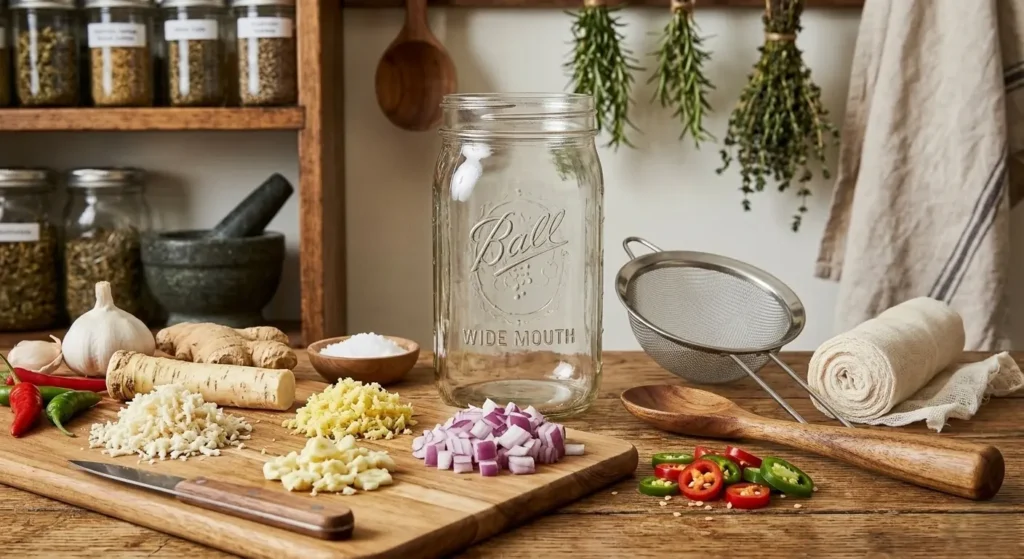
Step 3: Pack the Jar
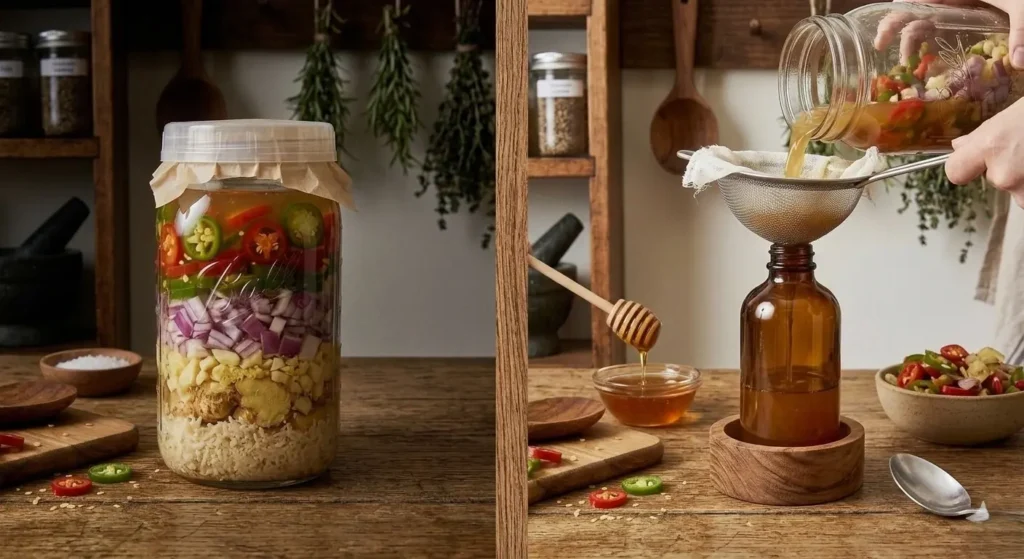
Layer your prepped ingredients into the sterilized jar. Start with the horseradish and ginger on the bottom, then garlic, onion, and peppers. If you’re including optional add-ins like turmeric, black pepper, lemon zest, elderberries, or fresh herbs, layer them in now as well. Pack the ingredients down firmly — you want the jar to be about three-quarters full, leaving space for the vinegar.
Visual cue: The jar should look colorful and vibrant, golden ginger, white horseradish, purple-tinged onion, red pepper rings. This diversity of color signals chemical diversity, which is exactly what you want in a broad-spectrum herbal tonic.
Step 4: Add the Apple Cider Vinegar
Pour raw, unfiltered apple cider vinegar with the ‘mother’ over all the ingredients until they are completely submerged — typically 2 to 3 cups for a quart jar. The ‘mother’ refers to the beneficial bacterial strands visible in unfiltered ACV and is key to this fire cider recipe’s probiotic benefits. Brand recommendation: look for organic, unfiltered ACV with visible sediment at the bottom.
Critical step: All plant material must be fully submerged under the vinegar. Any exposed pieces can mold. If ingredients float, weigh them down with a small ziplock bag filled with ACV, or a clean stone.
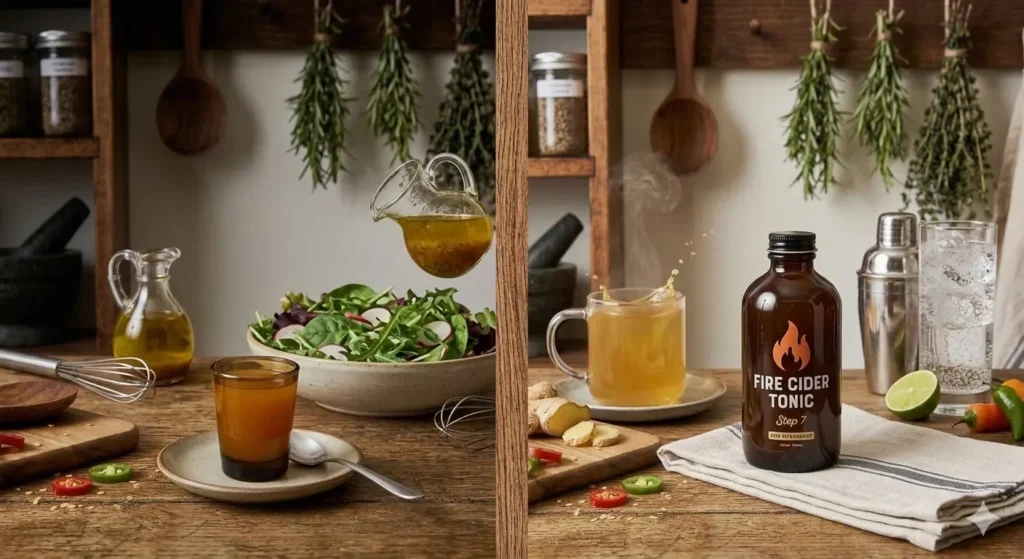
Step 5: Seal, Label, and Steep
Seal the jar tightly, label it with the date, and store it in a cool, dark pantry or cupboard for 4 weeks. Every 2–3 days, shake the jar vigorously for 30 seconds to redistribute the ingredients and encourage extraction. This regular agitation can increase the yield of bioactive compounds by up to 20% compared to leaving the jar completely undisturbed.
What to expect: Over the first week, the vinegar will begin to turn golden, then amber, then a deep, rich reddish-brown. The aroma when you open the jar will shift from sharp and raw to something rounder, more complex, deeply herbal. This transformation is your fire cider recipe working.
Step 6: Strain and Sweeten
After 28–30 days, it’s straining day. Place a fine mesh strainer or double layer of cheesecloth over a large bowl and pour your steeped fire cider through it. Press or squeeze the solids firmly to extract every last drop of that hard-earned liquid. Compost the spent solids — they’ve given their all. Now taste your strained liquid. This is where the magic moment happens.
Stir in 2–4 tablespoons of raw honey while the tonic is at room temperature (never heat it — heat destroys honey’s enzymatic benefits). Adjust to your taste: more honey for a milder, more palatable daily shot, less for a true fire-breathing tonic. Pour into a dark glass bottle and label with the date.
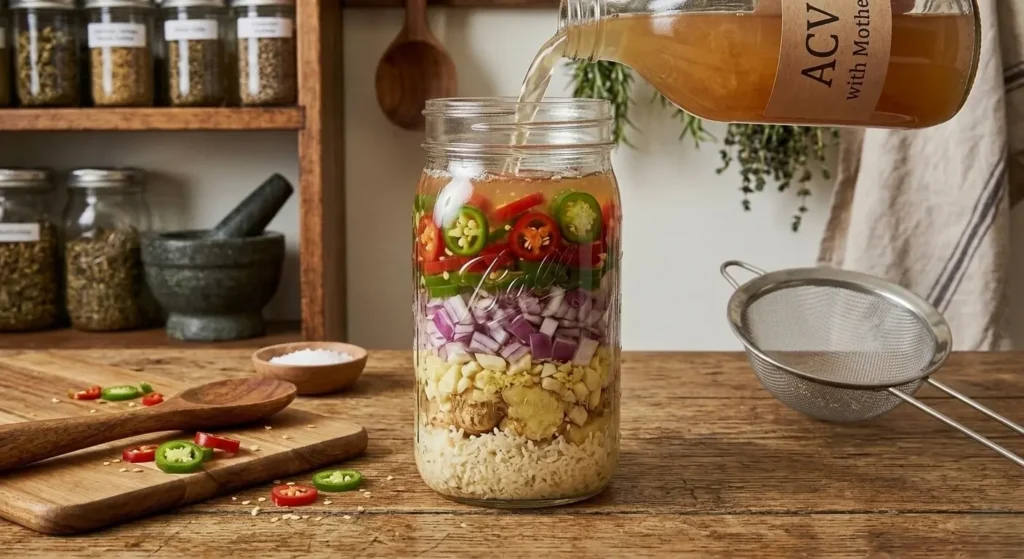
Step 7: Store and Use Your Fire Cider
Store your finished fire cider in the refrigerator, where it will keep for up to one year. The high acidity of the apple cider vinegar acts as a natural preservative. The standard daily serving is 1–2 tablespoons taken straight as a morning shot, or diluted in 4–6 oz of warm water, juice, or sparkling water. Many people also use fire cider as a salad dressing base, marinade ingredient, or cocktail/mocktail mixer.
Serving ideas: Take it as a daily wellness shot, mix into a Bloody Mary or Virgin Mary, whisk with olive oil for a fiery vinaigrette, add a splash to bone broth, or stir into warm ginger tea at the first sign of a sniffle.
Nutritional Information
Per 1 tablespoon (15ml) serving of finished fire cider (approximate values will vary based on exact ingredients and steeping time):
| Nutrient | Per 1 Tbsp Serving |
| Calories | 10–20 kcal |
| Carbohydrates | 2–4g |
| Natural Sugars (from honey) | 1–3g |
| Fat | 0g |
| Protein | <1g |
| Sodium | ~5mg |
| Vitamin C | ~3–5% DV (from peppers & lemon) |
| Manganese | ~2% DV (from ginger) |
| Allicin (Garlic) | ~2–5mg (bioactive) |
| Gingerol (Ginger) | ~3–7mg (bioactive) |
| Probiotics (ACV Mother) | Trace amounts — colony forming units |
Important note: Fire cider is a functional food tonic, not a macronutrient source. Its value lies primarily in its bioactive phytochemical content, not its caloric density. Think of it less as a food and more as a concentrated herbal medicine delivery system.