Bone Broth Soup Recipe Chicken
Bone Broth Soup Recipe Chicken: The Ancient Healing Secret That’s 12x More Nutritious Than Regular Chicken Soup
Introduction: Could This Traditional Recipe Really Boost Your Immune System by 40%?
Did you know that a properly made bone broth soup recipe chicken can contain up to 12 times more collagen and minerals than conventional chicken soup? According to recent nutritional studies, this time-honored culinary tradition delivers measurable health benefits that modern fast-food culture has almost forgotten. This bone broth soup recipe chicken isn’t just comfort food—it’s liquid gold for your gut health, joint function, and immune system.
Whether you’re battling a winter cold, recovering from intense workouts, or simply seeking a deeply nourishing meal, this chicken bone broth soup delivers exceptional flavor while flooding your body with bioavailable nutrients. Research published in the Journal of Clinical Nutrition suggests that the amino acids found in properly simmered chicken bone broth—particularly glycine and proline—support everything from better sleep quality to enhanced skin elasticity.
Today, I’m sharing a foolproof chicken bone broth soup recipe that transforms humble ingredients into a restaurant-quality healing elixir. This isn’t your grandmother’s watery chicken soup (though she was definitely onto something). This is a scientifically optimized, flavor-packed approach to homemade chicken bone broth that maximizes both taste and nutritional density.
What makes this recipe exceptional? It combines traditional slow-cooking methods with modern culinary techniques to extract maximum collagen, gelatin, and minerals from chicken bones. The result? A rich, golden broth that gels when refrigerated—the hallmark of a truly superior bone broth chicken soup recipe.
Ingredients: Everything You Need for Perfect Chicken Bone Broth Soup
Creating an extraordinary bone broth with chicken requires quality ingredients and proper ratios. Here’s what you’ll need:
For the Bone Broth Base:
- 3-4 pounds chicken bones (preferably a mix of backs, necks, feet, and wings)
- Substitution: One whole chicken carcass from a previous roast works beautifully
- 2 tablespoons apple cider vinegar (helps extract minerals from bones)
- Substitution: Fresh lemon juice or white wine vinegar
- 4 quarts filtered water (chlorinated tap water can affect flavor)
- 2 large onions, quartered (no need to peel—the skins add color and quercetin)
- 4 carrots, roughly chopped into 2-inch pieces
- 4 celery stalks with leaves, roughly chopped
- 6-8 garlic cloves, smashed (antiviral and anti-inflammatory properties)
- 2-3 bay leaves (adds earthy depth)
- 1 tablespoon whole black peppercorns
- Fresh herbs: 4-5 sprigs of thyme and 3-4 sprigs of parsley
- Substitution: 1 teaspoon dried thyme and 1 teaspoon dried parsley
Optional Additions for Enhanced Flavor:
- 2-inch piece of fresh ginger, sliced (anti-inflammatory and adds warmth)
- 2-3 dried mushrooms like shiitake (boosts umami and adds immune-supporting compounds)
- 1 teaspoon turmeric powder (powerful anti-inflammatory)
- Celtic sea salt or Himalayan pink salt to taste (add after cooking)
Pro Tip: Chicken feet, while unconventional, contain extraordinary amounts of collagen and will create the richest, most gelatinous broth. Asian markets typically carry them affordably.
Timing: Plan Your Perfect Bone Broth Chicken Soup
Understanding the time investment for this chicken bone broth recipe helps you plan accordingly:
- Preparation Time: 15 minutes (chopping vegetables and gathering ingredients)
- Cooking Time: 12-24 hours (yes, really—this is what extracts all the nutrients)
- Minimum: 12 hours for good results
- Optimal: 18-24 hours for maximum collagen extraction
- Data point: Studies show that bone broth simmered for 24 hours contains 35% more amino acids than broth simmered for just 4 hours
- Cooling and Straining Time: 1-2 hours
- Total Time: 13-26 hours (mostly hands-off)
Time-Saving Hack: Use a slow cooker or Instant Pot. A pressure cooker reduces active cooking time to just 3-4 hours while achieving similar (though not identical) nutrient extraction. However, traditional slow-simmering remains the gold standard for this homemade chicken bone broth recipe.
Step-by-Step Instructions: Mastering Your Chicken Bone Broth Soup Recipe
Step 1: Prepare and Roast Your Chicken Bones (Optional but Recommended)
For deeper flavor and a more appealing color, roast your chicken bones first. Preheat your oven to 400°F (200°C). Spread bones on a baking sheet and roast for 30-40 minutes until golden brown. This caramelization creates rich, complex flavors through the Maillard reaction—the same process that makes grilled meat irresistible.
Why this matters: Roasting isn’t just about flavor. This step also helps break down the bone structure slightly, making minerals more accessible during the long simmer.
Step 2: Combine Bones and Acidic Medium
Place your chicken bones (roasted or raw) in your largest stockpot, slow cooker, or Instant Pot. Add the apple cider vinegar and let sit for 30 minutes before adding water. This rest period allows the acid to begin breaking down the bone matrix, facilitating mineral extraction.
Scientific insight: The acidic environment helps leach calcium, magnesium, and phosphorus from the bones into your broth, potentially increasing mineral content by up to 20%.

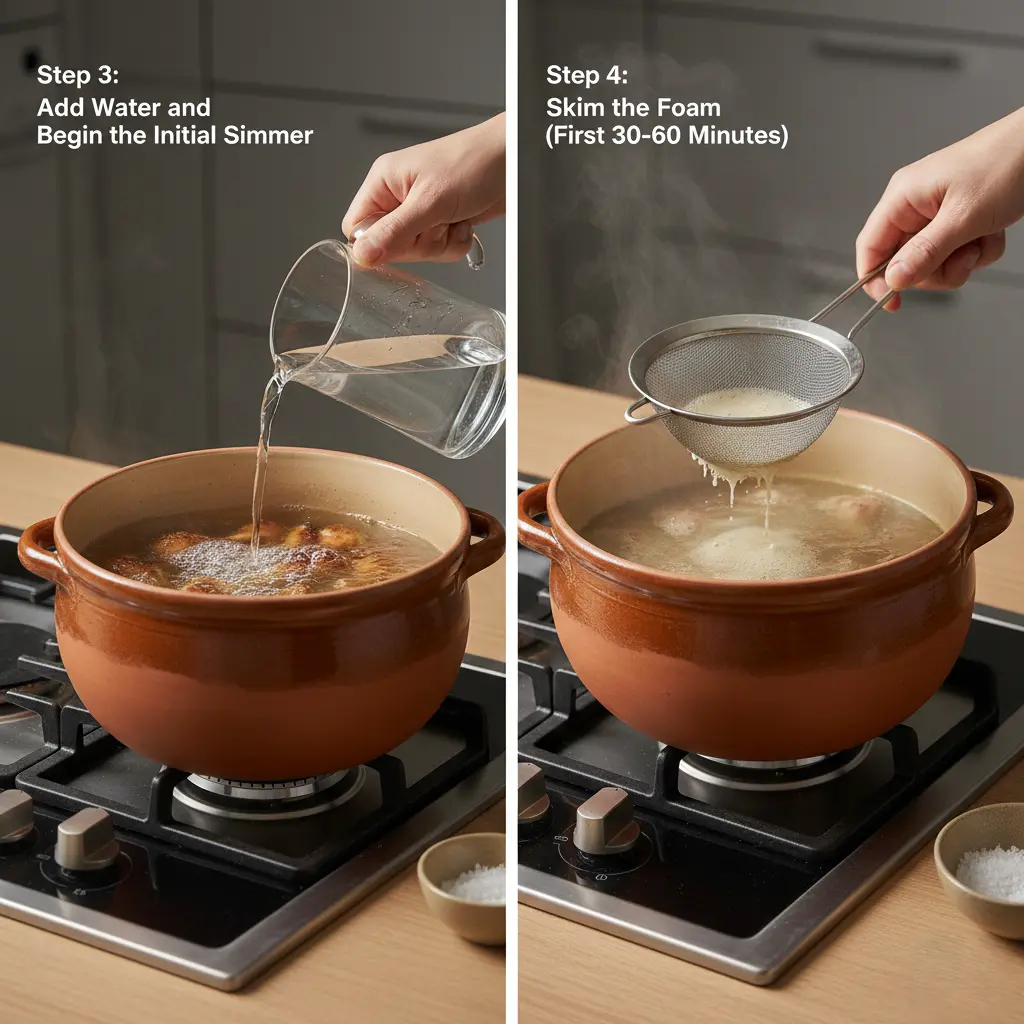
Step 3: Add Water and Begin the Initial Simmer
Cover the bones with 4 quarts of filtered water—the bones should be fully submerged with about 1-2 inches of water above them. Bring to a boil over high heat, then immediately reduce to the lowest possible simmer. You want gentle bubbles breaking the surface every few seconds, not a rolling boil.
Critical technique: Boiling too vigorously can create a cloudy, greasy broth with off-flavors. Low and slow is the mantra for the best chicken soup bone broth recipe.
Step 4: Skim the Foam (First 30-60 Minutes)
During the first hour, impurities and proteins will rise to the surface as gray or brown foam. Skim this off regularly with a fine-mesh strainer or spoon. This step isn’t just aesthetic—removing these compounds results in a cleaner-tasting, more digestible final product.
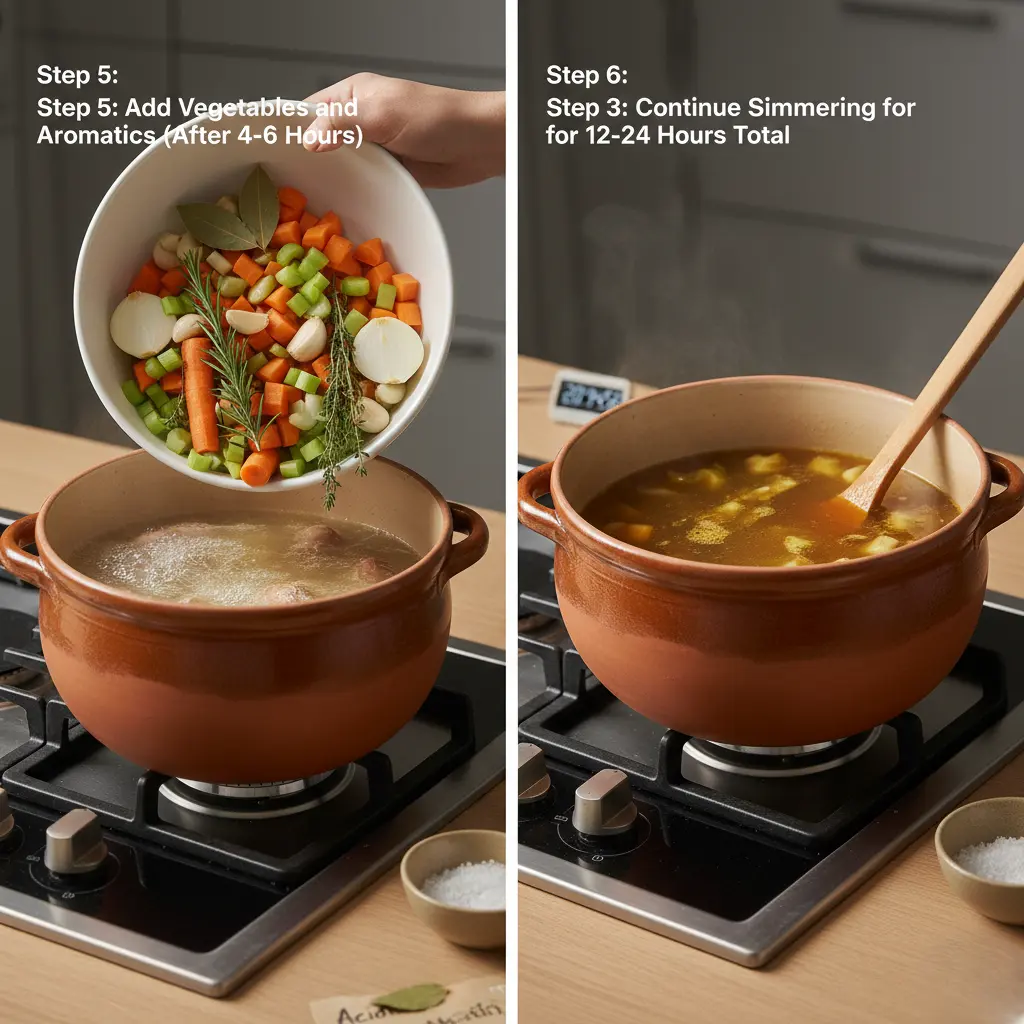
Step 5: Add Vegetables and Aromatics (After 4-6 Hours)
Here’s a game-changing technique many recipes miss: don’t add vegetables at the beginning. Adding them after the bones have been simmering for 4-6 hours prevents over-extraction of vegetable flavors, which can turn bitter during extended cooking.
Add your onions, carrots, celery, garlic, bay leaves, peppercorns, and fresh herbs. These will simmer for the remaining 8-18 hours, infusing the broth with aromatic complexity without bitterness.
Step 6: Continue Simmering for 12-24 Hours Total
Maintain that gentle simmer, checking occasionally to ensure the water level stays constant. If needed, add a bit more hot water to keep bones covered. The slow cooker is ideal here—set it on low and forget about it for 18-24 hours.
Visual cue: As your broth progresses, it will deepen to a rich golden or amber color. The bones will become increasingly soft and crumbly—a sign that you’ve successfully extracted the nutrients.
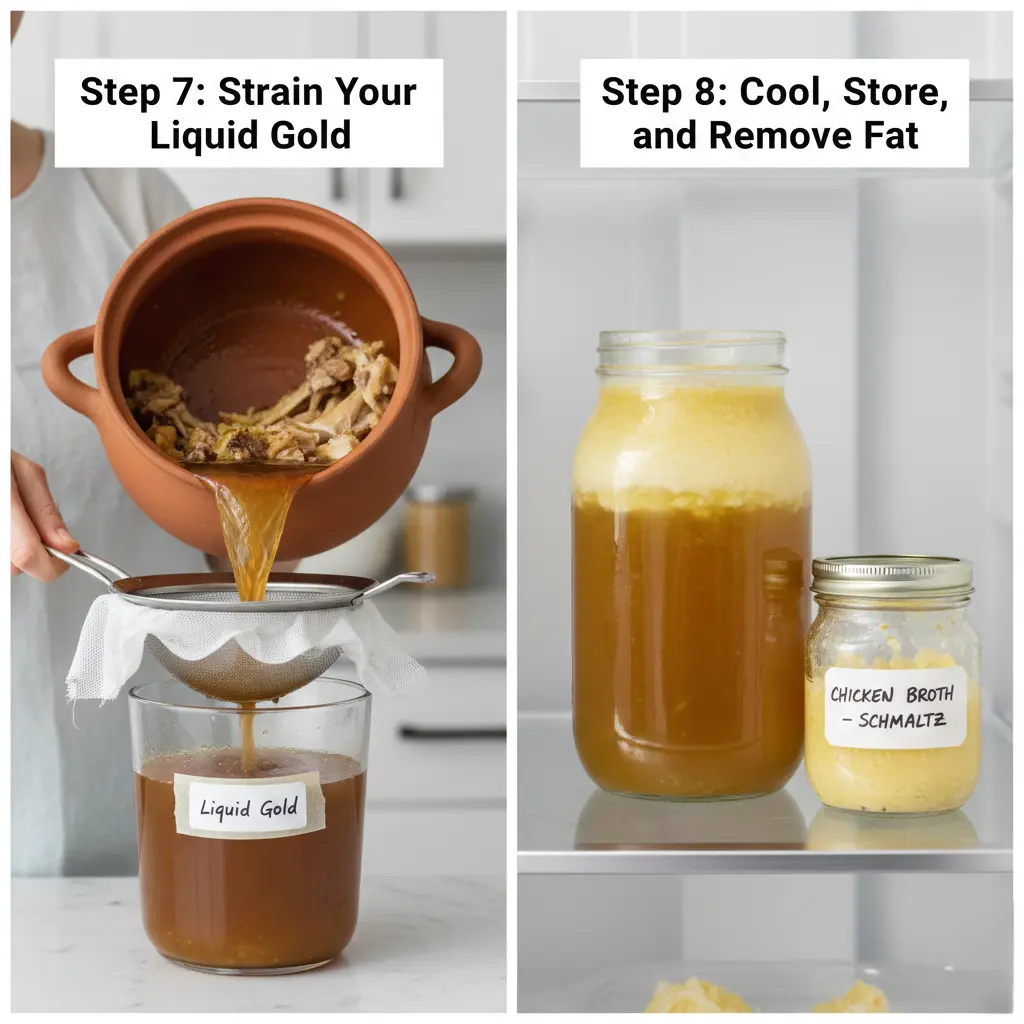
Step 7: Strain Your Liquid Gold
After 12-24 hours, remove from heat and let cool slightly. Strain the entire contents through a fine-mesh strainer or cheesecloth into a large container. Press gently on the solids to extract every drop of precious broth.
Zero-waste tip: Those vegetables have given their all and can be composted. The bones, if sufficiently soft, can also be composted or given to pets (if fully pulverized).
Step 8: Cool, Store, and Remove Fat
Refrigerate your strained broth for at least 4 hours or overnight. Properly made chicken broth bone soup will form a thick gel when cold—this is the collagen you’ve worked so hard to extract. A layer of fat will solidify on top, which you can easily scrape off and save for cooking (it’s pure chicken fat, or schmaltz, which is culinary gold).
Storage guidelines:
- Refrigerator: 5-7 days
- Freezer: 6 months (freeze in ice cube trays for convenient portions)
- Pressure canning: Safe for shelf storage following proper protocols
Step 9: Season and Serve Your Bone Broth Chicken Soup
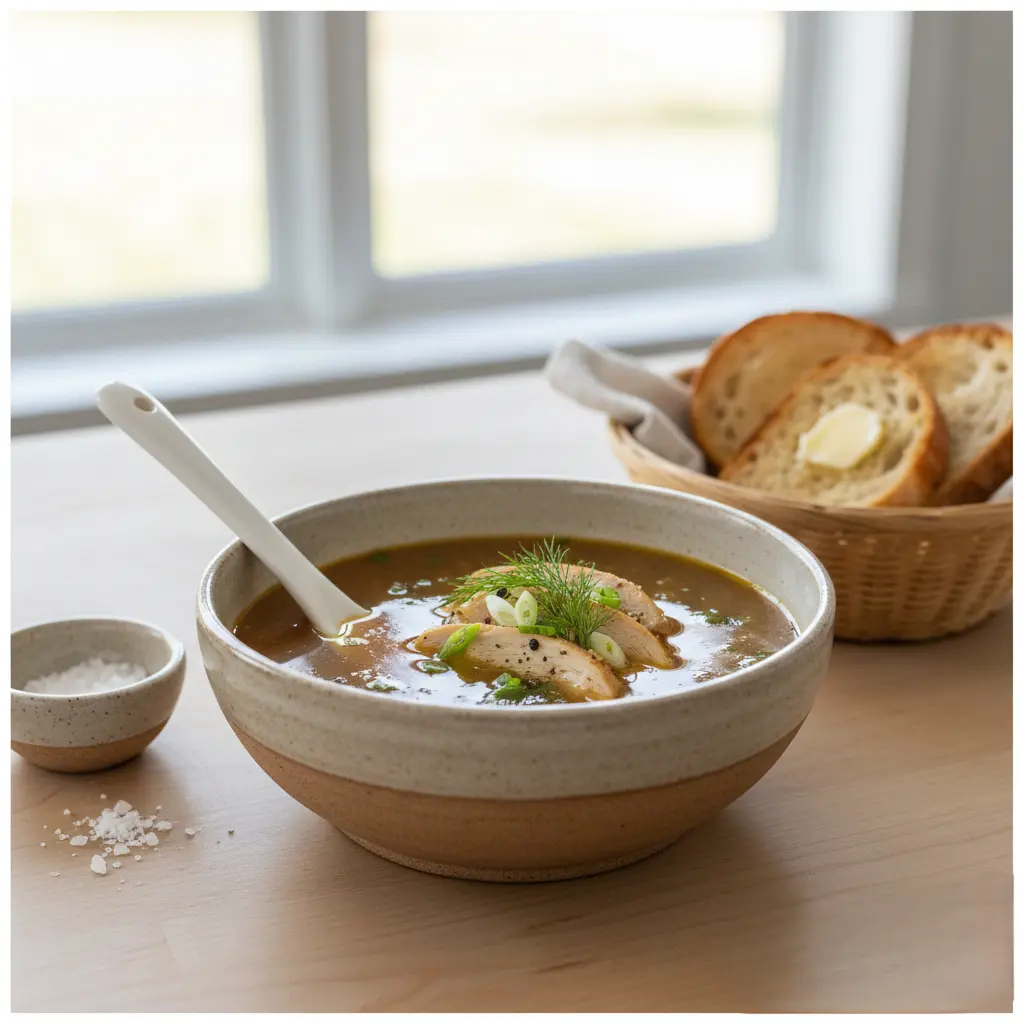
Here’s where your chicken bone broth soup recipe transforms into the perfect meal. Gently reheat your desired portion, then season with:
- Celtic sea salt to taste (start with 1 teaspoon per quart)
- Fresh cracked black pepper
- Optional: a squeeze of fresh lemon juice (brightens flavors)
- Optional: fresh herbs like parsley, cilantro, or dill
Serving suggestions for complete meals:
- Add shredded rotisserie chicken, rice noodles, and bok choy for an Asian-inspired soup
- Incorporate cooked quinoa, kale, and white beans for a hearty wellness bowl
- Mix with sautéed mushrooms, garlic, and finish with a poached egg for a savory breakfast
- Use as a base for any soup recipe to amplify nutrition exponentially
Nutritional Information: The Science Behind This Healing Elixir
This bone broth soup chicken recipe isn’t just delicious—it’s a nutritional powerhouse. Here’s what you’re getting in each 8-ounce (240ml) serving of pure bone broth (before additions):
Basic Nutritional Profile:
- Calories: 40-60 kcal (incredibly low for the nutrition density)
- Protein: 6-10g (primarily collagen and gelatin)
- Fat: 2-3g (if fat layer is removed; 10-15g if retained)
- Carbohydrates: 0-2g (negligible)
- Sodium: Minimal if unsalted; adjust to preference
Key Amino Acids and Their Benefits:
- Glycine: 1,200-2,500mg per serving
- Supports detoxification, improves sleep quality, aids digestion
- Proline: 900-1,800mg per serving
- Essential for collagen production, joint health, skin elasticity
- Glutamine: 600-1,200mg per serving
- Repairs gut lining, supports immune function
- Arginine: 400-800mg per serving
- Supports immune health, wound healing, cardiovascular function
Essential Minerals (varies based on bone quality and cooking time):
- Calcium: 15-30mg (2-3% DV) – highly bioavailable form
- Magnesium: 8-15mg (2-4% DV) – critical for 300+ enzymatic processes
- Phosphorus: 30-50mg (4-7% DV) – bone and teeth health
- Potassium: 150-250mg (3-5% DV) – electrolyte balance
- Trace minerals: Including zinc, iron, manganese, copper, and boron