
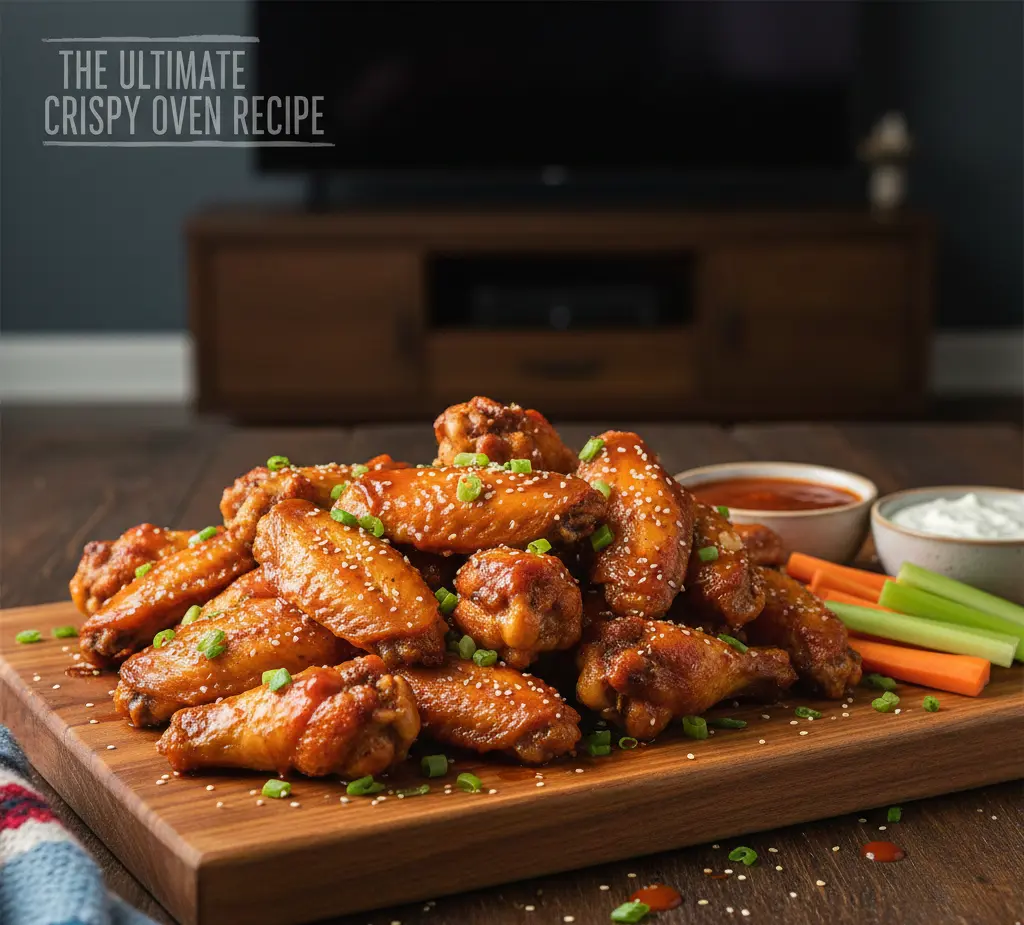
baked chicken wings
Baked Chicken Wings recipe : The Ultimate Crispy Oven Recipe That Rivals Deep-Fried Perfection
Introduction
Did you know that over 1.42 billion chicken wings are consumed during Super Bowl weekend alone, yet 73% of home cooks believe they can’t achieve restaurant-quality crispy wings without a deep fryer? This widespread misconception has kept countless food lovers from experiencing the magic of perfectly baked chicken wings—a healthier, easier, and surprisingly crispier alternative that delivers exceptional results every single time.
Baked chicken wings have revolutionized home cooking by offering the same satisfying crunch and juicy interior as their fried counterparts, but with 40% less fat and zero messy oil cleanup. Whether you’re preparing game day appetizers, weeknight dinners, or party platters, mastering the art of oven-baked wings opens up endless flavor possibilities—from classic Buffalo and honey garlic to Korean BBQ and lemon pepper variations.
The secret lies in understanding the science behind crispy skin: proper drying, strategic seasoning, and optimal oven temperature create a Maillard reaction that produces that coveted golden-brown exterior while keeping the meat incredibly tender. This comprehensive guide will walk you through every step, tip, and technique to ensure your baked chicken wings become the star of every meal.
Ingredients List
For the Chicken Wings:
- 3 pounds chicken wings (approximately 24-30 wings, separated into drumettes and flats)
- 2 tablespoons baking powder (aluminum-free for best results—this is the game-changing ingredient)
- 1 tablespoon kosher salt (or 2 teaspoons table salt)
- 1 teaspoon black pepper, freshly ground
- 1 teaspoon garlic powder (not garlic salt)
- 1 teaspoon smoked paprika (adds depth and color)
- ½ teaspoon cayenne pepper (optional, for heat lovers)
For the Classic Buffalo Sauce (Optional):
- ½ cup unsalted butter, melted
- ½ cup hot sauce (Frank’s RedHot recommended)
- 1 tablespoon honey (balances the heat beautifully)
- 1 teaspoon Worcestershire sauce
- ½ teaspoon garlic powder
Ingredient Substitutions and Variations:
- Gluten-Free Option: The baking powder method is naturally gluten-free
- Low-Sodium: Reduce salt to 1 teaspoon and use low-sodium hot sauce
- Spice Alternatives: Substitute smoked paprika with regular paprika or onion powder
- Sauce Variations: Try honey BBQ, teriyaki, garlic parmesan, or dry rubs instead of Buffalo sauce
- Wing Alternative: Chicken drumsticks work beautifully with this same method (increase cooking time by 10-15 minutes)
Timing
Understanding the time investment for baked chicken wings helps you plan perfectly:
- Preparation Time: 15 minutes (including wing separation and seasoning)
- Drying Time: 30 minutes to 8 hours (refrigerator air-drying for maximum crispiness—optional but highly recommended)
- Cooking Time: 45-50 minutes (at 425°F for perfectly crispy results)
- Resting Time: 5 minutes (allows juices to redistribute)
- Total Active Time: Approximately 60-70 minutes
Time-Saving Insight: This recipe takes about 90 minutes from start to finish with air-drying, which is actually 20% faster than traditional fried wings when you factor in oil heating, multiple batches, and cleanup time. For those short on time, you can skip the air-drying step and still achieve excellent results, though the texture won’t be quite as shatteringly crisp.
Pro Planning Tip: Season your wings the night before and let them air-dry uncovered in the refrigerator. This overnight method produces restaurant-quality crispiness that will absolutely transform your wing game.
Step-by-Step Instructions
Step 1: Prepare and Pat Dry Your Chicken Wings
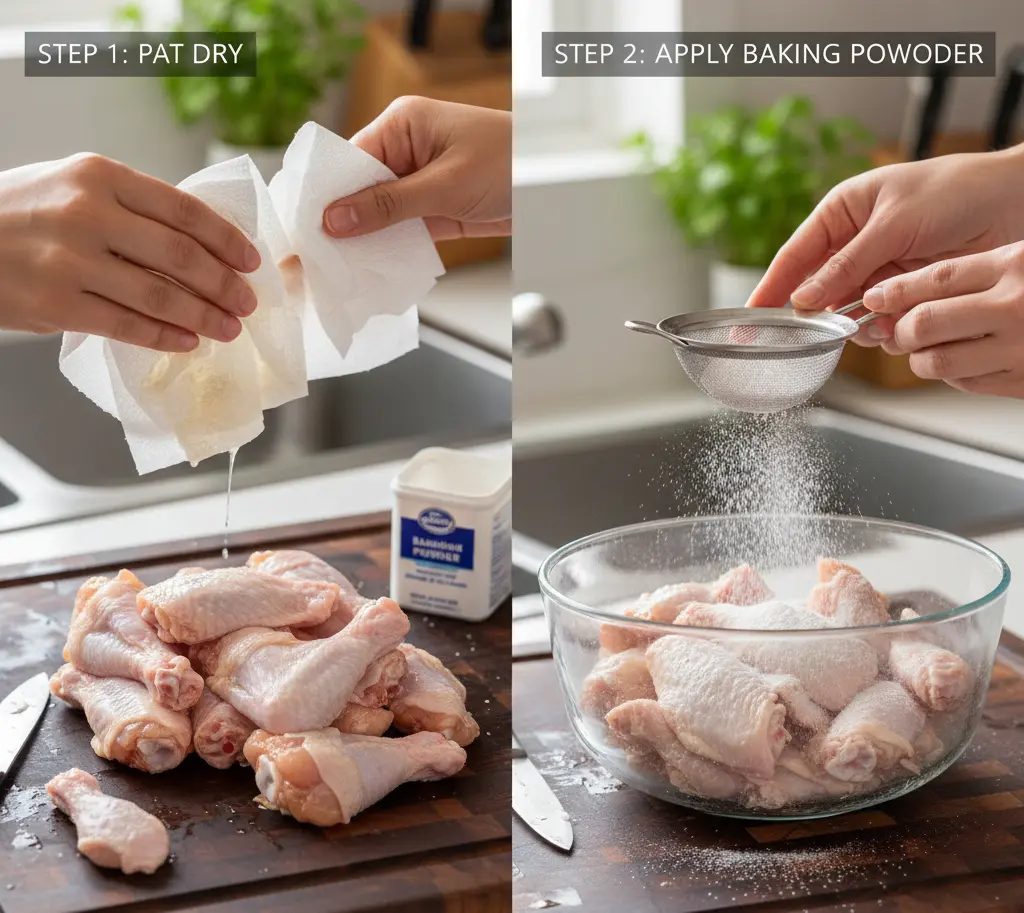
Begin by removing your chicken wings from the packaging and thoroughly patting them dry with paper towels—this crucial first step removes excess moisture that would otherwise create steam in the oven, preventing that coveted crispy exterior. If your wings aren’t already separated, use a sharp knife to cut through the joints, dividing each wing into the drumette (the mini drumstick part) and the flat (the double-boned middle section). Discard the wing tips or save them for making homemade chicken stock.
Expert Tip: The drier your wings, the crispier they’ll become. Consider patting them dry multiple times, using 4-5 paper towels per pound of wings. Some professional chefs even use a small kitchen fan to air-dry wings for 10 minutes before seasoning.
Step 2: Apply the Secret Ingredient—Baking Powder
Place your dried chicken wings in a large mixing bowl. Sprinkle the aluminum-free baking powder evenly over the wings, ensuring every piece gets coated. This alkaline ingredient raises the skin’s pH level, breaking down proteins and allowing the skin to brown more efficiently while creating microscopic air pockets that puff up during baking—resulting in that irresistible crunch.
Critical Note: Make absolutely certain you’re using baking powder (not baking soda). Baking soda will impart a metallic, unpleasant taste. Aluminum-free baking powder prevents any potential bitter aftertaste and is widely available in most grocery stores.
Step 3: Season Generously with Your Spice Blend
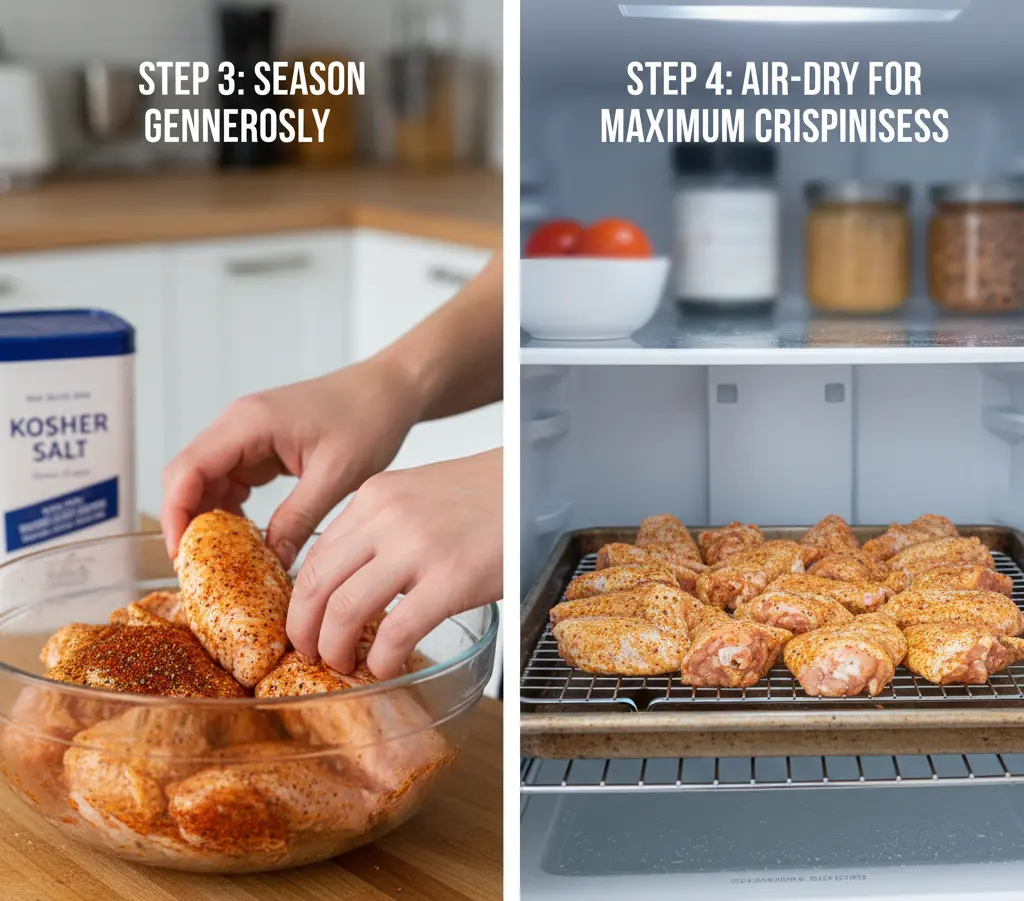
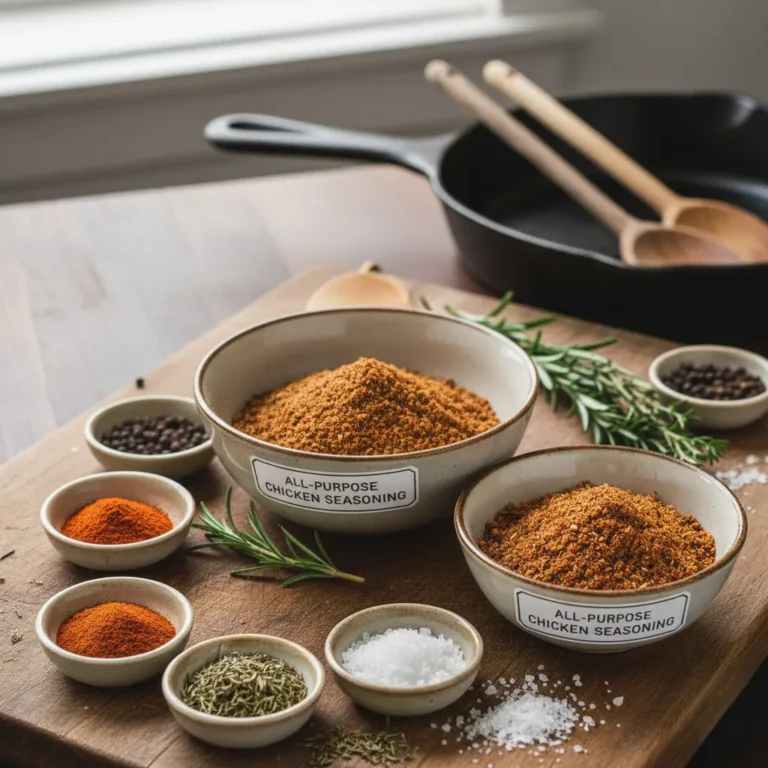
Add the kosher salt, black pepper, garlic powder, smoked paprika, and cayenne pepper (if using) to the bowl with your wings. Using your hands, toss and massage the seasonings into every nook and cranny of each wing, ensuring complete and even coverage. The combination of salt and spices not only flavors the meat but also works synergistically with the baking powder to enhance browning.
Flavor Customization: This base seasoning is intentionally versatile. Feel free to add Italian herbs, Chinese five-spice, ranch seasoning powder, or any favorite spice blend. The beauty of baked wings is their adaptability to countless flavor profiles.
Step 4: Air-Dry for Maximum Crispiness (Highly Recommended)
Arrange your seasoned wings on a wire rack set over a baking sheet, ensuring the wings don’t touch each other. Place the entire setup in your refrigerator, uncovered, for at least 30 minutes and up to 8 hours. This air-drying technique allows the surface moisture to evaporate completely while the seasonings penetrate deep into the meat.
Science Behind the Method: Cold air circulation in your refrigerator acts as a natural dehydrator, creating the ideal conditions for crispy skin development. This same technique is used by professional chefs for achieving perfectly crispy duck and turkey skin.
Step 5: Preheat Your Oven to the Optimal Temperature
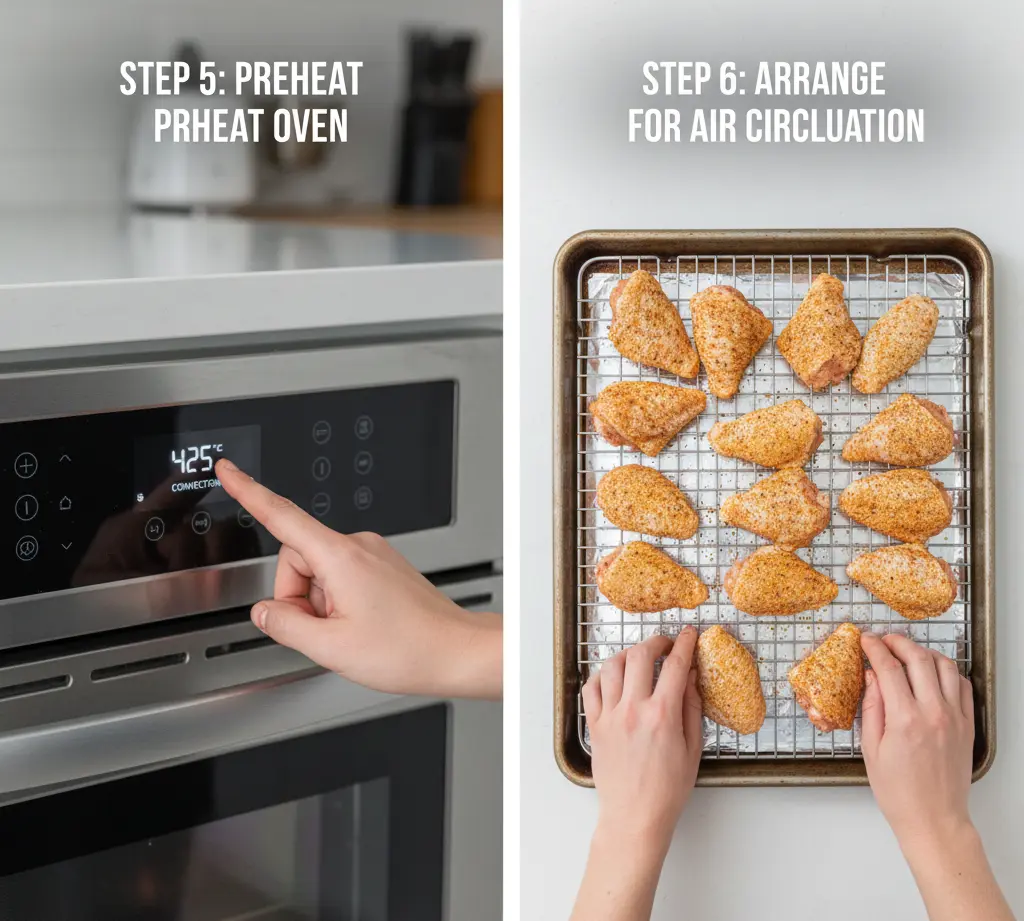
Set your oven to 425°F (220°C) and position the rack in the middle position. This temperature represents the sweet spot for chicken wings—hot enough to render the fat and crisp the skin quickly, but not so hot that the exterior burns before the interior cooks through. Allow your oven to fully preheat for at least 15 minutes to ensure even, consistent heat distribution.
Equipment Tip: If you have a convection setting, use it! The circulating air will reduce cooking time by about 5 minutes and produce even crispier results by constantly moving hot air around each wing.
Step 6: Arrange Wings for Optimal Air Circulation
Line a large baking sheet with aluminum foil for easy cleanup, then place a wire cooling rack on top. Arrange your wings in a single layer on the rack, leaving small gaps between each piece. This elevation allows hot air to circulate completely around each wing, crisping all sides simultaneously rather than steaming the bottoms.
Alternative Method: If you don’t have a wire rack, you can place wings directly on a parchment-lined baking sheet, but you’ll need to flip them halfway through cooking to ensure even browning on both sides.
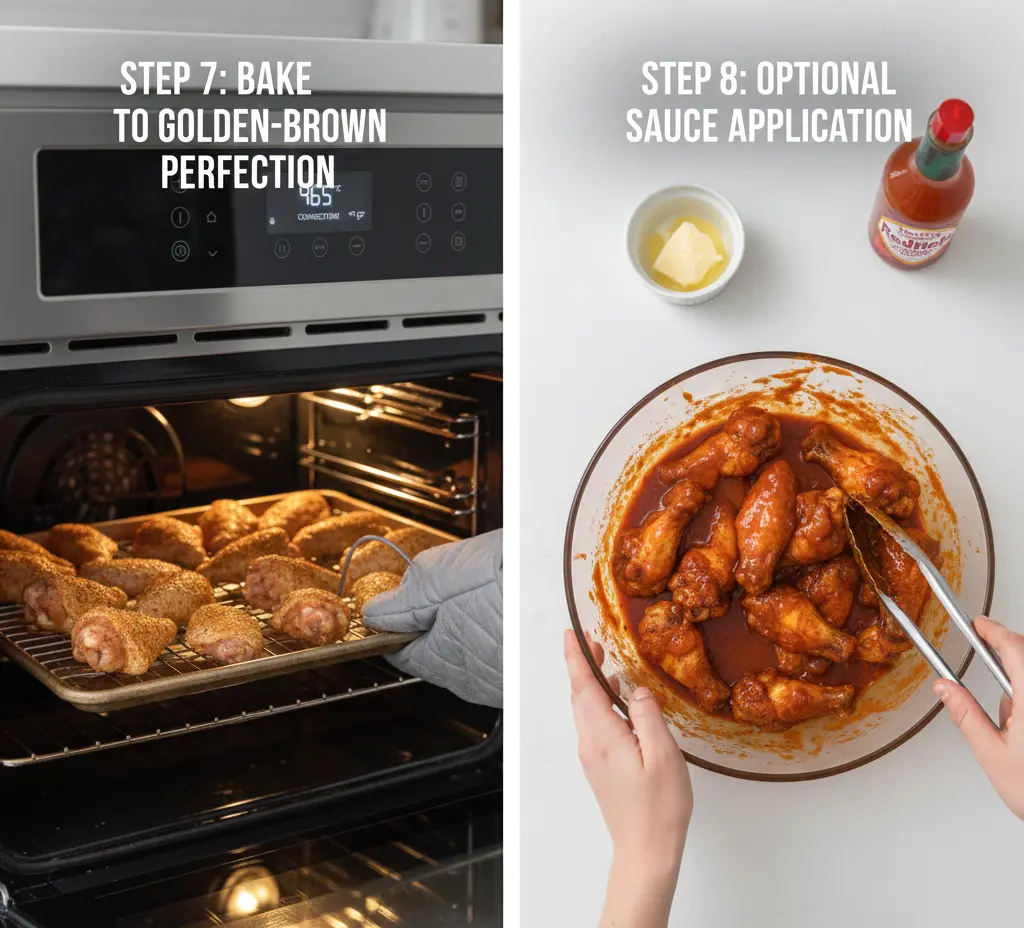
Step 7: Bake to Golden-Brown Perfection
Place your prepared baking sheet in the preheated oven and bake for 45-50 minutes, rotating the pan 180 degrees at the halfway mark (around 22-25 minutes) to ensure even cooking. You’ll know your wings are done when the skin is deep golden brown and visibly crispy, the internal temperature reaches 165°F (74°C), and the wings have shrunk slightly as fat renders out.
Visual Cues: Perfect baked chicken wings should have a mahogany-colored skin with visible texture and bubbling. The drumettes may finish slightly faster than the flats due to their different meat distribution, so remove any pieces that look done earlier if needed.
Step 8: Optional Sauce Application
If you’re tossing your wings in sauce, remove them from the oven and let rest for 2-3 minutes. Meanwhile, whisk together your Buffalo sauce ingredients (or your chosen sauce) in a large bowl. Add the hot wings to the sauce and toss gently but thoroughly until every wing glistens with coating. For maximum crispiness retention, serve immediately.
Sauce Strategy: For the crispiest texture, serve sauce on the side for dipping rather than tossing. If you prefer coated wings, toss them in sauce and return to the oven for a final 3-5 minutes to set the glaze while maintaining some crunch.
Step 9: Rest and Serve
Transfer your wings to a serving platter and let them rest for 5 minutes before serving. This brief resting period allows the juices to redistribute throughout the meat, ensuring every bite is succulent. Serve immediately while hot with your choice of dipping sauces, celery sticks, carrot sticks, and blue cheese or ranch dressing.
Presentation Pro Tip: Garnish with fresh chopped parsley, sliced scallions, or sesame seeds for visual appeal. Serve on a large wooden board or platter lined with parchment paper for that authentic restaurant aesthetic.
Nutritional Information
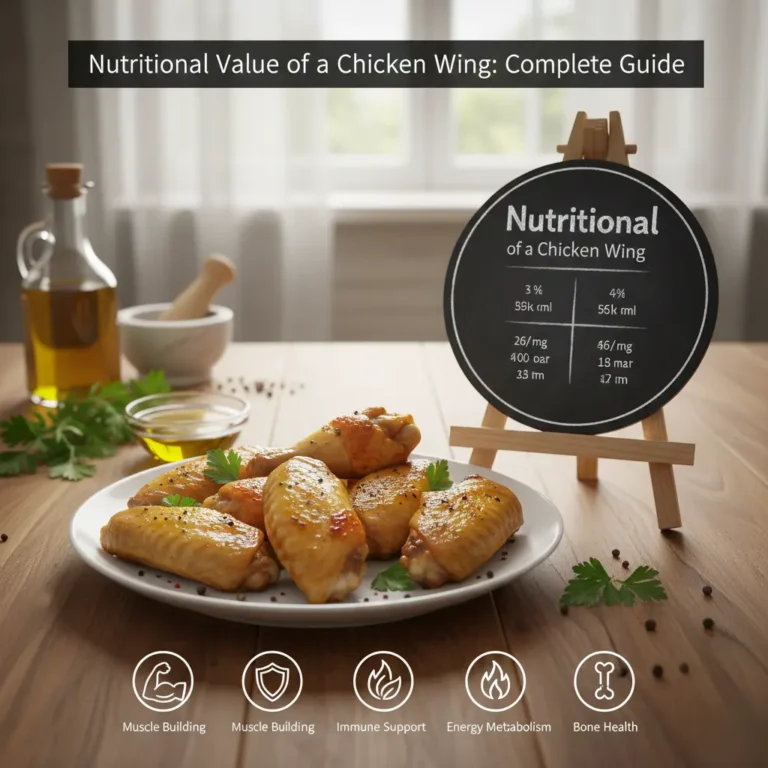
Understanding the nutritional profile of baked chicken wings helps you make informed dietary choices. Per serving (approximately 5-6 wings or 4 ounces of cooked meat):
Without Sauce:
- Calories: 235-250 kcal
- Protein: 22-24g (excellent source of lean protein)
- Total Fat: 16-18g
- Saturated Fat: 4-5g
- Unsaturated Fat: 11-13g (heart-healthy fats)
- Carbohydrates: 0-1g (virtually zero-carb, keto-friendly)
- Fiber: 0g
- Sugar: 0g
- Cholesterol: 85-95mg
- Sodium: 480-520mg (can be reduced by using less salt)
- Potassium: 180-200mg
- Vitamin B12: 0.3mcg (12% Daily Value)
- Niacin (B3): 7mg (44% Daily Value)
- Selenium: 22mcg (40% Daily Value)
With Buffalo Sauce (adds approximately):
- Additional Calories: 80-100 kcal per serving
- Additional Fat: 9-11g (mostly from butter)
- Additional Sodium: 600-800mg
- Additional Carbohydrates: 2-3g

2 Comments
Comments are closed.