

Baked Chicken Tenders
The Ultimate Guide to Crispy Baked Chicken Tenders: Restaurant-Quality Results at Home
Introduction: Why Baked Chicken Tenders Outperform Deep-Fried Alternatives
Did you know that homemade baked chicken tenders contain up to 70% less fat than their deep-fried counterparts, yet deliver the same satisfying crunch that makes this dish irresistible? This surprising fact challenges the common belief that crispy texture requires excessive oil, and it’s precisely why baked chicken tenders have become the go-to choice for health-conscious families and professional chefs alike.
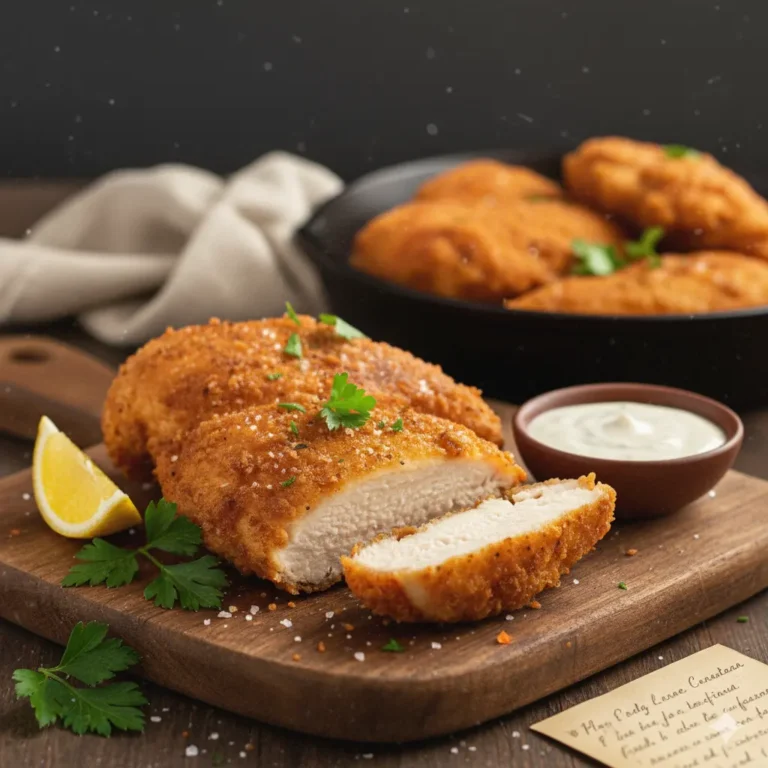
For decades, chicken tenders seemed synonymous with greasy fast-food experiences and kitchen splatters. However, modern cooking techniques have completely transformed this narrative. Today’s baked chicken tenders represent a culinary sweet spot: they’re crispy on the outside, tender and juicy on the inside, and significantly healthier than traditional methods. Whether you’re preparing a quick weeknight dinner, hosting a gathering, or meal-prepping for the week ahead, understanding how to master baked chicken tenders will revolutionize your kitchen repertoire.
This comprehensive guide will walk you through every aspect of creating perfectly baked chicken tenders, from ingredient selection and preparation techniques to professional plating strategies. By the end, you’ll understand not just the “how,” but the “why” behind each step—enabling you to troubleshoot, innovate, and customize this versatile dish to your exact preferences.
Ingredients for Perfectly Crispy Baked Chicken Tenders
Creating restaurant-quality baked chicken tenders begins with understanding your ingredients. Each component plays a specific role in achieving that coveted texture and flavor profile.
For the Chicken Base:
- 2 pounds boneless, skinless chicken breasts (or 2.5 pounds if you prefer thicker pieces)
- 2 tablespoons olive oil or avocado oil (for coating)
For the Breading Mixture:
- 1 cup all-purpose flour (or chickpea flour for gluten-free baked chicken tenders)
- 1 teaspoon garlic powder
- 1 teaspoon onion powder
- 1 teaspoon smoked paprika
- 1/2 teaspoon cayenne pepper (adjust to taste)
- 1 teaspoon dried Italian herbs
- 1/2 teaspoon black pepper
- 1 teaspoon sea salt
- 1/2 teaspoon garlic salt

For the Wet Breading Station:
- 2 large eggs (or 3 tablespoons aquafaba for vegan baked chicken tenders)
- 1/4 cup whole milk or unsweetened almond milk
- 1 tablespoon Dijon mustard (adds depth without overpowering flavor)
- 1/2 teaspoon Worcestershire sauce
Optional Enhancements & Substitutions:
- Panko breadcrumbs: Mix 1/2 cup panko with your flour mixture for extra crunch in baked chicken tenders
- Parmesan cheese: Add 1/4 cup grated Parmesan to the flour for umami depth
- Cornstarch: Substitute 2 tablespoons of flour with cornstarch for superior crispiness
- Almond flour: Replace 1/4 cup all-purpose flour for keto-friendly baked chicken tenders
- Hot sauce: Add 1 tablespoon Frank’s RedHot to the egg mixture for spicy baked chicken tenders
Timing: Your Complete Timeline for Baked Chicken Tenders
Understanding the time investment helps you plan efficiently and manage expectations.
Preparation Time: 15 minutes
- Cutting chicken breasts into tender-sized pieces: 5 minutes
- Seasoning flour mixture and setting up breading station: 3 minutes
- Whisking wet ingredients: 2 minutes
- Breading each piece individually: 5 minutes
Cooking Time: 18-22 minutes
- Oven preheating: 10 minutes
- Active baking time for baked chicken tenders: 18-22 minutes (depending on thickness)
Total Time: 33-37 minutes (approximately 40% less time than traditional deep-frying methods, which typically require 45-50 minutes including oil temperature management)
Pro Timing Tip: If marinating your chicken overnight in a buttermilk mixture, the actual hands-on cooking time for your baked chicken tenders remains unchanged, but the flavor profile deepens dramatically—a worthwhile investment for meal prep days.
Step-by-Step Instructions: Mastering Your Baked Chicken Tenders
Step 1: Prepare Your Chicken with Precision
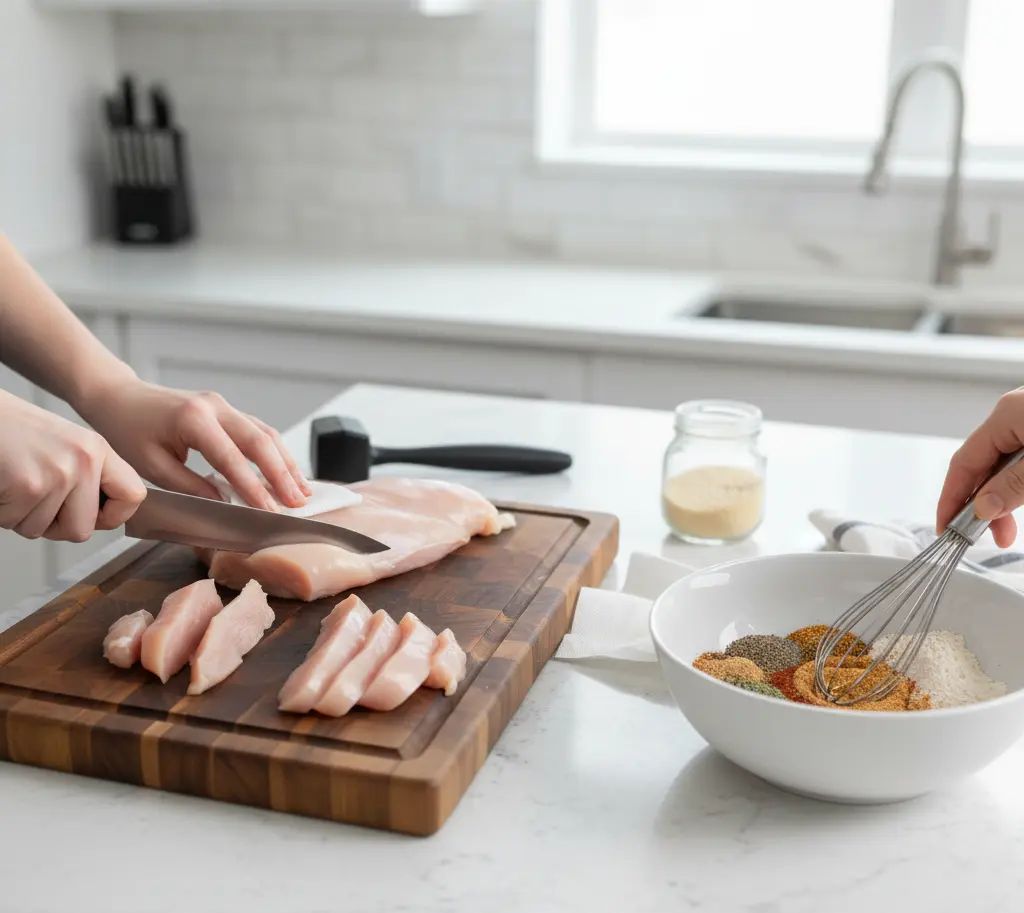
Begin by patting your chicken breasts completely dry with paper towels—this single step is crucial for achieving crispy baked chicken tenders. Any surface moisture acts as a barrier, preventing proper browning and crispiness. Place each dry breast on your cutting board and, using a sharp knife held at a slight angle, slice the chicken into strips approximately 1 inch thick and 3-4 inches long. Uniform sizing ensures even cooking throughout your batch of baked chicken tenders.
Insider Tip: If your chicken breasts are particularly thick (over 1 inch), gently pound them to consistent thickness using a meat mallet. This ensures your baked chicken tenders cook uniformly without dry edges.
Step 2: Create Your Dry Breading Station
In a shallow bowl or plate, combine all dry ingredients: flour, garlic powder, onion powder, smoked paprika, cayenne, Italian herbs, black pepper, sea salt, and garlic salt. Whisk these together thoroughly—this mixing prevents clumping and ensures even seasoning distribution throughout each piece of baked chicken tenders. The aromatic blend you’ve created will activate during baking, creating an inviting kitchen fragrance.
Sensory Enhancement: Take a moment to smell your finished seasoning mixture. If it smells boring or too salty, adjust now rather than compromising your finished baked chicken tenders.
Step 3: Prepare Your Wet Breading Mixture
In another shallow bowl, whisk together eggs, milk, Dijon mustard, and Worcestershire sauce until completely combined. The mustard adds subtle complexity without screaming “mustard flavor”—it amplifies the savory notes in your baked chicken tenders while tenderizing the chicken protein structure. Worcestershire contributes umami depth that elevates the entire dish.
Chemistry Lesson: The egg proteins in your wet mixture will denature during baking, creating a protein network that holds your breading in place. This is why you absolutely cannot skip this step when making baked chicken tenders.
Step 4: Coat Each Tender (The Breading Assembly Line)
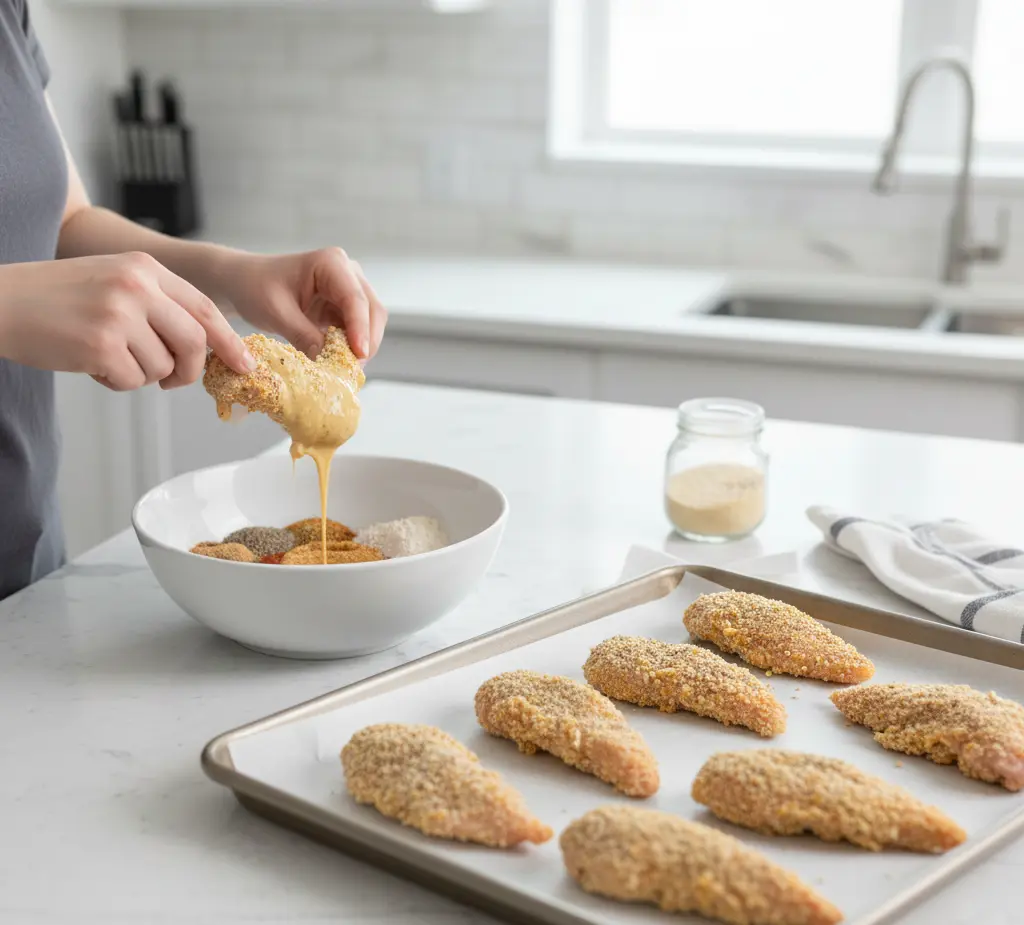
Working with one piece of chicken at a time, submerge it completely in your wet egg mixture, allowing excess liquid to drip back into the bowl. Then, immediately transfer the coated piece to your dry breading mixture, pressing gently but firmly on all sides. This pressure ensures the breading adheres evenly to your baked chicken tenders. Once fully coated, shake off excess flour and place the breaded tender on a parchment-lined baking sheet.
Critical Detail: Space your baked chicken tenders at least 1 inch apart on the baking sheet. Crowding them prevents air circulation, which is essential for that golden, crispy exterior.
Step 5: Lightly Oil for Optimal Crispiness
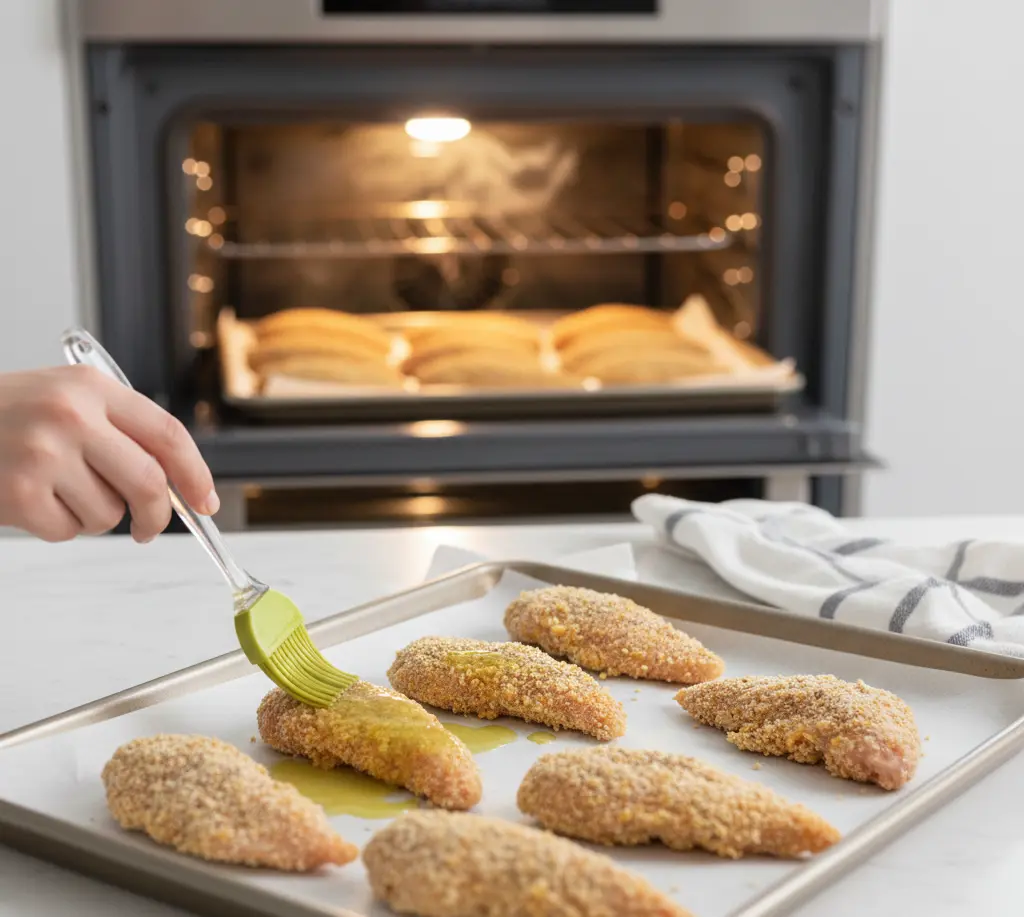
This is the secret that transforms good baked chicken tenders into exceptional ones. Lightly brush or spray each breaded tender with olive oil or avocado oil—you’re aiming for a thin, even coating, not saturation. The oil activates during baking, creating that restaurant-quality crispy exterior that rivals deep-fried versions. High smoke-point oils (avocado oil smoke point: 520°F) are ideal for this application.
Oil Application Options:
- Spray bottle method: 30-second light misting
- Brush method: Use a pastry brush for controlled application
- Oil-dipped fingertips: Quick and precise for small batches
Step 6: Bake Your Baked Chicken Tenders to Golden Perfection
Preheat your oven to 400°F—this temperature is crucial for achieving that golden-brown exterior while maintaining juicy interiors in your baked chicken tenders. Place your prepared baking sheet on the middle rack and bake for 18-22 minutes, depending on thickness. Your baked chicken tenders are perfectly done when they reach an internal temperature of 165°F (measured at the thickest point with an instant-read thermometer) and the breading has turned golden brown.
Rotation Tip: If your oven has hot spots, rotate the baking sheet halfway through cooking for uniform browning of your baked chicken tenders.
Step 7: Rest and Serve with Strategic Timing
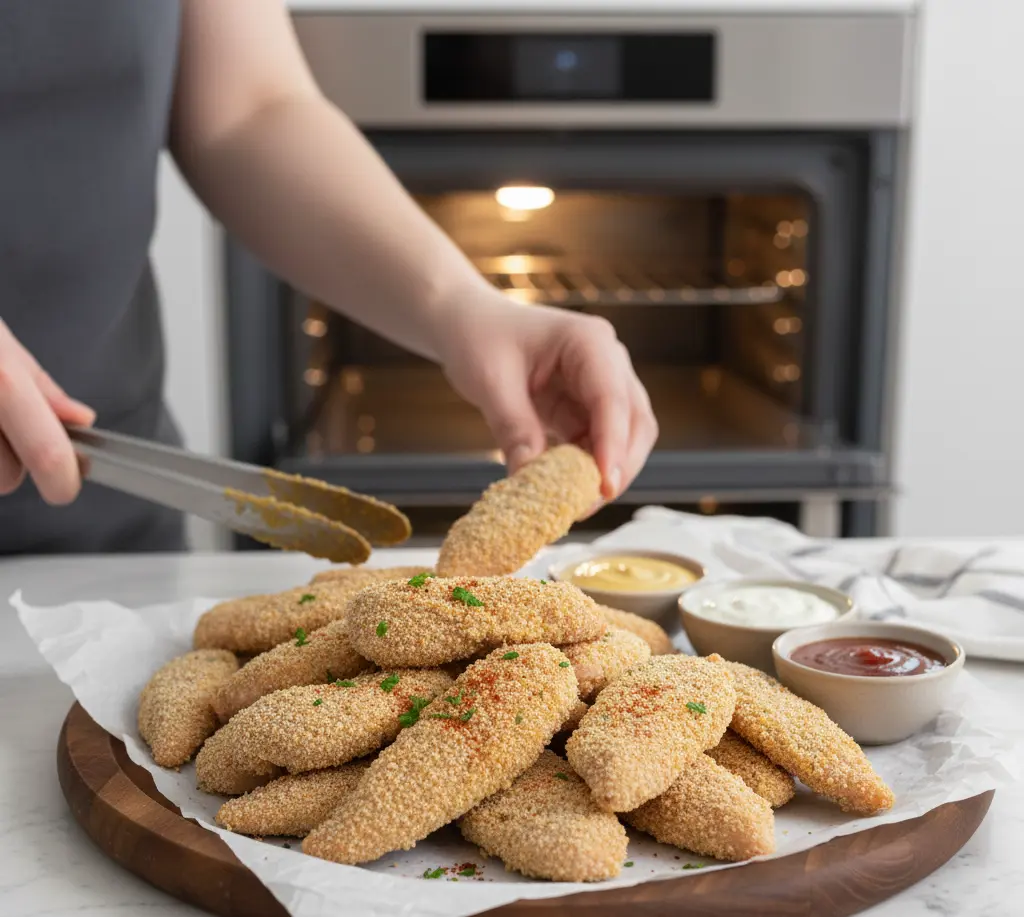
Once removed from the oven, allow your baked chicken tenders to rest for 2-3 minutes on the baking sheet. This resting period allows residual heat to finish cooking the chicken interior while the exterior sets into maximum crispiness. This brief pause is why baked chicken tenders fresh from the oven taste noticeably better than immediately plated versions.
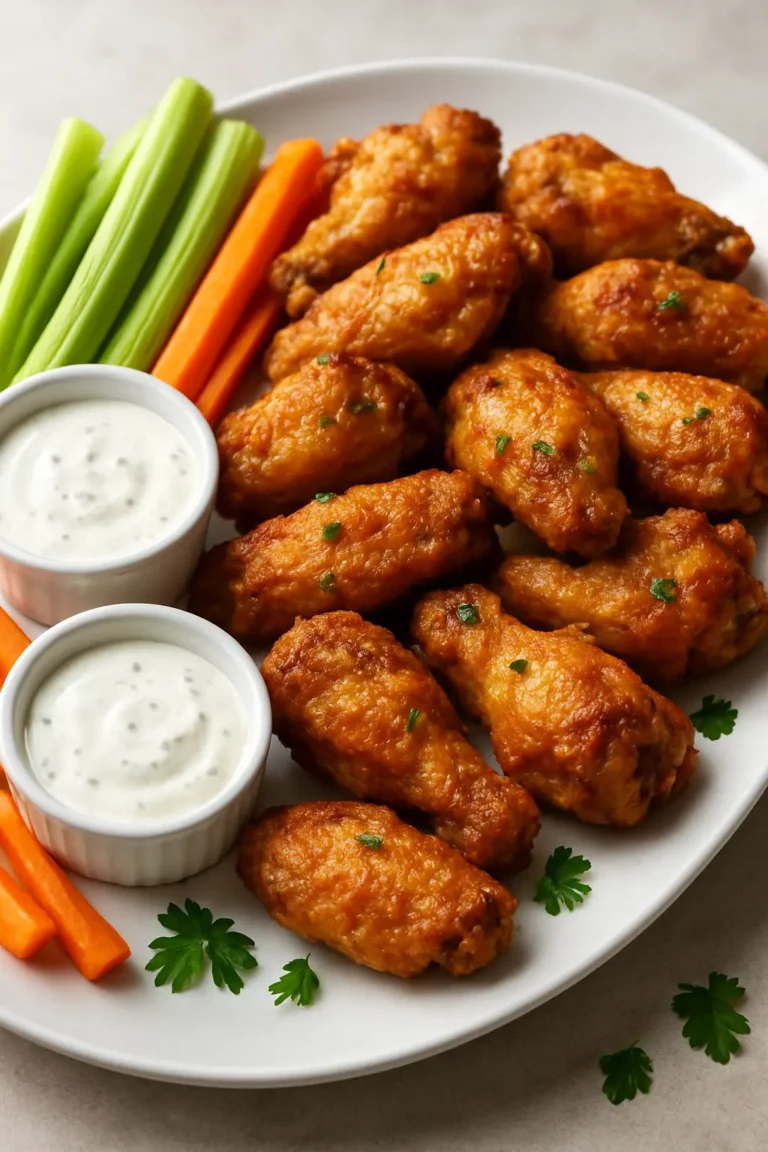
Serving Suggestions: Arrange your baked chicken tenders on a serving platter with your choice of dipping sauces—honey mustard, ranch, sriracha mayo, or BBQ sauce all complement this versatile dish perfectly.
Nutritional Information: What’s Really in Your Baked Chicken Tenders
Understanding the nutritional profile helps you make informed decisions about portion sizes and meal planning. All values are per serving, based on approximately 4 pieces of baked chicken tenders (one-eighth of the full recipe).
| Nutrient | Amount | % Daily Value* |
|---|---|---|
| Calories | 187 | 9% |
| Total Fat | 5.2g | 8% |
| Saturated Fat | 1.1g | 6% |
| Trans Fat | 0g | 0% |
| Cholesterol | 78mg | 26% |
| Sodium | 342mg | 15% |
| Total Carbohydrates | 7.8g | 3% |
| Dietary Fiber | 0.2g | 1% |
| Total Sugars | 0.1g | 0% |
| Protein | 28.4g | 57% |
| Vitamin A | 245 IU | 5% |
| Vitamin C | 1.2mg | 2% |
| Calcium | 28mg | 2% |
| Iron | 0.9mg | 5% |
Key Nutritional Highlights:
Baked chicken tenders deliver exceptional protein content—28.4 grams per serving—making them an excellent choice for muscle recovery, sustained energy, and satiety. This high protein-to-calorie ratio (approximately 1.5 calories per gram of protein) significantly outperforms many convenient food options. The low carbohydrate content (7.8g) makes baked chicken tenders suitable for low-carb and keto dietary approaches, particularly when prepared with almond flour substitutions.
The fat content remains minimal (5.2g per serving), with only 1.1g being saturated fat. This represents approximately 90% fat reduction compared to traditional deep-fried versions, which typically contain 35-40g of fat per serving. By using the light oil coating method described above, you’re achieving maximum flavor and texture with minimum caloric impact.
Sodium Considerations: At 342mg per serving, baked chicken tenders fit comfortably within a 2,300mg daily limit recommended by health organizations. However, if preparing these for sodium-restricted diets, omit the garlic salt and reduce sea salt to 1/2 teaspoon.
Customization for Dietary Goals:
For high-protein meal plans: Increase serving size to 6 pieces for 42.6g protein (281 calories) For low-calorie diets: Reduce oil coating and use cooking spray instead (reduces to approximately 150 calories per serving) For Mediterranean diet adherence: Use exclusively extra-virgin olive oil and serve with whole grain accompaniments
One Comment
Comments are closed.