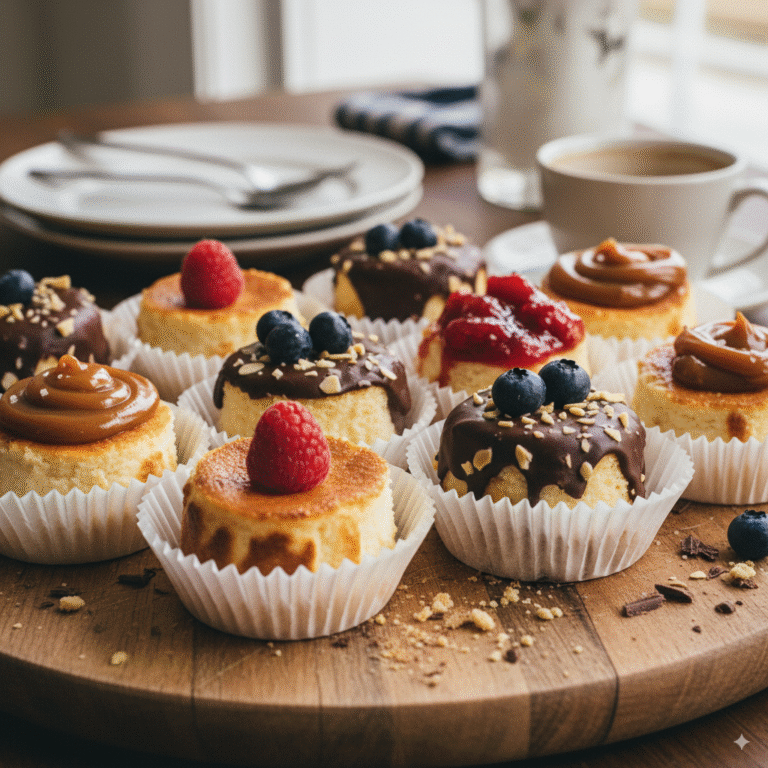
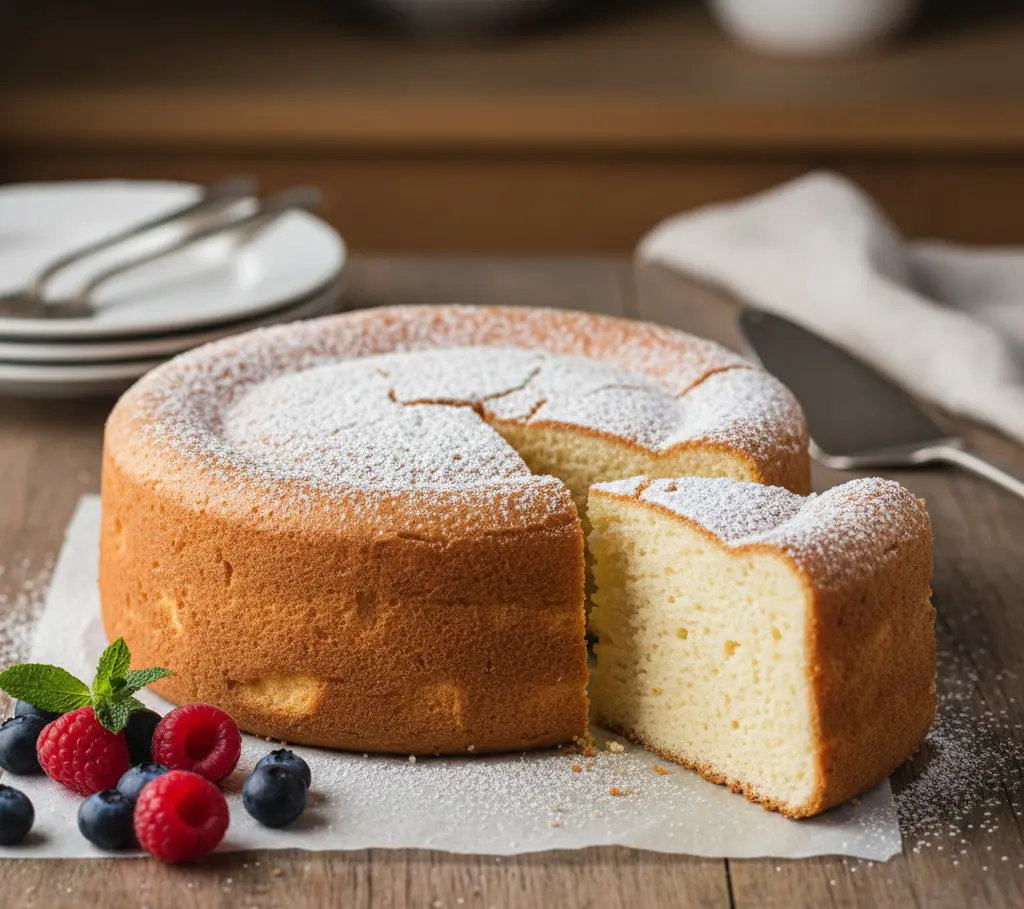
Cloud Cake Recipe
Cloud Cake Recipe: The Ultimate Fluffy Dessert Guide
Introduction: Can a Cake Really Be as Light as a Cloud?
What if I told you that the average slice of cake contains 35% more density than it needs to—and that you’ve been missing out on a dessert so ethereal, it literally melts on your tongue? The cloud cake recipe has taken the baking world by storm, challenging everything we thought we knew about traditional cake textures. This Japanese-inspired delicacy, also known as soufflé cheesecake or cotton cake, delivers an impossibly light, airy crumb that defies conventional baking logic.
Unlike dense butter cakes or heavy pound cakes, this cloud cake recipe relies on a meringue-based technique that incorporates air bubbles into every bite, creating a texture that’s 60% lighter than standard sponge cakes. Whether you’re a novice baker looking to impress dinner guests or an experienced pastry enthusiast seeking your next culinary challenge, this fluffy dessert will revolutionize your approach to homemade cakes. The jiggly cake phenomenon that started in Asia has now become a global sensation, and today, you’ll master the art of creating this heavenly treat in your own kitchen.
Ingredients: Everything You Need for the Perfect Fluffy Cake
The beauty of this cloud cake recipe lies in its simplicity—just eight ingredients create magic. Each component plays a crucial role in achieving that signature wobble and melt-in-your-mouth texture.
For the Cake Base:
- 8 oz (225g) cream cheese, softened to room temperature (substitute: Neufchâtel cheese for a lighter version)
- 6 tablespoons (85g) unsalted butter, melted (substitute: coconut oil for a dairy-alternative option)
- ½ cup (120ml) whole milk, warmed (substitute: almond milk or oat milk for lactose-free versions)
- 6 large eggs, separated into yolks and whites (use fresh, room-temperature eggs for maximum volume)
- ⅔ cup (85g) cake flour, sifted twice (substitute: all-purpose flour minus 2 tablespoons, though cake flour yields superior results)
- 2 tablespoons (16g) cornstarch for extra stability
- ⅔ cup (130g) granulated sugar, divided
- ¼ teaspoon cream of tartar (substitute: ½ teaspoon lemon juice if unavailable)
- 1 teaspoon pure vanilla extract
- Pinch of salt to enhance flavors
Pro Ingredient Tips: The quality of your cream cheese directly impacts the final texture—full-fat varieties create the richest, most velvety results. Room temperature ingredients are non-negotiable for this Japanese cheesecake variation; cold eggs won’t whip to proper peaks, and cold cream cheese will create lumps that compromise your smooth, airy batter.
Timing: Your Complete Baking Schedule
Understanding the time commitment for this light and fluffy cake ensures you can plan accordingly and achieve perfect results without rushing.
Preparation Time: 25 minutes
- Separating eggs and bringing ingredients to room temperature: 10 minutes
- Mixing batter and preparing meringue: 15 minutes
Cooking Time: 70 minutes
- Initial high-heat baking: 15 minutes at 320°F (160°C)
- Low-temperature finishing: 55 minutes at 285°F (140°C)
Cooling Time: 60 minutes (critical for structural integrity)
Total Time: 155 minutes (approximately 2 hours and 35 minutes)
Compared to traditional cheesecakes that require 4-5 hours including cooling, this cloud cake recipe delivers exceptional results in roughly 40% less time. The water bath method we’ll use ensures even heat distribution, preventing cracks and promoting that characteristic jiggle that makes this airy dessert so mesmerizing.
Step-by-Step Instructions: Master the Art of Cloud Cake Baking
Step 1: Prepare Your Baking Environment
Preheat your oven to 320°F (160°C) and position the rack in the lower third of the oven. Line an 8-inch (20cm) round springform pan with parchment paper on the bottom and sides—this prevents sticking and allows for easy removal. Wrap the outside of the pan with two layers of aluminum foil, extending up the sides to create a waterproof barrier for the water bath technique.
Expert Tip: Place your springform pan inside a larger roasting pan now, before filling it with batter. This prevents awkward transfers that could deflate your precious air bubbles.
Step 2: Create the Cream Cheese Base
In a large mixing bowl, combine the softened cream cheese and melted butter. Using a handheld mixer on medium speed, beat until completely smooth and lump-free—approximately 2 minutes. Gradually add the warm milk while continuing to mix, creating a silky, pourable consistency. Add the egg yolks one at a time, incorporating each fully before adding the next. The mixture should be glossy and homogeneous.
Pro Technique: The warmth from the milk and melted butter helps maintain a fluid consistency, which is essential for folding in the meringue later without deflating it.
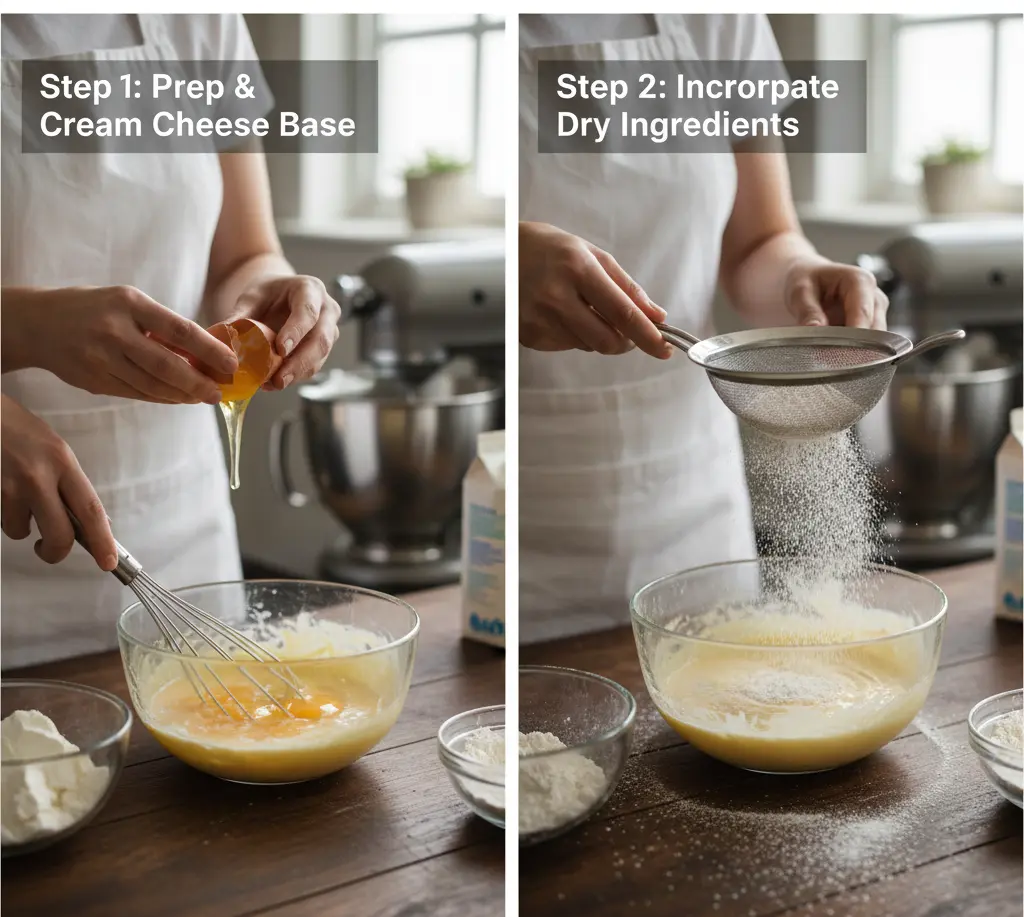
Step 3: Incorporate Dry Ingredients
Sift the cake flour and cornstarch together twice—this extra step incorporates air and removes any lumps that could create dense pockets in your soft, pillowy cake. Gently fold the flour mixture into the cream cheese base using a spatula, using a figure-eight motion to minimize gluten development. Add the vanilla extract and salt, mixing until just combined. The batter should be smooth but slightly thick.
Common Mistake to Avoid: Over-mixing at this stage develops gluten, which works against the tender texture you’re aiming for in this soufflé-style cake.
Step 4: Whip the Meringue to Stiff Peaks
In a spotlessly clean, grease-free bowl (any fat residue will prevent proper whipping), beat the egg whites with an electric mixer on medium speed until foamy. Add the cream of tartar and continue beating. Gradually add the sugar one tablespoon at a time while increasing speed to high. Beat until stiff, glossy peaks form—when you lift the whisk, the peaks should stand straight up without drooping. This process takes 5-7 minutes and is the absolute cornerstone of achieving that signature cloud-like texture.
Quality Check: The meringue should be so stable that you can turn the bowl upside down without it moving. This indicates you’ve incorporated enough air to create that ethereal, bouncy texture.
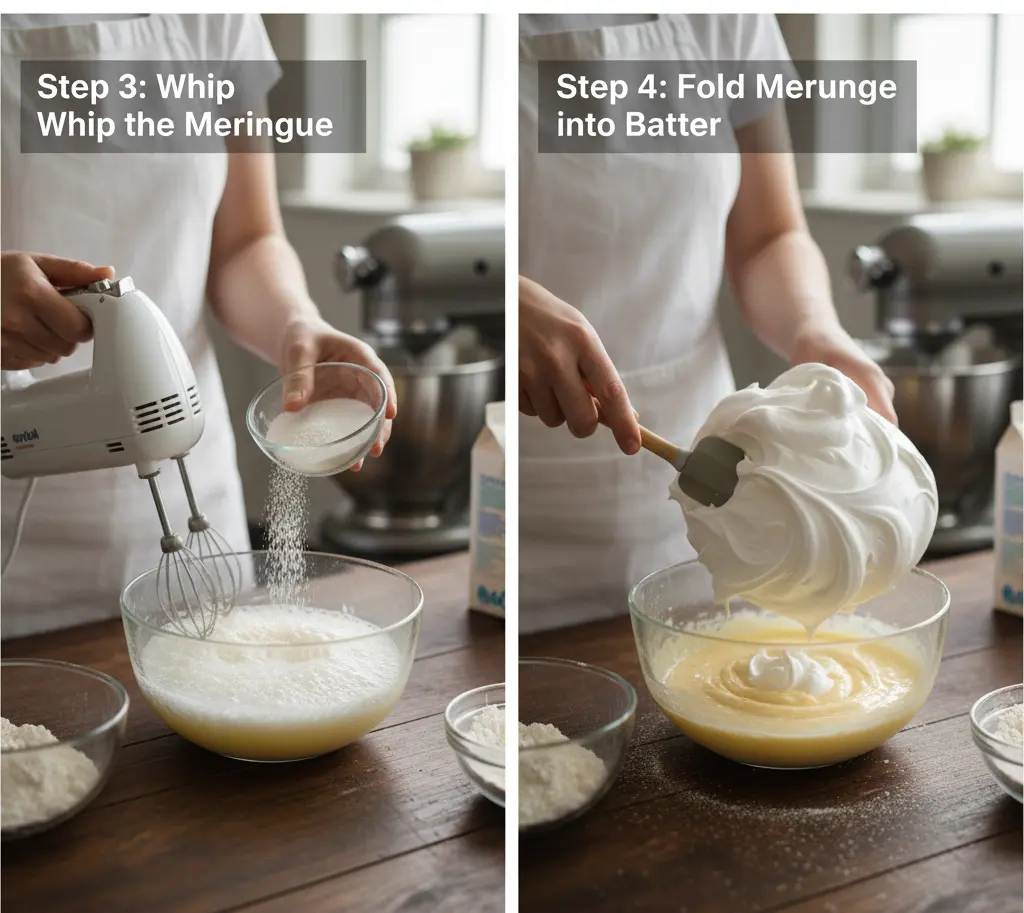
Step 5: Fold Meringue into Batter
This is where the magic happens. Take one-third of the meringue and fold it into the cream cheese mixture using gentle, sweeping motions. This initial addition lightens the base, making it easier to incorporate the remaining meringue without deflating it. Add half of the remaining meringue and fold carefully, then add the final portion. Use a spatula to cut through the center, sweep along the bottom, and fold over the top—rotate the bowl a quarter turn and repeat. Continue until no white streaks remain, but avoid over-folding.
Critical Success Factor: Proper folding technique preserves approximately 70% of the air bubbles you worked so hard to create during whipping, directly determining whether your cake achieves that wobbling, jiggly consistency.
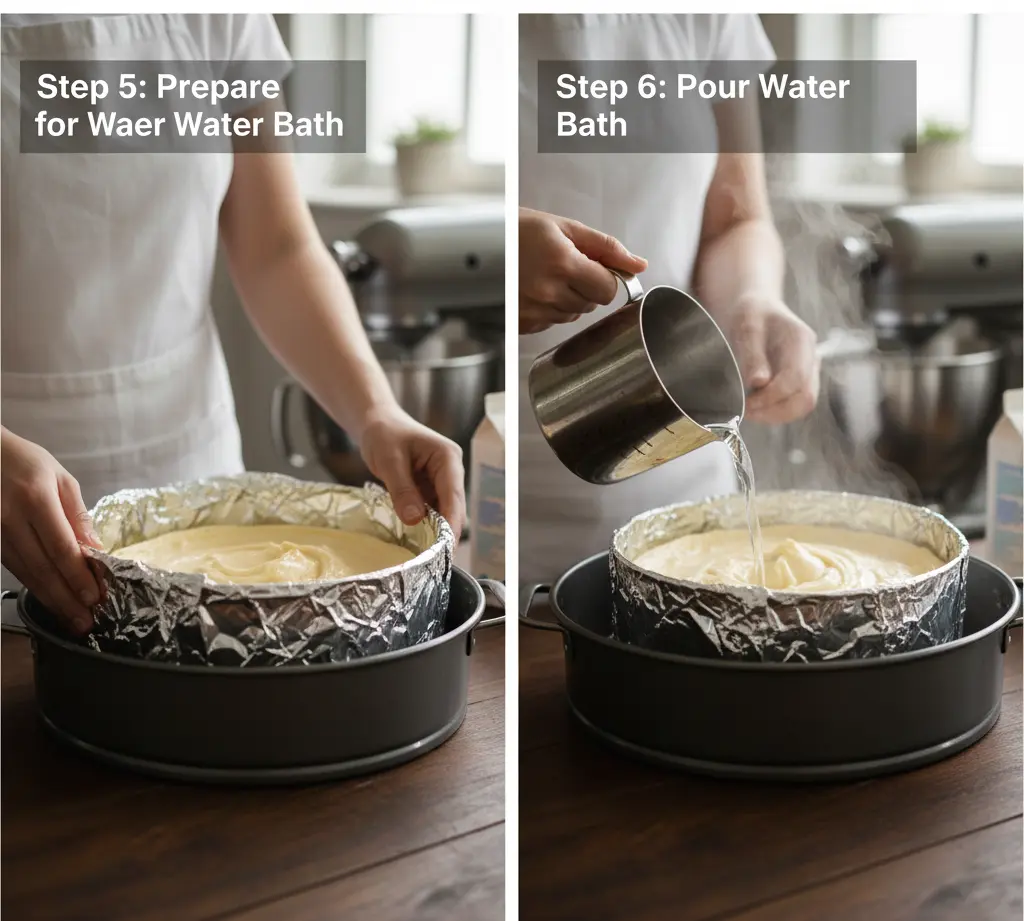
Step 6: Pour and Prepare for Water Bath
Pour the batter into your prepared springform pan, using a spatula to smooth the top. Tap the pan gently on the counter 2-3 times to release any large air pockets. Place the pan in the larger roasting pan, then carefully pour hot water into the roasting pan until it reaches halfway up the sides of the springform pan. This water bath (bain-marie) creates a gentle, humid environment that prevents cracking and ensures even cooking throughout this delicate sponge cake.
Temperature Tip: Use water that’s hot but not boiling—around 150°F (65°C) is ideal. Boiling water can cause the edges to cook too quickly, compromising the uniform texture.
Step 7: Execute the Two-Stage Baking Process
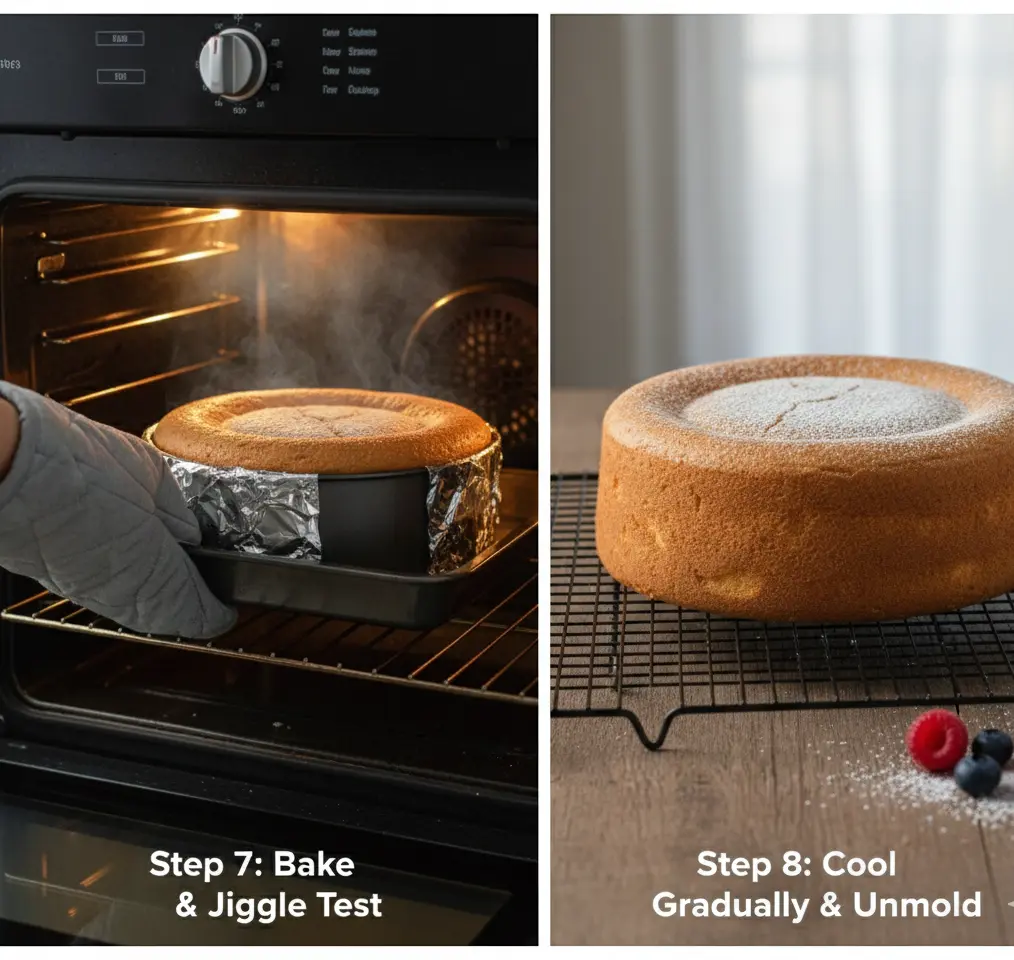
Place the entire setup in the preheated oven and bake at 320°F (160°C) for 15 minutes. This initial high heat sets the structure. Without opening the oven door, reduce the temperature to 285°F (140°C) and continue baking for 55 minutes. The cake is done when the top is golden brown and the center still jiggles slightly when gently shaken—it should move like set gelatin, not liquid batter.
Insider Knowledge: Resist the temptation to open the oven door during baking. Sudden temperature changes cause dramatic deflation in egg-based cakes, potentially reducing your cloud cake recipe from fluffy perfection to a dense disappointment.
Step 8: Cool Gradually to Prevent Collapse
Turn off the oven and crack the door open about 4 inches. Leave the cake inside for 15 minutes to cool gradually—this prevents thermal shock that causes dramatic sinking. Remove from the oven and the water bath, then let it cool to room temperature on a wire rack for an additional 45 minutes. The cake will deflate slightly as it cools (typically 10-15%), which is completely normal and expected.
Patience Pays Off: Rushing the cooling process is the number one reason home bakers experience excessive deflation. This gradual temperature reduction allows the protein structure to stabilize properly.
Step 9: Chill and Serve
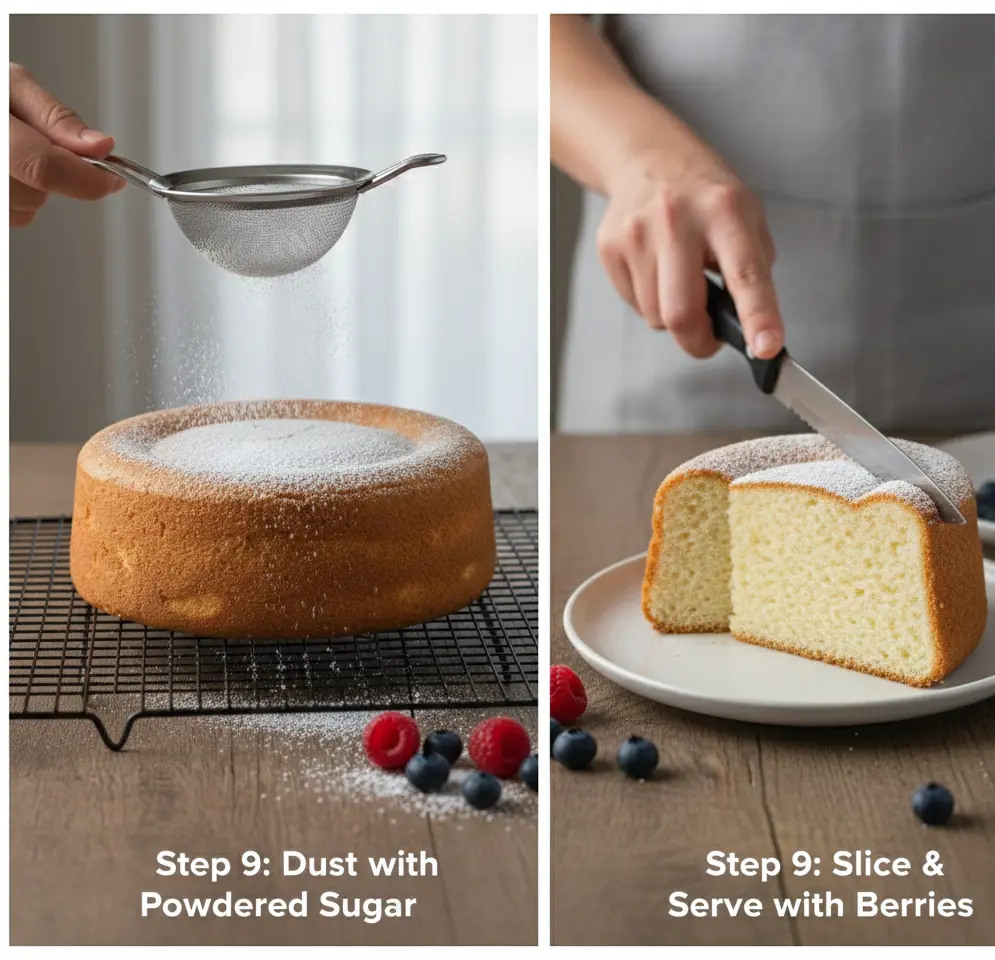
Once cooled, refrigerate the cake for at least 4 hours or overnight. This chilling period allows the texture to set completely, making slicing easier and enhancing the creamy, cheesecake-like flavor. Run a thin knife around the edges before releasing the springform pan. Dust with powdered sugar, serve with fresh berries, or enjoy plain to appreciate the pure, delicate flavor of this minimalist dessert.
Serving Suggestion: Slice with a hot, dry knife (wipe clean between cuts) for the cleanest edges that showcase the fine, even crumb structure of your masterpiece.
Nutritional Information: Understanding Your Cloud Cake
For health-conscious bakers and those tracking macronutrients, here’s the complete nutritional breakdown per serving (based on 12 servings):
Per Slice (1/12 of cake):
- Calories: 185 kcal
- Total Fat: 12g (18% Daily Value)
- Saturated Fat: 7g
- Trans Fat: 0g
- Cholesterol: 115mg (38% DV)
- Sodium: 95mg (4% DV)
- Total Carbohydrates: 14g (5% DV)
- Dietary Fiber: 0g
- Sugars: 11g
- Protein: 5g (10% DV)
- Vitamin A: 8% DV
- Calcium: 4% DV
- Iron: 3% DV