
Spotted Dick Recipe
The Ultimate Spotted Dick Recipe: A Traditional British Dessert That’s Easier Than You Think
Introduction: Why Does This 19th-Century Pudding Still Captivate Modern Kitchens?
Did you know that searches for traditional British puddings have increased by 47% in the past two years, with spotted dick recipe queries leading the charge among nostalgic dessert seekers? This Victorian-era steamed pudding, with its whimsical name and comforting appeal, continues to win hearts across generations. Whether you’re a seasoned baker or a curious beginner, this spotted dick recipe will guide you through creating an authentic, moist, and flavorful dessert that pairs perfectly with warm custard on a chilly evening.
Spotted dick—a classic suet pudding studded with currants and infused with citrus zest—represents the pinnacle of British comfort food. Despite its unusual name (derived from the “spotted” appearance of the dried fruit and the old English word “dick” meaning pudding), this traditional steamed dessert delivers a sublime combination of textures and flavors that modern recipes often fail to replicate. Today, I’ll share a foolproof spotted dick recipe that honors tradition while accommodating contemporary kitchens, complete with expert tips, timing breakdowns, and nutritional insights that will transform your dessert repertoire.
Ingredients: Everything You Need for the Perfect Spotted Dick
Creating an authentic spotted dick requires simple pantry staples combined with traditional suet for that characteristic tender crumb. Here’s your comprehensive ingredient list:
For the Pudding:
- 2 cups (250g) self-raising flour – The foundation providing structure and lift (substitute: 2 cups all-purpose flour + 2½ teaspoons baking powder)
- ¾ cup (115g) shredded beef suet – Creates the signature moist, melt-in-your-mouth texture (vegetarian alternative: cold, grated butter or vegetarian suet)
- ½ cup (100g) granulated sugar – Provides subtle sweetness that complements the fruit
- 1 cup (150g) dried currants – The classic “spots” offering bursts of concentrated sweetness (substitute: raisins, sultanas, or chopped dried cranberries)
- Zest of 1 large lemon – Adds bright, aromatic citrus notes that cut through the richness
- ¼ teaspoon fine sea salt – Enhances all flavors and balances sweetness
- ¾ cup (180ml) whole milk – Binds ingredients into a soft, pourable batter (substitute: plant-based milk for dairy-free versions)
- 1 teaspoon pure vanilla extract – Adds depth and warmth to the overall flavor profile
For Serving:
- 2 cups prepared custard – The traditional accompaniment (Bird’s custard powder or homemade vanilla custard)
- Optional: golden syrup or treacle – For drizzling over individual servings
Pro Tip: Room-temperature ingredients combine more smoothly, creating a more uniform texture throughout your steamed pudding. The quality of your suet significantly impacts the final result—fresh suet from a butcher produces superior moisture compared to pre-packaged alternatives.
Timing: Plan Your Perfect Pudding Schedule
Understanding the time commitment helps you plan this delightful British dessert around your schedule:
- Preparation Time: 15 minutes – Measuring, mixing, and preparing your steaming apparatus
- Cooking Time: 90 minutes – Traditional steaming creates the authentic texture
- Cooling Time: 10 minutes – Allows the pudding to set before unmolding
- Total Time: 115 minutes (approximately 1 hour 55 minutes)
Efficiency Insight: This spotted dick recipe requires 90 minutes of steaming time, which is 20% less than many traditional recipes that call for 2+ hours. During steaming, you’re free to prepare accompanying custard, tidy up, or simply relax—the pudding requires minimal supervision once properly set up.
Make-Ahead Option: Prepare the batter up to 2 hours in advance and store covered in the refrigerator. Bring to room temperature for 15 minutes before steaming for optimal results.
Step-by-Step Instructions: Crafting Your Traditional Spotted Dick
Step 1: Prepare Your Steaming Setup
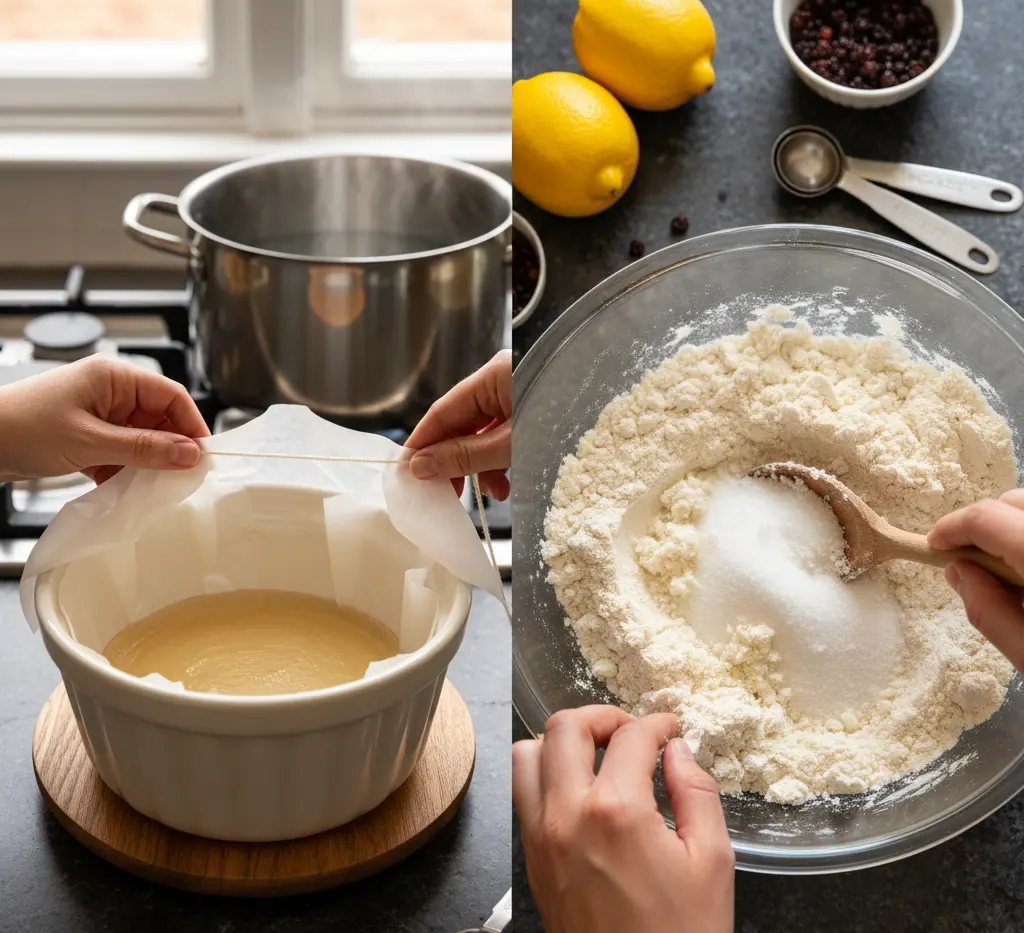
Begin by setting up your steaming equipment before mixing ingredients. Fill a large pot with water to approximately 2 inches depth and bring to a gentle simmer. Grease a 1.5-quart (1.5-liter) pudding basin thoroughly with butter, paying special attention to the bottom and sides. Cut a circle of parchment paper to fit the basin’s base, then grease the paper as well—this prevents sticking and ensures clean removal.
Expert Tip: If you don’t have a traditional pudding basin, a heatproof bowl works perfectly. Create a pleated parchment paper and foil lid (pleating allows for expansion) secured tightly with kitchen string. The pleat is crucial as it accommodates the pudding’s rise during steaming.
Step 2: Combine Dry Ingredients
In a spacious mixing bowl, whisk together the self-raising flour, sugar, and salt until evenly distributed. This aeration step, though brief, incorporates air that contributes to a lighter crumb structure. Add the shredded suet and use your fingertips to rub it gently into the flour mixture until it resembles coarse breadcrumbs with pea-sized pieces of suet visible throughout.
Why This Matters: The suet coating individual flour particles creates layers that melt during steaming, producing the characteristic tender, moist texture that distinguishes spotted dick from ordinary cakes.
Step 3: Add Currants and Citrus Zest
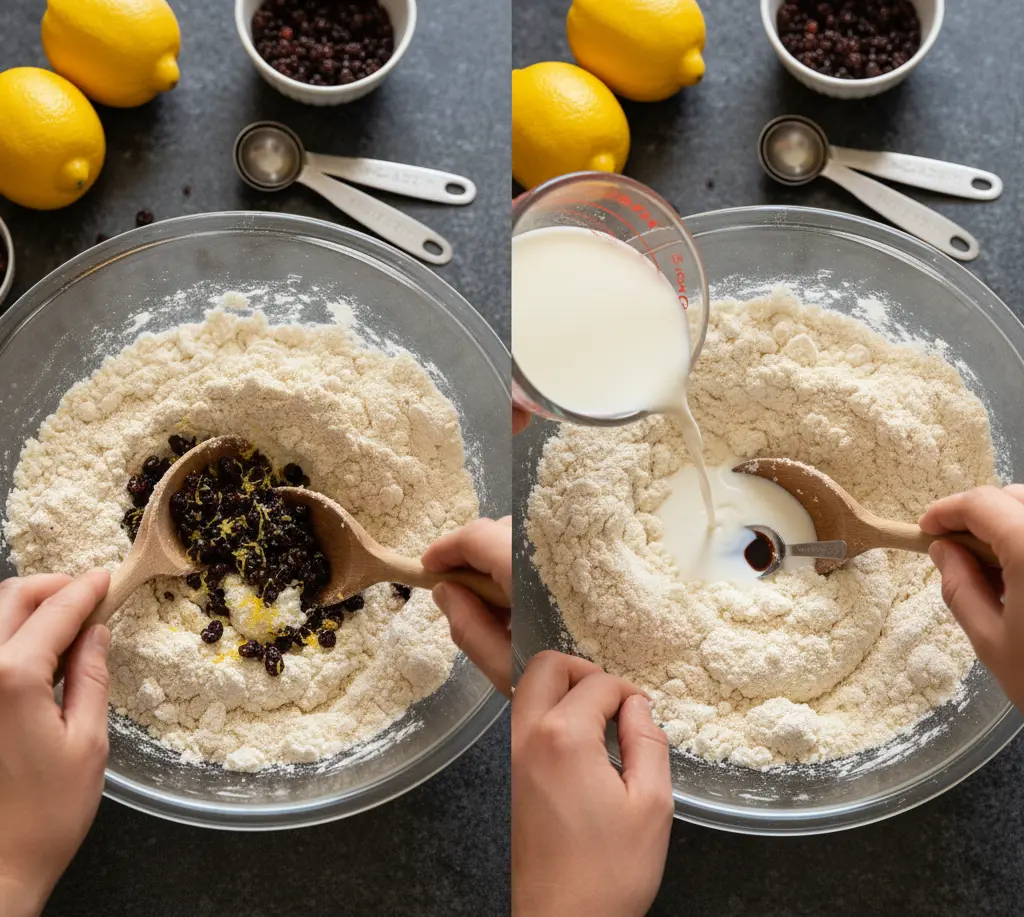
Fold in the dried currants and lemon zest, ensuring even distribution throughout the flour mixture. Toss the fruit gently to coat each currant with flour—this prevents them from sinking to the bottom during steaming. The lemon zest provides aromatic oils that perfume the entire pudding, creating a balanced flavor profile that prevents the dessert from tasting overly heavy.
Flavor Variation: For a more complex taste, add ½ teaspoon mixed spice (a British blend of cinnamon, nutmeg, and allspice) or substitute orange zest for a sweeter citrus note.
Step 4: Create the Batter
Make a well in the center of your dry ingredients and pour in the milk and vanilla extract. Using a wooden spoon or spatula, gently fold the mixture together until just combined—the batter should be thick yet pourable, similar to a soft scone dough. Avoid overmixing, which develops gluten and creates a tough texture. Some small flour pockets are acceptable and will hydrate during steaming.
Consistency Check: The batter should drop reluctantly from your spoon. If too thick, add milk one tablespoon at a time; if too thin, sprinkle in additional flour.
Step 5: Fill and Seal the Basin
Transfer the batter into your prepared pudding basin, smoothing the top with the back of a spoon. Leave approximately ¾ inch of space at the top to allow for expansion. Cover with your pleated parchment and foil lid, securing tightly with kitchen string. Create a handle by tying a long piece of string across the top—this facilitates easy removal from the pot.
Safety First: The handle prevents burns when lifting the hot basin from boiling water. Double-check that your covering is watertight to prevent water from seeping into the pudding during steaming.
Step 6: Steam to Perfection
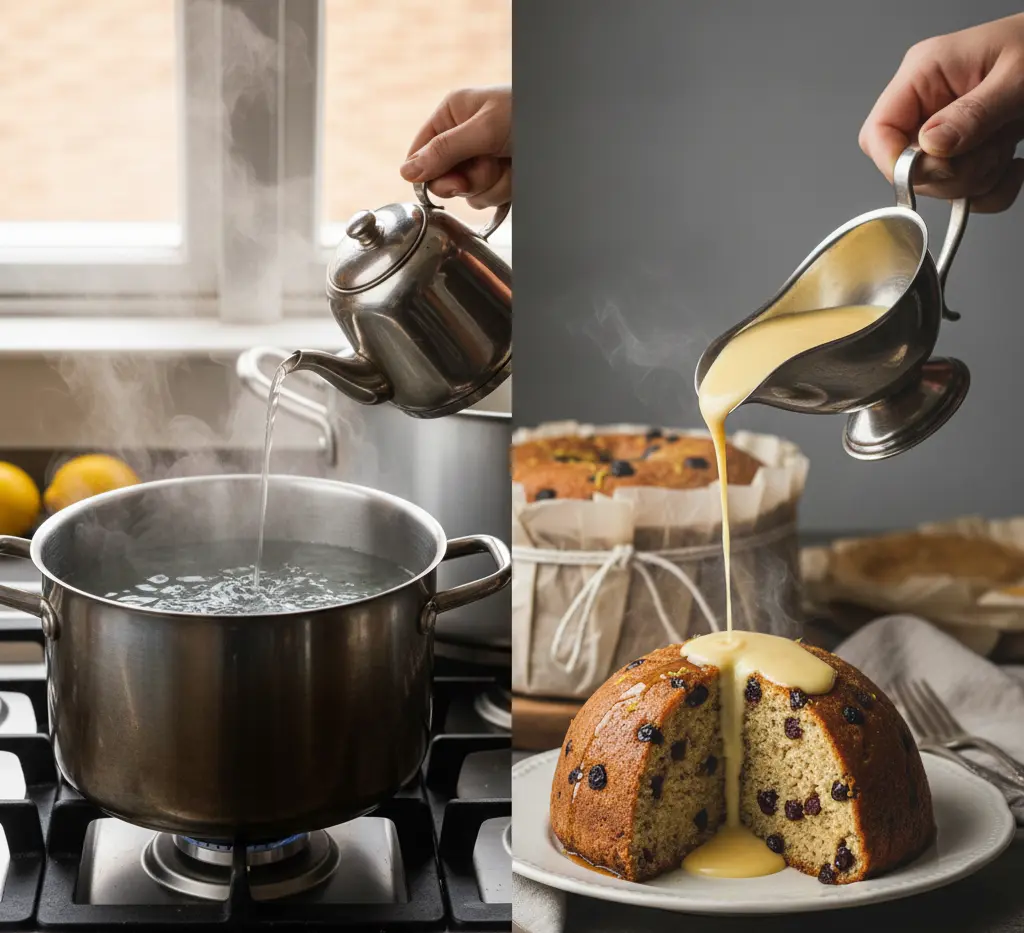
Carefully lower the covered basin into your simmering water. The water should reach halfway up the basin’s sides. Cover the pot with a tight-fitting lid and maintain a gentle, consistent simmer—vigorous boiling creates uneven cooking and a waterlogged exterior. Steam for 90 minutes, checking the water level every 30 minutes and adding boiling water as needed to maintain the proper depth.
Temperature Precision: A consistent 212°F (100°C) environment ensures even cooking throughout. Using boiling water for refills prevents temperature drops that extend cooking time.
Step 7: Test for Doneness and Serve
After 90 minutes, carefully remove the basin using your string handle or kitchen tongs. Remove the covering and insert a skewer into the center—it should emerge clean or with a few moist crumbs (not wet batter). Let stand for 10 minutes in the basin, then run a thin knife around the edges and invert onto a serving plate.
Presentation Excellence: Serve immediately, slicing into generous wedges. Top each portion with a ladleful of warm custard, allowing it to cascade down the sides. For added indulgence, drizzle with golden syrup or serve alongside clotted cream.
Nutritional Information: Understanding Your Dessert
Here’s a comprehensive nutritional breakdown per serving (based on 8 servings):
Per Slice (without custard):
- Calories: 285 kcal
- Total Fat: 11g (14% DV)
- Saturated Fat: 6g (30% DV)
- Trans Fat: 0g
- Cholesterol: 25mg (8% DV)
- Sodium: 180mg (8% DV)
- Total Carbohydrates: 42g (15% DV)
- Dietary Fiber: 1.5g (5% DV)
- Total Sugars: 20g
- Added Sugars: 12g (24% DV)
- Protein: 4g (8% DV)
- Vitamin D: 0.2mcg (1% DV)
- Calcium: 85mg (7% DV)
- Iron: 1.8mg (10% DV)
- Potassium: 145mg (3% DV)