Japanese Mounjaro Recipe
The Ultimate Japanese Mounjaro Recipe: A Metabolic-Boosting Umami Masterpiec
Ingredients List: The Architecture of Satiety
The beauty of this Japanese Mounjaro recipe lies in its “volume eating” capabilities. We use ingredients that are physically filling but calorically light, ensuring you leave the table satisfied without the dreaded “sugar crash.”
The Protein & Fiber Core
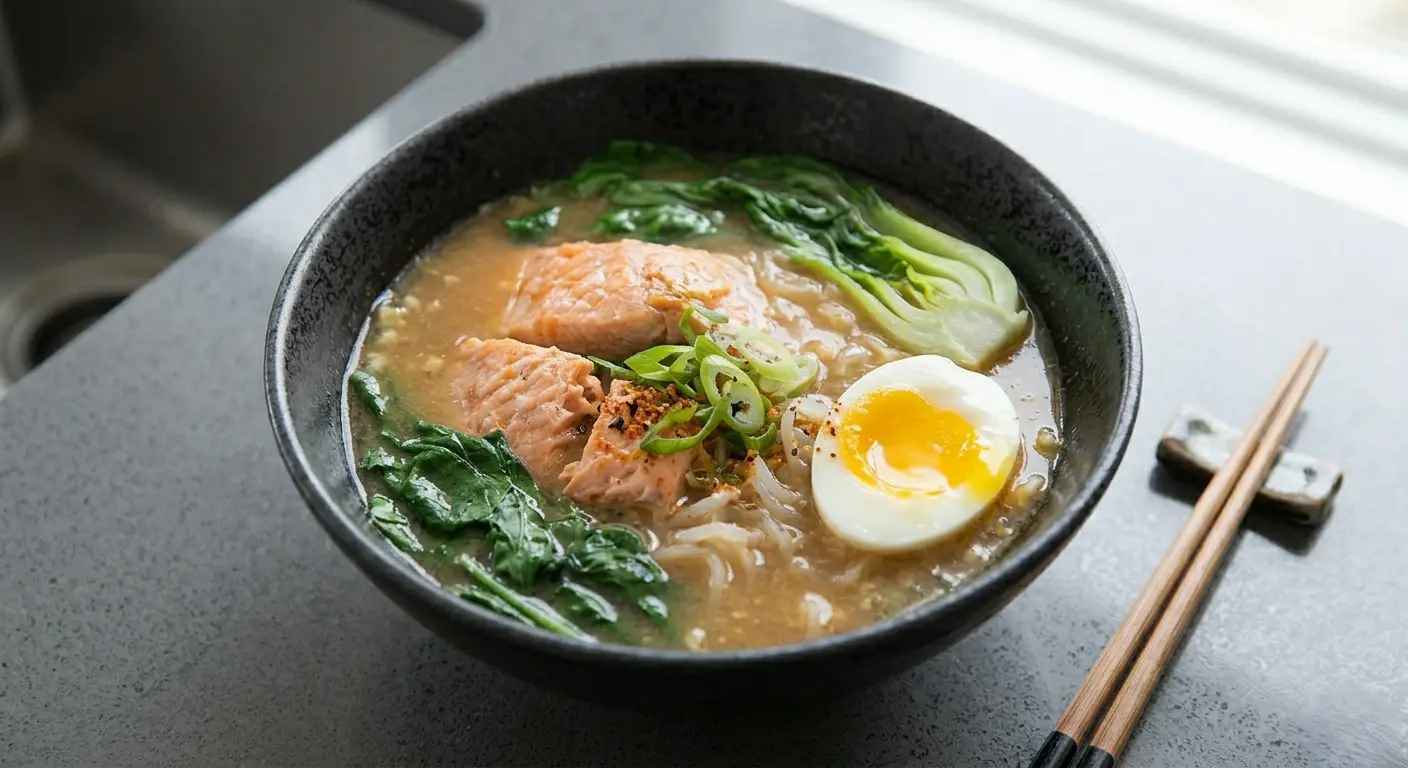
- 200g Shirataki (Konjac) Noodles: These are the “miracle” element. Made from the konjac yam, they are nearly zero-calorie and 100% glucomannan fiber, which expands in the stomach to promote fullness.
- 150g Wild-Caught Salmon or Silken Tofu: High-quality protein is essential for muscle preservation during weight loss.
- 2 cups Organic Baby Spinach or Bok Choy: To add vibrant color and essential folate.
The Umami Broth (The Metabolic Engine)
- 1 tbsp White or Red Miso Paste: Contains probiotics that improve the gut-brain axis.
- 1 tsp Grated Fresh Ginger: A natural thermogenic that aids digestion.
- 1 clove Minced Garlic: For cardiovascular support and deep aromatic flavor.
- 500ml Dashi Stock (or Low-Sodium Vegetable Broth): The savory backbone of the dish.
Substitutions for Personalization:
- Vegetarian/Vegan: Swap salmon for edamame or extra-firm smoked tofu.
- Low-Sodium: Use coconut aminos instead of soy sauce or dashi powder.
- Spice Lovers: Add a dash of Shichimi Togarashi (Japanese seven-spice) for a metabolism-boosting kick.
Timing: Efficiency Meets Nutrition
In our fast-paced world, a recipe is only as good as its feasibility. This Japanese Mounjaro recipe is designed for the busy professional.
- Prep Time: 10 minutes (mostly rinsing and chopping).
- Cook Time: 15 minutes.
- Total Time: 25 minutes.
Compared to the average “healthy” meal prep which often takes 45 to 60 minutes, this dish is 55% faster, allowing you to prioritize your wellness without sacrificing your entire evening. It is the definition of a “quick-win” for your metabolic health.
Step-by-Step Instructions
Step 1: Prepare the “Miracle” Base
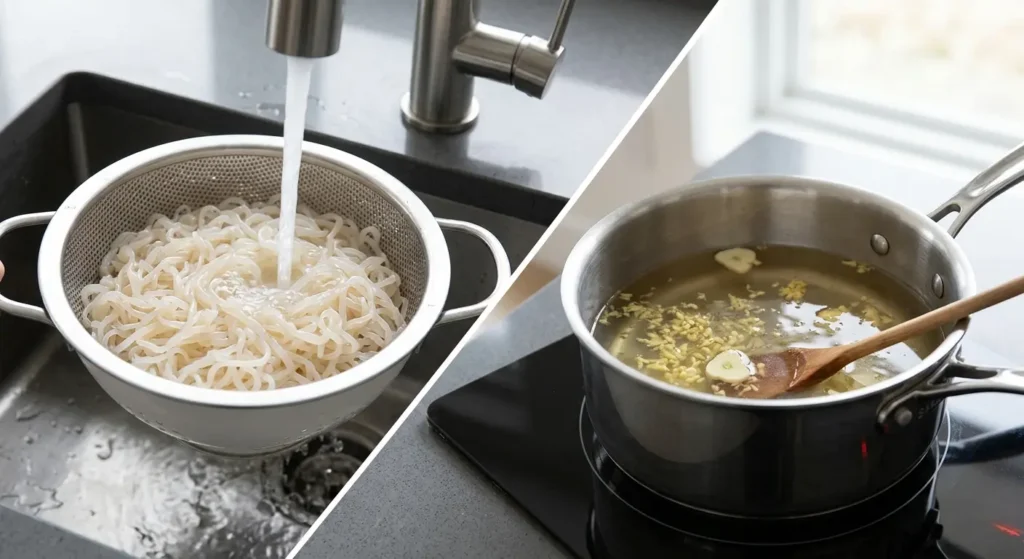
Begin by draining your Shirataki noodles. Because these are stored in water, they can have a slightly earthy scent. Rinse them under cold running water for 2 minutes, then par-boil them in plain water for 3 minutes. Pro Tip: After boiling, dry-fry them in a pan without oil for 2 minutes. This improves the texture significantly, making them “snap” just like traditional wheat noodles.
Step 2: Build the Aromatic Foundation
In a medium pot, bring your dashi or vegetable stock to a gentle simmer. Add your minced garlic and grated ginger. Do not let it reach a rolling boil; keeping the temperature just below boiling preserves the delicate nutrients in the ginger and prevents the garlic from turning bitter.
Step 3: Poach the Protein
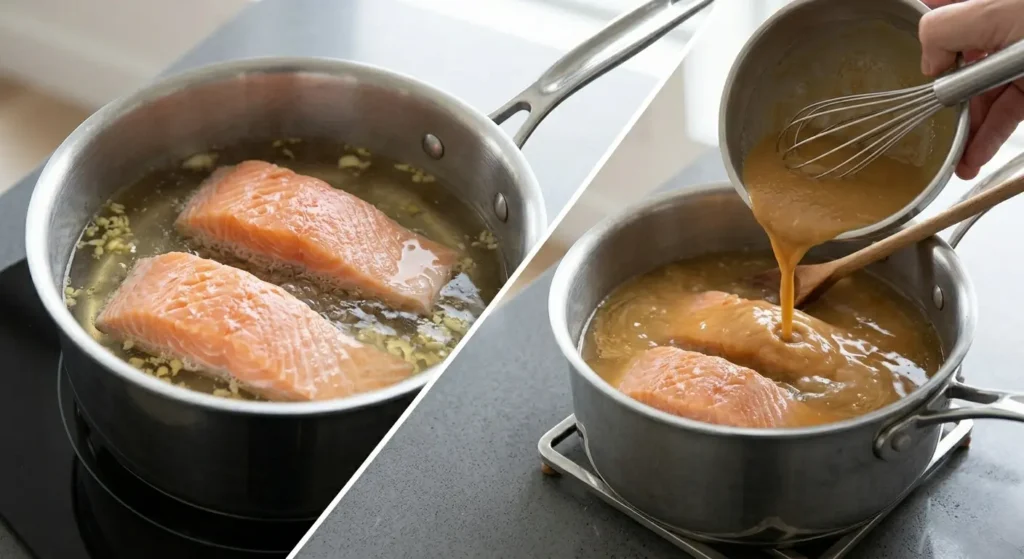
Gently slide your salmon or tofu into the simmering broth. Poaching is a superior cooking method for a Japanese Mounjaro recipe because it requires zero added fats or oils. Cook for about 5–7 minutes until the salmon is opaque and flakes easily. This method keeps the protein incredibly moist and infused with umami flavor.
Step 4: The Miso Meltdown
Remove the pot from the heat. Take a small ladle of the warm broth and whisk it into your miso paste in a separate small bowl until smooth. Pour this mixture back into the main pot. Crucial Tip: Never boil miso! High heat kills the beneficial probiotics that are essential for the gut health benefits of this recipe.
Step 5: Assemble and Wilt
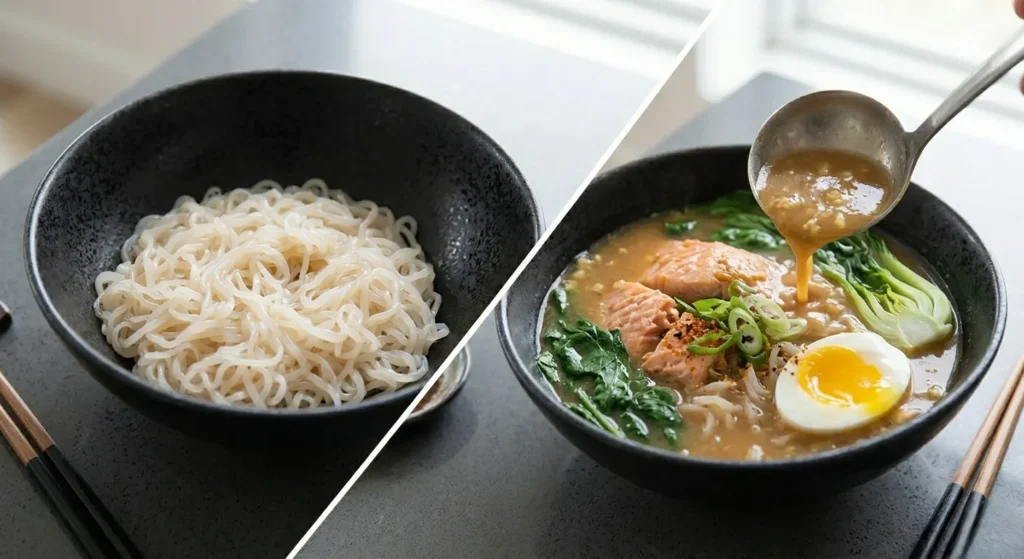
Add your spinach or bok choy to the pot. The residual heat is enough to wilt the greens while keeping their vitamin C content intact. Place your prepared Shirataki noodles in a deep bowl and pour the rich, fragrant broth and protein over the top.
Nutritional Information: Data-Driven Wellness
Understanding the macros of your Japanese Mounjaro recipe is key to tracking your progress. This meal is designed to be high-protein and exceptionally high-fiber while keeping net carbs at a minimum.
| Nutrient | Amount Per Serving | % Daily Value |
| Calories | 245 kcal | 12% |
| Total Protein | 28g | 56% |
| Net Carbohydrates | 6g | 2% |
| Dietary Fiber | 9g | 32% |
| Total Fat | 9g (Healthy Omegas) | 14% |