Sourdough Discard Pancakes
Sourdough Discard Pancakes
Fluffy, Tangy & Ready in 25 Minutes
Ingredients
Every ingredient below earns its place. The sourdough discard is the star — use discard that’s been in the fridge for no longer than 2 weeks for the best tangy flavor without any off-notes. Room temperature ingredients emulsify better and produce a lump-free batter.🖨 Print Recipe
Wet ingredients
200g Sourdough discardRoom temp. Unfed, straight from the fridge is fine.
180ml Whole milkSub: oat milk or buttermilk for extra tang
2 large EggsRoom temp. Yolks add richness; whites add lift.
30g Unsalted butter, meltedSub: neutral coconut oil or avocado oil
1 tsp Pure vanilla extractOptional but rounds the flavor beautifully
Dry ingredients
120g All-purpose flourSub: whole wheat flour for a nuttier, denser pancake
2 tbsp Granulated sugarSub: maple syrup or honey in the wet mix
1 tsp Baking powderAluminum-free preferred — no metallic aftertaste
½ tsp Baking sodaReacts with discard’s acid for extra lift
½ tsp Fine sea saltBalances the tang; don’t skip it
For cooking
1–2 tbsp Clarified butter or gheeSub: avocado oil. Neutral, high-smoke-point fat
Timing
These sourdough discard pancakes are remarkably fast for a fermented recipe. Because the discard is already fermented, there’s no overnight rest required — unlike many sourdough pancake recipes that demand 8–12 hours. You’re looking at 25 minutes from cold starter to hot stack, which is approximately 20% faster than the average buttermilk pancake recipe (which requires resting the batter for at least 10 minutes).
Prep (5 min)Cook (20 min)
| Stage | Time | Notes |
|---|---|---|
| Measure & mix wet ingredients | 2 min | Whisk discard, milk, eggs, butter |
| Combine dry ingredients | 1 min | Whisk flour, sugar, leaveners, salt |
| Fold batter together | 1 min | 5–8 strokes only — lumps are fine |
| Preheat skillet | 2 min | Medium-low; water droplet should dance |
| Cook 8 pancakes (2 at a time) | 16–20 min | ~2 min per side, 4 batches |
| Total | ~25 min | No overnight rest required |
Step-by-Step Instructions
Follow these steps in order for the fluffiest sourdough discard pancakes every time. The biggest mistake most bakers make? Overmixing. This recipe will show you exactly when to stop.
1 Pull Your Discard & Let It Come to Temperature
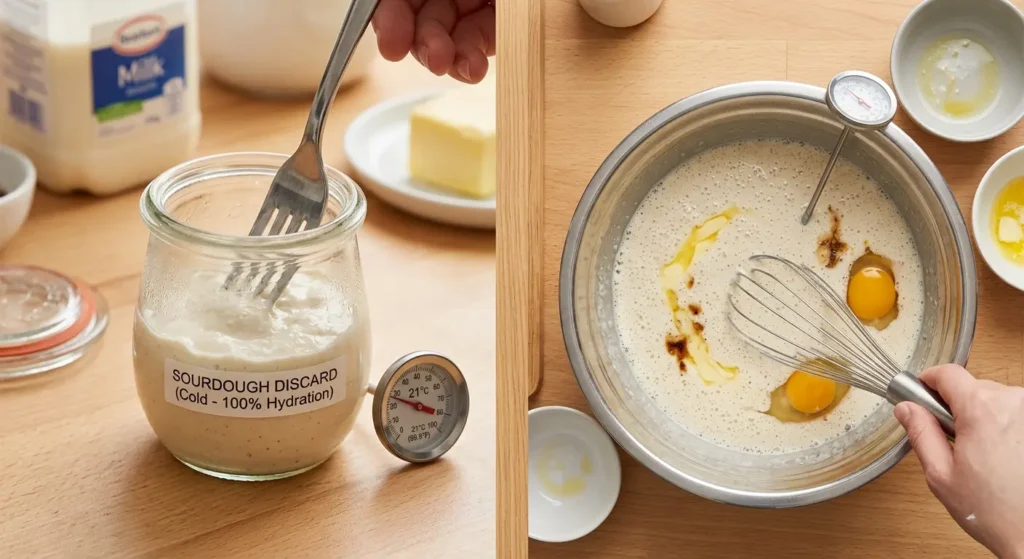
Remove your sourdough discard from the refrigerator 15–20 minutes before you begin (or while you prep other ingredients). Cold discard added directly to warm butter can cause the fat to seize. You’re aiming for discard that’s between 18–22°C (65–72°F) — just barely cool to the touch. Stir it once with a fork to homogenize any liquid that has separated on top; this is just hooch (alcohol from fermentation) and is perfectly normal.
Pro tip: The hydration of your discard matters. Most 100% hydration starters (equal parts flour and water by weight) work perfectly in this recipe. If yours is thicker (50–75% hydration), add an extra 30ml of milk to the wet mix.
2 Whisk the Wet Ingredients Together
In a large mixing bowl, whisk together the room-temperature sourdough discard, milk, eggs, melted (and cooled) butter, and vanilla extract. Whisk vigorously for about 20 seconds until the mixture looks uniform and slightly frothy. The discard will loosen up considerably once mixed with the liquid — don’t be alarmed if it looks stringy at first; those are simply gluten strands from the fermented flour, and they’ll integrate smoothly.
Pro tip: If your butter is still hot, temper it first by whisking a tablespoon of the cold milk into it before adding it to the bowl. This prevents scrambling the eggs.
3 Combine the Dry Ingredients Separately
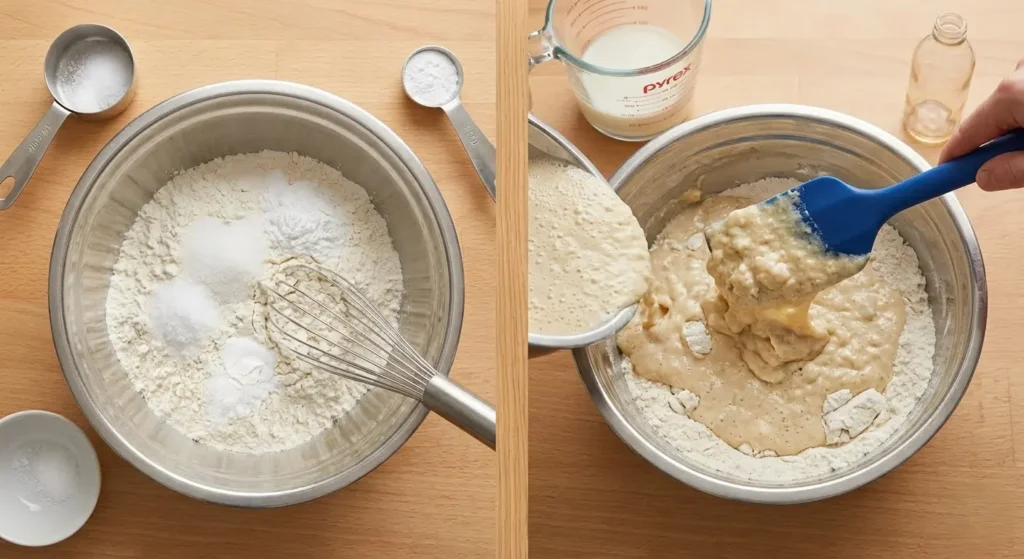
In a separate medium bowl, whisk together the all-purpose flour, granulated sugar, baking powder, baking soda, and fine sea salt for 15–20 seconds. Whisking the dry ingredients together before folding them in ensures even distribution of the leaveners — meaning every single pancake gets the same rise. Never skip this step; uneven distribution of baking soda leads to soapy-tasting bites in random spots.
Science note: The baking soda reacts specifically with the lactic acid in your sourdough discard to produce CO₂. The baking powder provides backup leavening from steam. Together, they create a double-rise effect — one in the batter, one on the hot pan — which is what makes these pancakes exceptionally airy.
4 Fold Wet into Dry — and Stop at 8 Strokes
Pour the wet mixture into the dry ingredients bowl (always wet into dry, not the other way around — this minimizes over-mixing). Using a large silicone spatula, fold the batter with broad, sweeping strokes. Count them: you want between 6 and 10 strokes. Stop when no large pockets of dry flour remain, even if the batter looks lumpy. Lumps are your friends — they steam open on the pan and create those beautiful, irregular holes. Overmixed batter develops tough gluten networks that result in flat, rubbery pancakes.
Texture test: The finished batter should fall in a thick ribbon from your spatula, not pour like water. If it pours too freely, add flour one tablespoon at a time. If it’s too stiff to fall at all, add milk one tablespoon at a time.
5 Preheat Your Pan to the Right Temperature
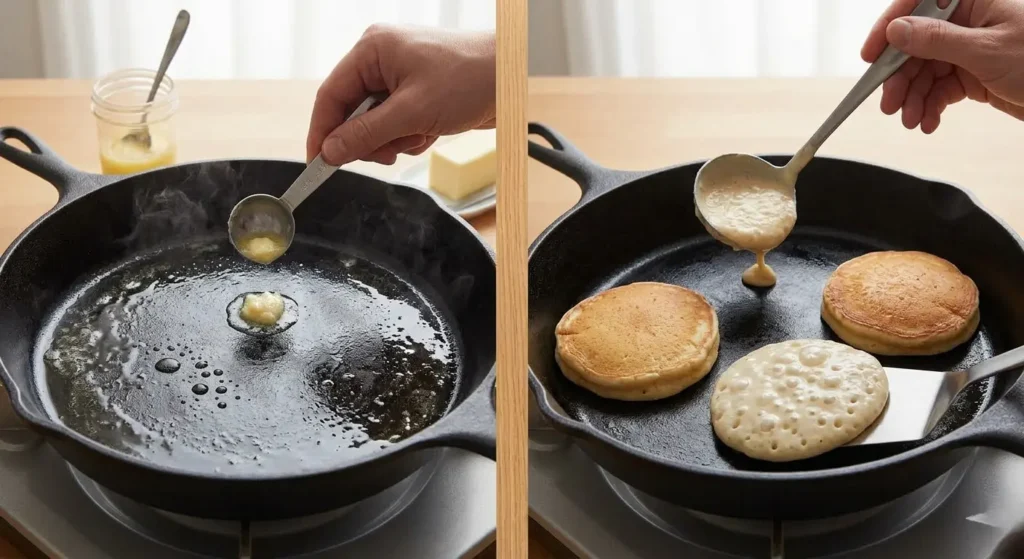
Place a cast iron skillet or non-stick pan over medium-low heat for 2 full minutes before adding any fat. The correct pan temperature is the most overlooked variable in pancake making. To test: flick a few drops of water onto the surface. If they immediately evaporate and sputter wildly, the pan is too hot. If they just sit there, it’s too cool. You want them to form small beads that skitter across the surface (the Leidenfrost point) — around 175°C (347°F). Add your clarified butter and swirl to coat.
Pan choice matters: Cast iron holds heat evenly and produces the best crust. A thin non-stick pan will have hot spots that scorch the edges. If using non-stick, keep the heat at true medium-low and expect a slightly paler (but still delicious) result.
6 Ladle, Cook, Watch for Bubbles — Then Flip Once
Use a ¼ cup (60ml) measure or ladle to portion the batter onto the pan — two at a time, giving each pancake at least 3cm of space. Cook undisturbed for 2 minutes, until bubbles form across the entire surface and the edges look matte (no longer glossy or wet). This is your signal. Slide a thin, wide spatula under the pancake and flip in one confident motion — hesitation causes tearing. Cook on the second side for 1–1.5 minutes, until golden brown. The second side cooks faster; watch it closely.
The one-flip rule: Flip your sourdough discard pancakes once and only once. Multiple flips compress the steam pockets inside, deflating the rise you’ve worked so hard to create. Resist the urge.
7 Keep Warm in the Oven & Serve Fresh
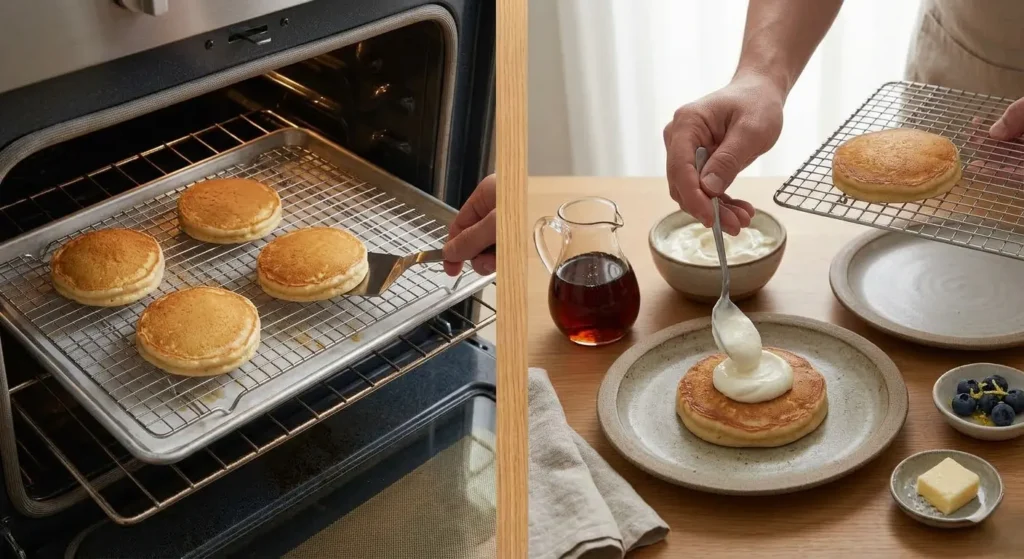
Preheat your oven to 93°C (200°F) and set a wire rack over a baking sheet inside. As each batch finishes, transfer the pancakes to the rack — never stack them directly, as steam gets trapped and makes the bottoms soggy. The wire rack allows air circulation on both sides, keeping them warm and crisp-edged for up to 20 minutes while you cook the remaining batches. Serve immediately with your choice of toppings.
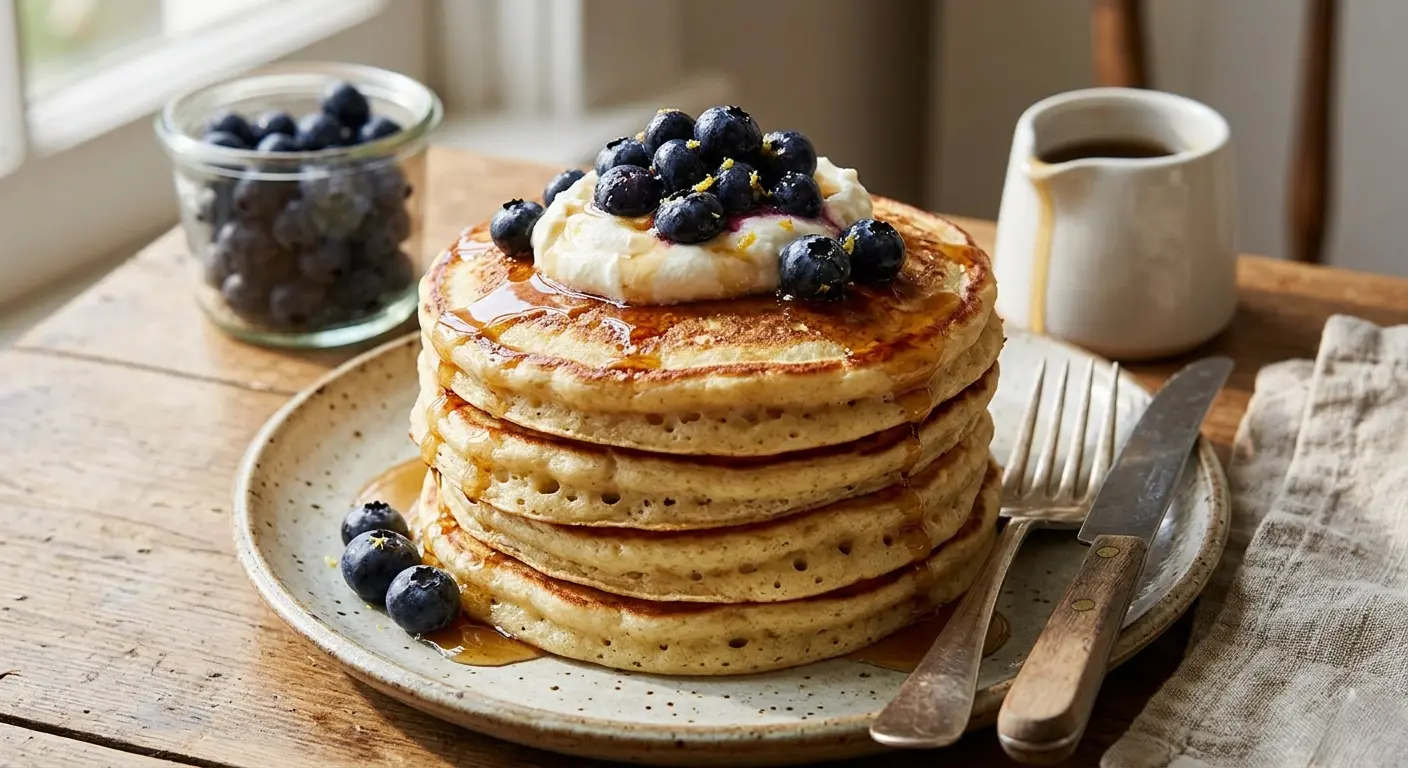
Serving suggestion: The tang of sourdough discard pancakes pairs beautifully with rich, sweet toppings: real maple syrup, whipped crème fraîche, fresh blueberries macerated in lemon, or a drizzle of salted honey butter. Savory toppings work too — try smoked salmon with crème fraîche and dill.
Nutritional Information
The following values are calculated per serving of 2 pancakes (approximately 110g cooked weight), using the base recipe with whole milk and unsalted butter. Values will vary slightly based on the hydration and flour type of your sourdough starter, but the range below reflects typical 100% hydration white flour starters. Fermented grains have also been shown in several studies to have improved mineral bioavailability compared to unfermented equivalents — the phytic acid that blocks iron and zinc absorption is significantly reduced during the sourdough fermentation process.
Nutrition Facts
Serving size: 2 pancakes (approx. 110g) · Servings per batch: 4
Calories214 % Daily Value*
Total Fat 7.8g10%
Saturated Fat 4.1g21%
Trans Fat 0g
Cholesterol 68mg23%
Sodium 310mg13%
Total Carbohydrate 31g11%
Dietary Fiber 1.2g4%
Total Sugars 6.8g
Protein 7.4g15%
Iron8%
Calcium12%
* Percent Daily Values based on a 2,000 calorie diet. Values are estimates calculated using USDA FoodData Central and may vary based on ingredient brands and sourdough starter type.