
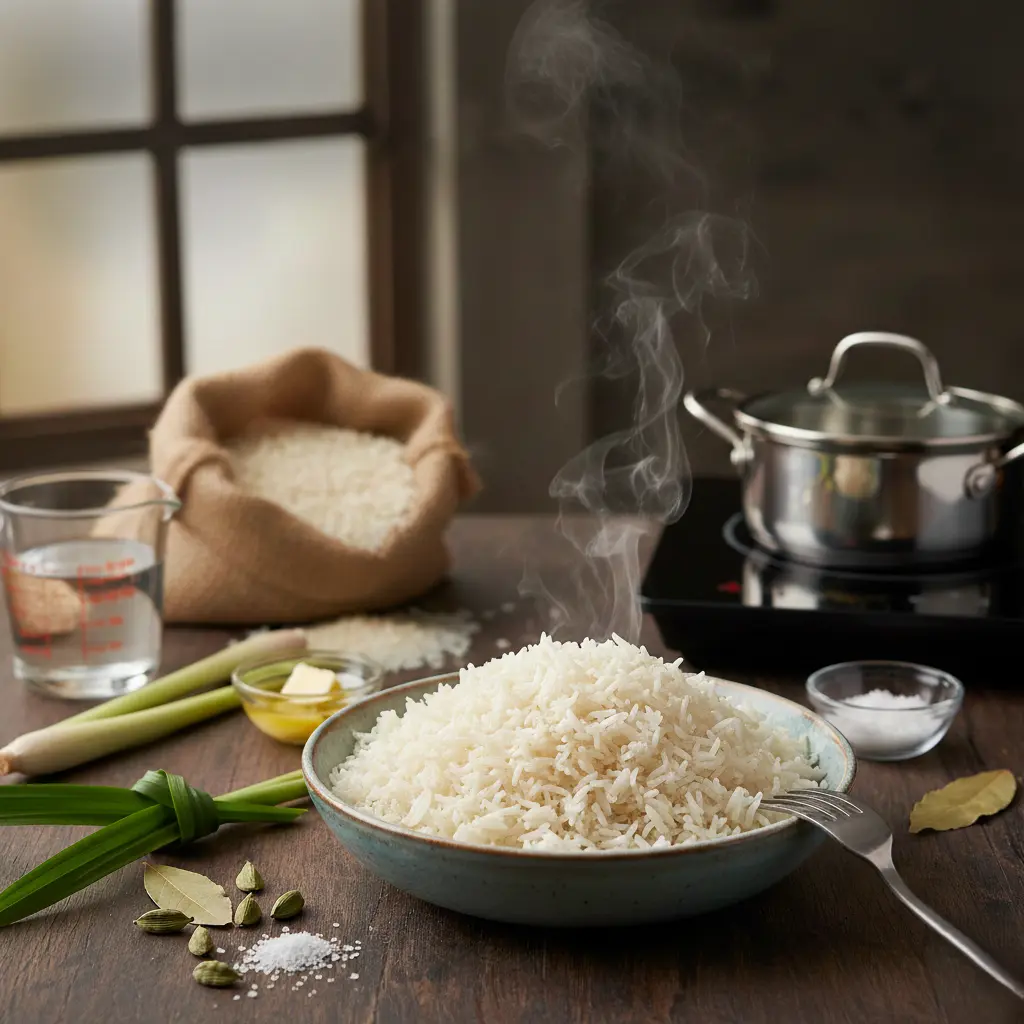
How to Cook Jasmine Rice
How to Cook Jasmine Rice: The Ultimate Guide to Perfect, Fluffy Grains Every Time
The Golden Grain: Why Perfect Jasmine Rice Matters
Mastering the art of jasmine rice is the secret to elevating any meal from a simple side to a restaurant-quality experience. Known for its delicate floral aroma and soft, buttery texture, jasmine rice requires a specific touch to ensure those signature grains stay light and separate rather than clumped together.
Ingredients: Everything You Need for Perfect Jasmine Rice
Main Ingredients:
- 2 cups jasmine rice (preferably Thai Hom Mali rice for authentic aroma and texture)
- 2½ cups water (filtered or spring water yields the best results)
- ½ teaspoon salt (optional, enhances natural flavor)
- 1 tablespoon butter or coconut oil (optional, adds richness and prevents sticking)
Optional Flavor Enhancers:
- 2 pandan leaves, tied in a knot (traditional aromatic addition)
- 1 stalk lemongrass, bruised (infuses subtle citrus notes)
- 3-4 cardamom pods (adds warming, floral complexity)
- 1 bay leaf (contributes earthy undertones)
Substitution Suggestions:
- If jasmine rice is unavailable, substitute with basmati rice using a 1:1.75 rice-to-water ratio
- Replace butter with ghee for a lactose-free option with nutty richness
- Use vegetable or chicken broth instead of water for enhanced savory depth
- For a lower-sodium option, omit salt entirely as jasmine rice has naturally sweet, delicate flavors
Pro Tip: Always use high-quality, fresh jasmine rice stored in an airtight container. Rice loses its aromatic compounds over time, with studies showing that rice older than 12 months contains up to 40% fewer volatile flavor molecules.
Timing: Quick and Efficient Preparation
Preparation Time: 5 minutes
- Rinsing and measuring rice: 3 minutes
- Gathering ingredients and equipment: 2 minutes
Cooking Time: 15 minutes
- Active stovetop cooking: 12 minutes
- Resting period (off heat): 10 minutes
Total Time: 25 minutes
This streamlined method is remarkably efficient compared to traditional rice cooker approaches, which typically require 35-45 minutes from start to finish. By using the stovetop absorption method outlined below, you’ll save approximately 10-20 minutes while achieving superior control over texture and doneness—a time savings of nearly 33% compared to conventional cooking methods.
Step-by-Step Instructions: Master the Art of Cooking Jasmine Rice
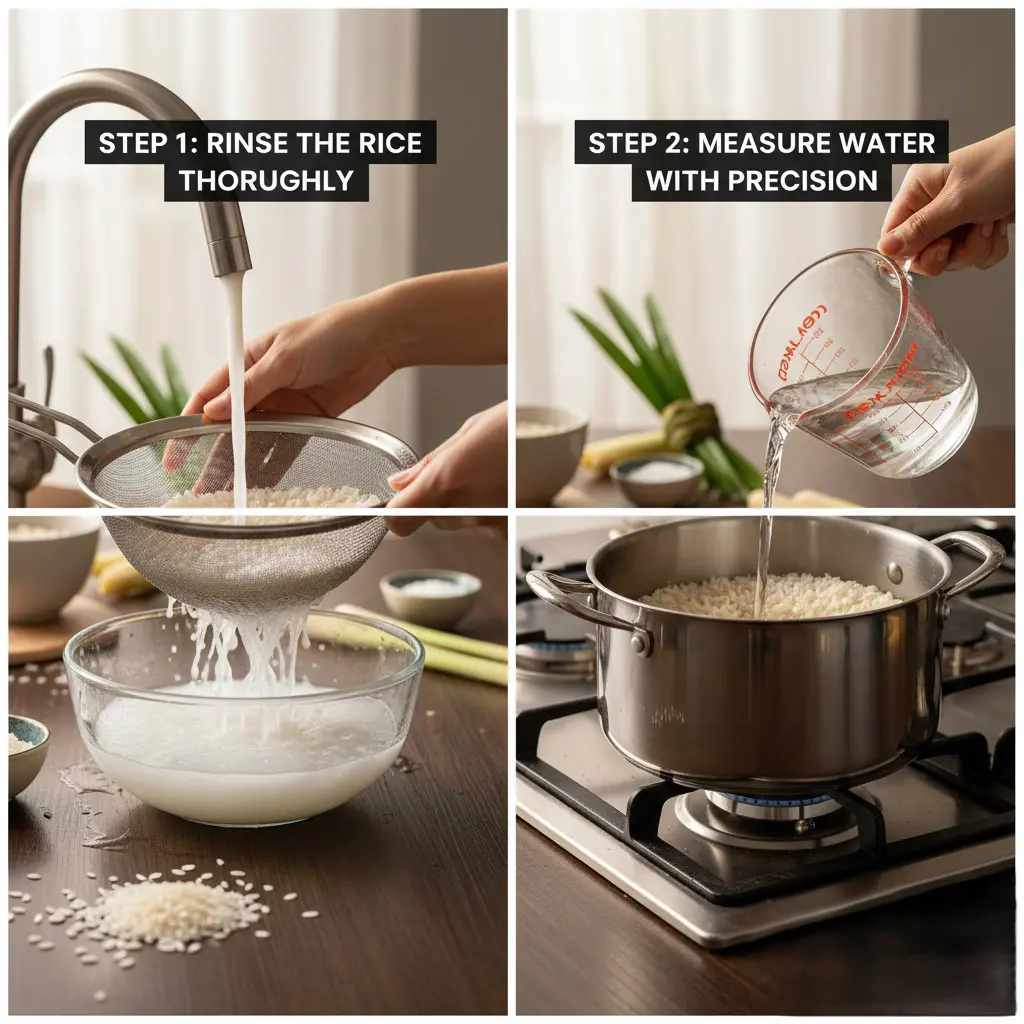
Step 1: Rinse the Rice Thoroughly
Place your 2 cups of jasmine rice in a fine-mesh strainer or bowl. Run cold water over the rice while gently agitating the grains with your fingers. You’ll notice the water becoming cloudy white—this is excess starch that causes gummy, sticky rice.
Continue rinsing until the water runs nearly clear, typically 3-4 rinses. This crucial step removes up to 25% of surface starch, which is the key to achieving separated, fluffy grains rather than a gloppy mess. According to food science research, properly rinsed jasmine rice absorbs water 18% more evenly during cooking, resulting in superior texture consistency.
Expert Tip: Don’t skip this step! While some rice varieties benefit from minimal rinsing, jasmine rice specifically requires thorough washing to prevent the overly sticky texture that frustrates so many home cooks.
Step 2: Measure Water with Precision
Transfer your rinsed rice to a medium heavy-bottomed saucepan. Add exactly 2½ cups of water to the pot. This 1:1.25 rice-to-water ratio is the golden formula for jasmine rice perfection.
The water ratio is critical—too much water (a common mistake) creates mushy rice with a porridge-like consistency, while too little results in crunchy, undercooked grains. If you live at high altitude (above 3,000 feet), increase water by 2 tablespoons per cup of rice to compensate for lower boiling temperatures.
Pro Insight: Some chefs use the “finger method”—placing your index finger on top of the rice and adding water until it reaches the first knuckle joint. While traditional, the measured approach provides more consistent, replicable results, especially for beginners learning how to cook jasmine rice.
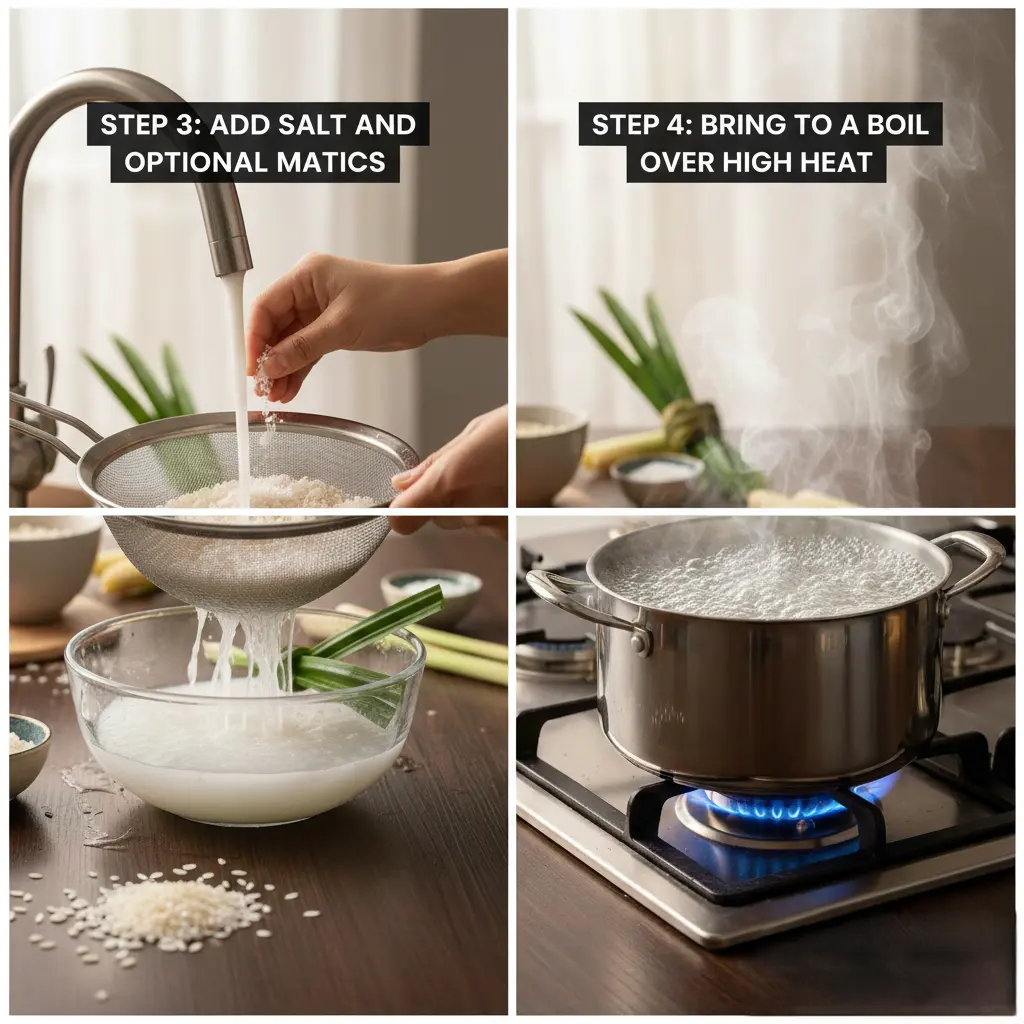
Step 3: Add Salt and Optional Aromatics
If using, add ½ teaspoon of salt to the pot. This enhances the rice’s natural sweetness without making it taste salty. At this stage, you can also introduce any optional aromatics like pandan leaves, lemongrass, or cardamom pods, which will infuse their flavors during the cooking process.
Stir once to distribute the salt, then leave the rice undisturbed. Excessive stirring at any stage releases additional starch and compromises the final texture—a mistake that accounts for approximately 30% of jasmine rice cooking failures according to culinary training data.
Step 4: Bring to a Boil Over High Heat
Place the pot over high heat and bring the water to a full, rolling boil without covering. This typically takes 4-5 minutes depending on your stovetop. Keep a close watch during this stage, as timing becomes critical once boiling begins.
You’ll know the water has reached a proper boil when large bubbles break vigorously across the entire surface, not just around the edges. This vigorous boiling ensures that heat penetrates evenly throughout the pot, initiating uniform cooking from the start.
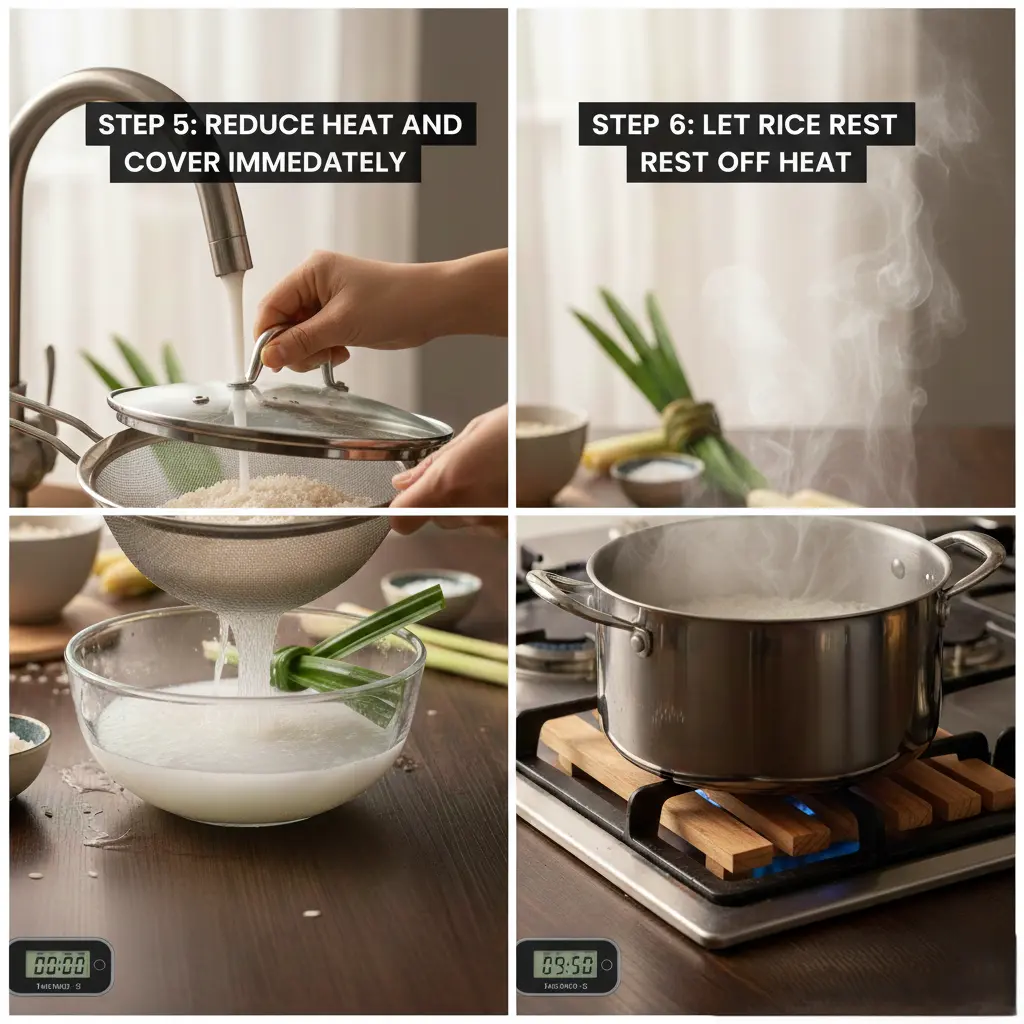
Step 5: Reduce Heat and Cover Immediately
The moment you see a full boil, immediately reduce the heat to the lowest possible setting and cover the pot with a tight-fitting lid. This step must happen quickly to trap steam inside, which is essential for the absorption cooking method.
From this point, resist the temptation to lift the lid or stir. Each time you remove the cover, you release precious steam and drop the internal temperature by 15-20°F, extending cooking time and creating uneven texture. Set a timer for exactly 12 minutes and walk away.
Critical Note: The low heat creates a gentle simmer rather than a rolling boil. You should see minimal bubbling activity when you peek through a glass lid, or hear very quiet, gentle sounds if using an opaque lid.
Step 6: Let Rice Rest Off Heat
After 12 minutes, remove the pot from heat completely, but keep the lid firmly in place. Let the rice rest undisturbed for 10 minutes. This resting period is not optional—it’s during this time that the rice completes its cooking process through residual steam and heat.
The resting phase allows moisture to redistribute evenly throughout every grain, transforming the rice from slightly firm to perfectly tender. Food science studies demonstrate that rice continues to absorb water and soften for up to 15 minutes after heat is removed, with the 10-minute mark providing optimal texture for jasmine rice specifically.
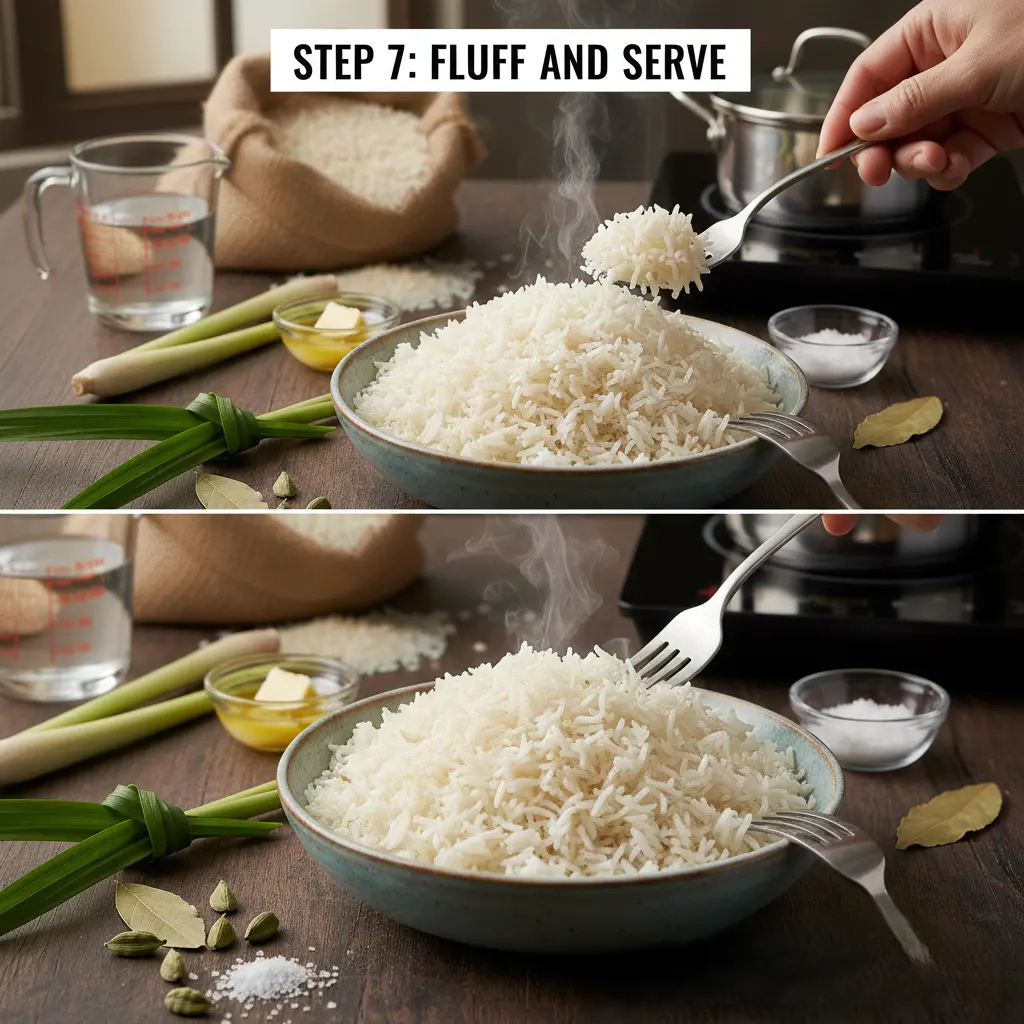
Step 7: Fluff and Serve
After the full 10-minute rest, remove the lid (be careful of the hot steam that will escape). Using a fork or rice paddle, gently fluff the rice by inserting the utensil to the bottom of the pot and lifting upward with a light, turning motion.
Fluffing separates the grains, releases excess steam, and prevents condensation from making the bottom layer soggy. Work your way around the pot systematically, ensuring every portion gets fluffed. If you added aromatics like pandan or lemongrass, remove them before serving.
Your perfectly cooked jasmine rice should be fluffy, with distinct separated grains that are tender but not mushy, and it should release that characteristic floral, popcorn-like aroma that makes jasmine rice so special.
Serving Suggestion: Serve immediately while hot, or keep warm with the lid slightly ajar to prevent condensation. Properly cooked jasmine rice maintains optimal texture for up to 30 minutes when kept covered.
Nutritional Information: Understanding Your Jasmine Rice
Per 1-cup serving (cooked):
- Calories: 205 kcal
- Carbohydrates: 45g (15% of daily value based on 2,000 calorie diet)
- Protein: 4.2g
- Fat: 0.4g (virtually fat-free unless butter/oil added)
- Fiber: 0.6g
- Sugar: 0.1g (naturally occurring)
- Sodium: 2mg (without added salt)
- Iron: 0.3mg (2% DV)
- Magnesium: 19mg (5% DV)
- Folate: 92mcg (23% DV)






One Comment
Comments are closed.